
Why Social Running Clubs Are Winning Over New Fitness Audiences
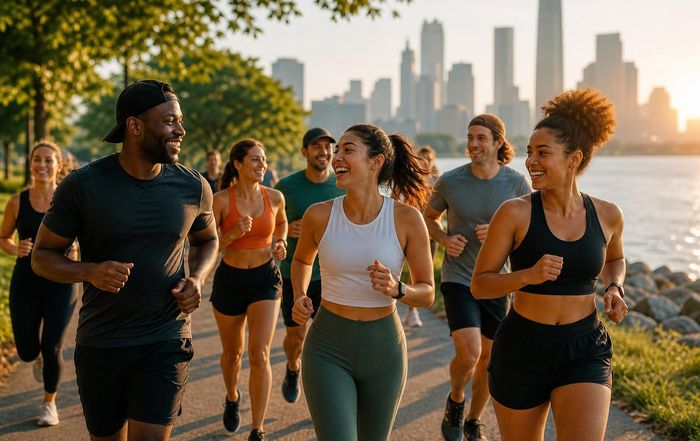
For years, running had a reputation as a solitary pursuit: headphones in, eyes forward, miles logged alone. Yet in cities and suburbs around the world, a different model has taken hold. Social running clubs-often free, loosely organized, and heavily powered by group chats and social media-are drawing in people who never saw themselves as "runners" at all. From after-work 5K meetups to café-anchored "run crews" and inclusive community groups, these clubs are changing who runs, how they train, and what fitness looks like in everyday life.
Understanding why these groups are so attractive helps explain broader shifts in how people approach movement, health, and community. It also suggests what other parts of the fitness world might learn from the social running boom.
From Performance to Belonging: A Shift in What "Counts" as Fitness
Traditional running culture often emphasized performance: race times, marathon finishes, training plans, and personal bests. While that structure motivated some, it also intimidated many. Social running clubs tend to flip the hierarchy: belonging and enjoyment come first, performance second. Newcomers are more likely to be invited to "come for a chatty 30-minute jog and coffee after" than to "start a 16-week training block."
This aligns with broader public-health messaging around movement, where organizations like the World Health Organization stress that any regular physical activity-whether walking, jogging, or interval running-supports cardiovascular health, mental wellbeing, and reduced chronic disease risk, even at modest intensities (WHO). For people who previously felt that only high-intensity workouts or serious races "counted," the lower barrier to entry is liberating. The club's identity becomes less about being fast and more about simply showing up.
That shift is especially important for people returning to exercise after long breaks, managing weight, or recovering from illness. Many are advised to start with moderate activity by healthcare providers or resources from bodies such as the American Heart Association (heart.org) or the UK's National Health Service (nhs.uk). A welcoming, non-judgmental group run can feel far more accessible than walking into a performance-driven gym environment. For readers exploring sustainable training habits, this culture of "progress over perfection" complements the more structured advice often found in our dedicated fitness and health coverage.
The Science of Social Motivation: Why People Stick With Groups
Adherence is one of the biggest challenges in any exercise program. Many people start strong, only to fade after a few weeks. Social running clubs directly tackle this problem by blending accountability with enjoyment. Psychological research on exercise adherence has consistently shown that social support-friends, teammates, or even casual acquaintances who expect to see you-significantly increases the odds of sticking with a routine over months and years. Institutions such as Harvard T.H. Chan School of Public Health and Mayo Clinic emphasize social support and enjoyment as key predictors of long-term activity (hsph.harvard.edu, mayoclinic.org).
In practice, this support often looks ordinary but powerful: someone sending a message in a group chat asking who's in for Thursday's 6 p.m. run, a club leader noticing when a regular has missed a few sessions, or a newcomer being paired with a "buddy" who runs at their pace. Rather than relying on raw willpower, people plug into a structure where showing up becomes the default social choice. Missing a run is no longer just skipping exercise; it is skipping time with friends.
This effect can be especially strong for those who do not identify as "sporty." The group's identity-creative, social, inclusive, sometimes tied to music or local culture-gives people a reason to be there that has nothing to do with performance metrics. Over time, the social pull and the sense of shared progress can encourage participants to take on bigger goals, from a first 5K to a half marathon, without feeling pressured from day one.
Technology, Apps, and the New Running "Third Place"
Social running clubs have been amplified by technology, but not in the way traditional fitness apps once promised. Instead of replacing real-world communities, platforms such as Strava (strava.com) and Nike Run Club (nike.com) often act as connective tissue. Group leaders use messaging apps and social media to coordinate meetups, share routes, and celebrate milestones. Runners log their efforts and cheer each other on, turning individual training sessions between group runs into shared experiences.
This hybrid of physical and digital space turns the club into a kind of "third place"-not home, not work, but a consistent environment where people feel known and welcomed. In urban areas, runs often start and finish at cafés, independent stores, or community centers, making local businesses part of the ecosystem. Some global brands and events have tapped into this trend as well: initiatives like parkrun, a free weekly timed 5K supported by volunteers, have created regular, low-pressure gathering points in parks across multiple continents (parkrun.com).
For people who might feel anxious about arriving alone, digital tools help reduce uncertainty. They can see photos from past runs, understand typical paces, and message organizers with questions. That transparency makes it easier to take the first step. For those exploring broader intersections of technology and movement, our technology and innovation sections frequently examine how digital platforms reshape everyday health behaviors.
Inclusivity, Identity, and the Rise of Community-Led Crews
Another key reason social running clubs appeal to new audiences is that many of them are explicitly designed to be inclusive. In contrast to some traditional clubs that implicitly centered experienced, often faster runners, newer community-led crews frequently foreground diversity in age, pace, body size, race, gender identity, and running goals. Groups organized by and for underrepresented communities-such as women-only, LGBTQ+, Black, or immigrant-led running collectives-have gained visibility in major cities worldwide.
Organizations such as Black Girls RUN! in the United States (blackgirlsrun.com) or GoodGym in the UK, which combines running with community volunteering (goodgym.org), illustrate how specific missions can broaden appeal. For some participants, the draw is less about fitness alone and more about reclaiming public space, building cultural pride, or contributing to local neighborhoods. This social purpose resonates strongly with people who may not be motivated by performance targets but care deeply about community and representation.
Inclusivity also shows up in how runs are structured. Many clubs offer multiple pace groups, with leaders assigned to each, so no one is left behind. Walk-run intervals are normalized. Clear communication about routes, rest stops, and safety measures helps people who may be anxious about getting lost, being too slow, or navigating unfamiliar streets. This approach aligns with a wider shift in wellness culture toward body-neutral and weight-inclusive models, a trend we explore regularly in our wellness and culture coverage.
Mental Health, Stress Relief, and the Appeal Beyond Aesthetics
For many participants, the primary benefit of joining a social running club is psychological rather than aesthetic. Public-health bodies such as the U.S. Centers for Disease Control and Prevention and the National Institute of Mental Health highlight that regular aerobic exercise is associated with reduced symptoms of anxiety and depression, improved sleep, and better stress management (cdc.gov, nimh.nih.gov). Running in a group can amplify these effects by adding social connection, which itself is strongly linked to mental wellbeing.
Crucially, many clubs deliberately de-emphasize weight loss or appearance-based goals, focusing instead on how running makes people feel: calmer after work, more focused during the day, or more confident navigating their city. This framing is particularly appealing for those who are wary of diet culture or have had negative experiences in appearance-driven fitness environments. When the central narrative is "we move together to feel better," people of varied shapes, sizes, and histories can see themselves as belonging.
The mental-health dimension became especially visible during and after the COVID-19 pandemic, when lockdowns disrupted both physical activity and social contact. As restrictions eased, outdoor group runs offered a relatively low-risk way to reconnect. Some clubs integrated mental-health check-ins, charity runs for psychological support services, or partnerships with organizations such as Mind in the UK (mind.org.uk) or similar mental-health charities elsewhere. For readers interested in the broader evidence linking movement and mood, our health and nutrition sections frequently unpack the science behind lifestyle-based mental-health strategies.
Low-Cost, Low-Friction: A Counterpoint to Boutique Fitness
Another reason social running clubs attract new fitness audiences is economic. In many cities, boutique studios and premium gyms can be prohibitively expensive, particularly for students, early-career workers, and families. Running, by contrast, requires minimal equipment-primarily a pair of suitable shoes-and can be done almost anywhere. Many social clubs are free or operate on voluntary donations, making regular participation accessible regardless of income.
This low financial barrier is especially important as the cost of living rises in many countries. While the global fitness industry continues to innovate with connected equipment and high-end experiences, there is growing demand for sustainable, budget-friendly options that still provide structure and community. Social running clubs sit at this intersection: they offer a sense of belonging and routine similar to a membership-based facility, but without the recurring fees.
At the same time, some brands and local businesses have recognized the cultural pull of these communities. Sportswear companies, cafés, and even employers sometimes sponsor or host runs, provide storage for bags, or offer discounts to participants. When handled thoughtfully, these partnerships can support community growth without undermining the grassroots feel. For those tracking the business side of fitness, our business and brands sections often examine how companies engage with emerging fitness subcultures.
Safety, Structure, and the Needs of New Runners
While the informality of many social running clubs is part of their appeal, new runners also benefit from clear guidance and safe practices. Reputable groups typically pay attention to route planning, visibility (especially at night), and traffic awareness, and they may encourage reflective gear or headlamps in low-light conditions. Some collaborate with local authorities or follow guidelines from organizations such as Road Runners Club of America (rrca.org) or national athletics bodies to promote safe road-running etiquette.
Injury prevention is another key consideration. Beginners often increase distance or intensity too quickly, leading to overuse injuries. Clubs that integrate simple warm-ups, cool-downs, and education on gradual progression help participants stay healthy. Many refer runners to evidence-based resources from sports-medicine organizations like the American College of Sports Medicine (acsm.org) or national health services when more structured advice is needed.
For new runners, this combination of social support and basic structure can be a sweet spot: not as intimidating as hiring a coach or joining a competitive club, but more guided than running entirely alone. It allows people to build confidence at a sustainable pace, while still having access to more advanced options-like race-training subgroups-if they decide to progress.
Culture, Creativity, and the "Run Crew" Aesthetic
Beyond health and performance, social running clubs often tap into cultural and creative identities. In some cities, "run crews" operate almost like collectives, blending streetwear, music, photography, and nightlife influences. Runs might be accompanied by curated playlists, end at art spaces or food markets, or be themed around cultural events and holidays. The aesthetic-captured in photos and short videos-circulates widely on platforms such as Instagram and TikTok, attracting people who may never have considered traditional athletics clubs.
This cultural framing matters because it reframes running from a purely athletic activity into a lifestyle choice. It can coexist with other interests-music, fashion, activism, or local food-rather than competing with them. People who might not identify with the imagery of elite races or conventional sports marketing can see themselves reflected in these more eclectic, everyday scenes.
Such creativity also extends to events. Some clubs organize scavenger-hunt runs, city-history tours, or charity relays that highlight local stories and causes. Others partner with environmental groups for plogging (jogging while picking up litter), aligning with broader concerns about sustainability and urban livability. Readers interested in the environmental dimension of active transport and outdoor exercise can find related coverage in our environment and sustainability sections.
What Other Parts of Fitness Can Learn from Social Running
The success of social running clubs with new fitness audiences offers lessons that extend well beyond running itself. Several themes stand out for gyms, studios, sports organizations, and even employers seeking to support healthier lifestyles:
First, lowering psychological and social barriers is as important as lowering physical ones. Clear communication about pace, expectations, and inclusivity reduces anxiety for beginners. Second, centering community and enjoyment rather than performance alone can draw in people who have been alienated by competitive or appearance-driven environments. Third, integrating digital tools in a way that supports real-world connection-rather than replacing it-seems particularly effective. Group chats, event pages, and activity-tracking apps can strengthen, not substitute, in-person experiences.
Finally, aligning movement with broader values-whether mental health, social justice, neighborhood improvement, or environmental action-helps people see exercise as meaningful rather than merely obligatory. That sense of purpose may be one of the strongest long-term motivators there is, especially for those who have cycled through short-lived fitness resolutions in the past.
Finding a Club-and Making It Work for You
For those considering joining a social running club, the options are increasingly diverse. Local running stores, community centers, and parks often host regular meetups. Many national and regional athletics bodies maintain directories of affiliated clubs on their websites, such as England Athletics (englandathletics.org) or comparable organizations in other countries. Global initiatives like parkrun, as well as city-based crews publicizing themselves through social media, offer additional entry points.
The key is to approach the experience as an experiment rather than a test. It may take a few tries to find a group whose pace, culture, and schedule fit your life. Communicating with organizers beforehand, starting with a beginner-friendly session, and being honest about your current fitness level can all help. Many people also combine group runs with solo sessions or other activities like strength training, yoga, or team sports, creating a rounded routine that supports both performance and injury prevention. Our daily sports and events sections regularly highlight races and community activities that can complement club participation.
In the end, the growing appeal of social running clubs reflects a broader redefinition of fitness. It is less about chasing extreme transformation and more about weaving movement into everyday life in ways that feel sustainable, social, and personally meaningful. For many new runners, the most important finish line is not a race banner but the realization that they have found a community where they are welcome to move at their own pace-and keep coming back.