

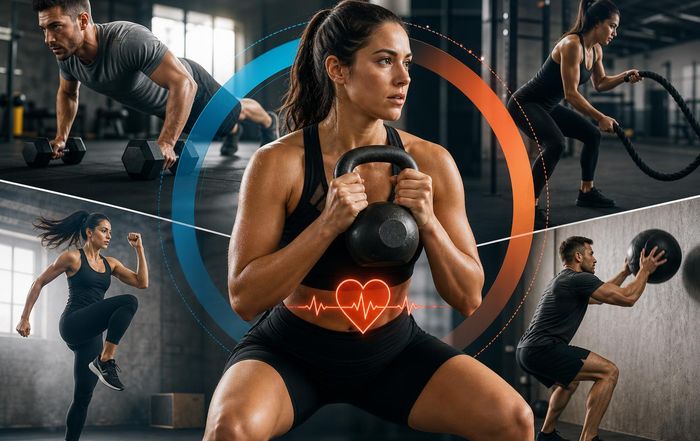
Circuit Training: The High-Performance Blueprint for Strength, Cardio, and Business Leaders
The New Role of Circuit Training in a High-Pressure World
Circuit training has moved from being a niche gym class format to a central pillar of high-performance lifestyles for executives, entrepreneurs, athletes, and knowledge workers across the globe. In an era characterized by compressed schedules, hybrid work, and relentless digital distraction, the ability to build strength, cardiovascular capacity, and mental resilience in highly efficient sessions has made circuit training one of the most strategically valuable training methods for modern professionals. For the fit happy audience online, whose interests cover fitness, health, performance, and business impact, circuit training is no longer just a workout style; it is an operating system for sustainable productivity and long-term wellbeing.
Circuit training, in its modern form, combines sequences of strength, mobility, and conditioning exercises performed with minimal rest, often alternating muscle groups and energy systems to maintain intensity while avoiding excessive fatigue in any single area. This approach enables individuals to gain the benefits of resistance training and cardiovascular exercise within the same session, a key advantage for time-poor professionals in the United States, United Kingdom, Germany, Canada, Australia, and beyond. As leading organizations such as American College of Sports Medicine (ACSM) and World Health Organization (WHO) continue to emphasize the dual importance of strength and aerobic activity for long-term health, circuit training has emerged as one of the most practical ways to meet those guidelines in real-world conditions. Readers can review current physical activity recommendations through resources from the World Health Organization and the U.S. Centers for Disease Control and Prevention.
Defining Circuit Training: From Old-School Gyms to Data-Driven Studios
Historically, circuit training was associated with fixed stations of weight machines and basic cardio equipment, often used in school gyms or entry-level fitness programs. In 2026, however, circuit training has evolved into a highly adaptable methodology that can be delivered in boutique studios, corporate wellness centers, home gyms, and even outdoor spaces in cities from New York and London to Singapore and Sydney. The core principle remains the same: a sequence of exercises, each performed for a set time or number of repetitions, with limited rest between stations, targeting different muscle groups and energy systems in a structured manner.
This evolution has been accelerated by the rise of connected fitness technologies, wearables, and smart programming platforms. Organizations like Peloton, Apple Fitness+, and Les Mills have integrated circuit-style programming into their digital offerings, using heart rate data, performance metrics, and progressive overload models to guide users through increasingly sophisticated sessions. Those seeking a deeper understanding of how digital fitness platforms structure progressive training can explore resources from Harvard Health Publishing and the Mayo Clinic. At the same time, performance-focused gyms and sports performance centers in Europe, Asia, and North America now routinely employ circuit formats to condition athletes in sports ranging from football and basketball to tennis and mixed martial arts, underscoring the method's versatility and efficiency.
For this smart community, which tracks events across sports, technology, and innovation, this convergence of tradition and technology has made circuit training a uniquely data-informed, results-oriented modality that aligns with both athletic and business performance goals.
Physiological Benefits: Strength, Power, and Cardiovascular Capacity
The primary appeal of circuit training lies in its ability to stimulate multiple physiological adaptations within the same session. When designed correctly, a circuit can simultaneously challenge muscular strength, muscular endurance, aerobic capacity, and anaerobic power, creating a comprehensive training effect that would otherwise require separate strength and cardio workouts.
From a strength perspective, circuits that incorporate compound movements such as squats, deadlifts, presses, and rows, whether performed with free weights, resistance bands, or bodyweight, can provide sufficient mechanical tension and volume to drive hypertrophy and strength gains, particularly in novice and intermediate trainees. Research summarized by organizations such as the National Strength and Conditioning Association (NSCA) and American Council on Exercise (ACE) has consistently shown that circuit-style resistance training can improve muscular strength and endurance, especially when load, tempo, and rest intervals are carefully managed. Readers can explore foundational strength training principles through the NSCA and ACE educational resources.
On the cardiovascular side, the minimal rest periods and inclusion of dynamic, full-body movements elevate heart rate and oxygen consumption to levels comparable with moderate to vigorous continuous exercise. Studies cited by institutions like Johns Hopkins Medicine and Cleveland Clinic have demonstrated that high-intensity circuit formats can improve VO₂ max, blood pressure profiles, and markers of metabolic health in various populations, including individuals at risk for cardiometabolic disease. Those interested in the cardiometabolic implications of time-efficient training can review overviews from Johns Hopkins Medicine and Cleveland Clinic.
For busy professionals in sectors from finance and technology to healthcare and media, the ability to gain both strength and cardiovascular benefits in a 30-45 minute circuit session is particularly valuable, as it reduces the perceived trade-off between building muscle and improving heart health. This dual benefit aligns closely with the holistic performance philosophy that FitPulseNews highlights across its wellness and business coverage, where physical capability is increasingly recognized as a driver of cognitive performance and leadership effectiveness.
Metabolic Health, Body Composition, and Longevity
Beyond strength and cardio metrics, circuit training exerts a profound influence on metabolic health and body composition, issues that are top of mind for readers from United States, Canada, Germany, Japan, and other nations grappling with rising rates of obesity and metabolic syndrome. The combination of resistance and aerobic elements in circuit training supports improvements in insulin sensitivity, resting metabolic rate, and fat oxidation, while preserving or increasing lean muscle mass.
Public health agencies and research institutions, including the National Institutes of Health (NIH) and Public Health England, have emphasized the importance of resistance training for maintaining metabolic health, particularly as individuals age and naturally lose muscle mass. When resistance work is integrated into circuits with sustained cardiovascular demand, the resulting sessions can enhance energy expenditure both during and after exercise, a phenomenon often described as excess post-exercise oxygen consumption. Professionals seeking a deeper understanding of exercise and metabolic health can consult resources from the NIH and National Health Service (NHS).
For the audience of FitPulseNews, many of whom balance demanding careers with family commitments across regions like Europe, Asia, and North America, circuit training offers a realistic pathway to managing weight, supporting healthy blood sugar levels, and improving long-term health markers without requiring hours in the gym. When combined with informed nutritional strategies, such as those regularly discussed in the platform's nutrition and health sections, circuit training can form the cornerstone of a sustainable body composition strategy that supports both aesthetic and performance goals.
Mental Performance, Stress Management, and Cognitive Benefits
In 2026, mental performance and resilience have become as central to executive success as financial acumen and strategic thinking. Circuit training, with its demand for sustained focus, task switching, and discomfort tolerance, offers mental benefits that extend well beyond traditional notions of "burning calories" or "getting in shape." The structured intensity of circuits, where individuals must transition rapidly between exercises, manage breathing, and maintain technique under fatigue, simulates many of the cognitive and emotional demands of high-pressure work environments.
Research from institutions such as Stanford University and University College London has highlighted the positive impact of regular physical activity on cognitive function, neuroplasticity, and mood regulation, with particular benefits observed in executive function, working memory, and stress resilience. While much of this research focuses on aerobic or resistance training in isolation, circuit training's hybrid nature suggests that it may deliver a compounded cognitive benefit, especially when performed consistently over time. Readers interested in the link between exercise and brain health can explore resources from Stanford Medicine and UCL.
For knowledge workers, entrepreneurs, and leaders across Singapore, South Korea, United States, and United Kingdom, integrating circuit training into weekly routines can function as both a physical conditioning tool and a stress management strategy. The endorphin release, sense of mastery, and clear structure provide psychological counterweights to the ambiguity and cognitive overload of digital-era work. This alignment between physical training and mental performance is increasingly evident in corporate wellness programs and executive coaching practices, themes frequently examined in FitPulseNews coverage of culture and jobs.
Circuit Training for Athletes and Everyday Performers
While circuit training is often promoted to general populations seeking time-efficient fitness, it has also become deeply embedded in the training systems of professional and semi-professional athletes worldwide. In football, basketball, rugby, tennis, and combat sports, coaches use circuits to develop sport-specific conditioning, movement quality, and resilience, often tailoring exercise selection and work-to-rest ratios to the unique energy system demands of each sport.
Organizations such as FIFA, NBA, and World Rugby have integrated circuit-style conditioning into their performance frameworks, focusing on qualities like repeated sprint ability, strength endurance, and robustness under fatigue. Performance departments at elite clubs in Spain, Italy, Germany, and France frequently combine gym-based circuits with on-field conditioning drills, ensuring that athletes build both general physical capacity and sport-specific fitness. Those interested in how elite sport integrates modern conditioning methods can review performance insights from FIFA and the International Olympic Committee.
For recreational athletes and fitness enthusiasts following FitPulseNews sports and fitness reporting, circuit training offers a practical bridge between general fitness and sport performance. Runners, cyclists, and triathletes, for example, can use strength-focused circuits to develop muscular resilience and injury resistance, while team sport participants can employ high-intensity circuits to simulate game-like demands in off-season or pre-season phases. The adaptability of circuit formats allows them to be scaled for different ages and abilities, making them suitable for youth development programs in Scandinavia, masters athletes in North America, and community sports initiatives in Africa and South America.
Business, Brands, and the Circuit Training Economy
The rapid adoption of circuit training has not only reshaped personal routines; it has also influenced the global fitness and wellness economy, an area of particular interest to readers of the business and brands sections of FitPulseNews. Over the past decade, circuit-based boutique concepts and digital platforms have attracted significant investment, with brands such as F45 Training, Orangetheory Fitness, and Barry's expanding across United States, Europe, Asia, and Australia, often positioning circuit-style sessions as premium, community-driven experiences.
These brands have refined the circuit model into tightly choreographed, time-efficient sessions that appeal to urban professionals seeking predictable, high-intensity workouts that can be booked around demanding schedules. Many of these organizations leverage heart rate tracking, leaderboards, and gamified elements to enhance engagement, a trend that aligns with broader shifts in the fitness technology landscape documented by entities like the Global Wellness Institute and McKinsey & Company. Readers interested in the economics of fitness and wellness can explore broader industry analyses via Global Wellness Institute and McKinsey.
At the corporate level, circuit training has found its way into workplace wellness programs and on-site fitness facilities, particularly in sectors where high cognitive load and sedentary work patterns are prevalent. Companies in technology, finance, and professional services increasingly recognize that short, structured, circuit-style sessions before work or during lunch breaks can improve employee energy, reduce musculoskeletal issues, and support retention in competitive talent markets. This intersection of fitness, performance, and organizational culture is a recurring theme in FitPulseNews coverage, reflecting a broader shift toward seeing physical training as a strategic asset rather than a discretionary perk.
Technology, Data, and Personalized Circuit Design
The integration of technology into circuit training has accelerated in 2026, enabling more precise personalization, monitoring, and progression than ever before. Wearables from Apple, Garmin, Whoop, and Oura now provide continuous data on heart rate, heart rate variability, recovery status, and sleep quality, allowing individuals and coaches to calibrate circuit intensity and volume based on objective readiness markers rather than guesswork.
In addition, AI-driven training platforms and smart gym systems can now auto-adjust resistance levels, suggest exercise substitutions, and adapt work-to-rest ratios in real time based on performance feedback. This level of personalization is particularly valuable for individuals managing high workloads or travel schedules across regions like Asia-Pacific, Europe, and North America, where circadian disruption and stress can significantly affect training capacity. Those interested in the broader context of technology-enabled health can review insights from World Economic Forum and MIT Technology Review.
For the FitPulseNews audience, which closely follows developments in technology and innovation, the key takeaway is that circuit training is no longer a one-size-fits-all template. Instead, it can be dynamically tailored to individual goals, constraints, and physiological responses, whether the user is a senior executive in Zurich, a creative professional in Berlin, or a startup founder in Seoul. This level of refinement enhances both safety and effectiveness, reinforcing circuit training's position as a cornerstone of modern performance lifestyles.
Sustainability, Accessibility, and the Future of Circuit Training
Sustainability, both environmental and personal, has become an increasingly important lens through which training methods are evaluated, particularly for readers engaged with environment and sustainability issues. Circuit training, by virtue of its flexibility and minimal equipment requirements, can be implemented in low-impact ways that reduce reliance on large, energy-intensive facilities. Bodyweight circuits performed in homes, parks, or community spaces can deliver meaningful strength and cardio benefits without heavy infrastructure, making them accessible to populations in emerging markets and resource-constrained environments across Africa, South America, and parts of Asia.
From a personal sustainability standpoint, circuit training's time efficiency and variability support long-term adherence, which is arguably the most critical determinant of health and performance outcomes. By allowing individuals to adjust session length, intensity, and complexity according to life demands, circuits can be woven into the fabric of daily routines rather than existing as sporadic, aspirational commitments. Those who wish to understand more about sustainable exercise habits and behavior change can explore resources from American Psychological Association and World Health Organization.
For FitPulseNews, whose editorial mission spans wellness, events, and global news, circuit training represents a model of sustainable performance that resonates across demographics, industries, and geographies. Whether implemented in high-end performance centers in Switzerland, community programs in South Africa, or remote work setups in New Zealand, circuits can be tailored to meet people where they are, supporting both personal health and societal wellbeing.
Integrating Circuit Training into a Holistic Performance Lifestyle
For the growing readership here, the question is not whether circuit training works-its benefits for strength, cardio, metabolic health, and mental performance are well established-but how to integrate it intelligently into a broader lifestyle that includes nutrition, recovery, and professional ambition. The most effective use of circuit training in 2026 is as a central, but not exclusive, component of a balanced regimen that also includes lower-intensity movement, dedicated mobility work, and periods of deliberate recovery.
Professionals and athletes alike are increasingly recognizing that optimal results arise not from maximal intensity at all times, but from strategic variation and alignment with life demands. On weeks with heavy travel or intense deadlines, shorter, moderate-intensity circuits may preserve capacity without overstressing the system. During more stable periods, higher-intensity or strength-focused circuits can accelerate adaptation and performance gains. This periodized approach mirrors the strategies used in elite sport and is now being translated into executive and entrepreneurial contexts, where sustainable high performance is a competitive differentiator.
Readers who follow us across fitness, health, and world coverage will recognize circuit training as emblematic of a broader shift toward integrated, evidence-informed, and technology-enabled approaches to human performance. As the lines between athletic preparation, workplace productivity, and personal wellbeing continue to blur, circuit training offers a practical, adaptable, and globally accessible framework for building the physical and mental foundations required to thrive in an increasingly complex world.
In this sense, circuit training in 2026 is more than a workout trend; it is a strategic tool for individuals and organizations aiming to align health, performance, and purpose. By leveraging its unique combination of strength and cardio benefits, its compatibility with digital tools, and its inherent efficiency, the global community that turns to FitPulseNews for insight and direction can use circuit training as a cornerstone of a resilient, future-ready lifestyle that supports both personal ambition and collective wellbeing.