
Why Recreational Fitness Is Becoming More Social in 2026
Recreational fitness, once a largely individual pursuit defined by solitary runs, home workouts, or quiet sessions at the gym, has evolved into a deeply social experience that now shapes how people connect, work, and live in 2026. For the global audience of FitPulseNews, which spans fitness enthusiasts, health-conscious professionals, sports fans, brand leaders, and innovators across North America, Europe, Asia, Africa, and South America, this shift is not simply a passing trend; it is a structural transformation of how communities form, how brands communicate, and how technology integrates with everyday movement. Understanding why fitness is becoming more social, and what this means for businesses, cities, and individuals, is critical for anyone operating at the intersection of health, culture, and commerce.
From Isolation to Interaction: The New Fitness Mindset
The socialization of fitness reflects a broader cultural reorientation after years marked by remote work, digital communication, and fragmented social interaction. As organizations such as the World Health Organization highlight ongoing concerns about physical inactivity and mental health, more people are discovering that exercise is not only a tool for personal health but also a powerful mechanism for building relationships and shared experiences. Learn more about global physical activity guidelines on the World Health Organization website.
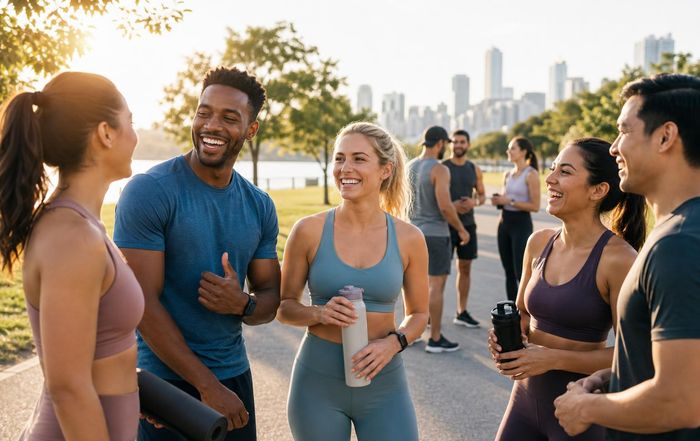
In this environment, recreational fitness is increasingly framed as a community activity, whether through group classes, neighborhood running clubs, or digitally connected training cohorts. On FitPulseNews, coverage of health and fitness has consistently shown that people are more likely to sustain their routines when they feel part of something larger than themselves. The individual pursuit of performance remains important, but the dominant narrative is shifting toward connection, accountability, and shared enjoyment, especially among younger generations in the United States, the United Kingdom, Germany, Canada, Australia, and beyond.
Digital Platforms as Social Gyms
The most visible driver of this transformation is the rapid maturation of digital platforms that turn workouts into social events, even when participants are scattered across multiple continents. Fitness apps, connected devices, and streaming platforms now integrate leaderboards, live chats, and social feeds, enabling users to exercise together in real time or asynchronously while still feeling part of a group. Companies like Strava have built vast communities around running, cycling, and hiking, where users can compare segments, comment on each other's activities, and join virtual clubs that cross national borders. Explore how digital communities reshape sport on the Strava website.
Similarly, connected equipment providers such as Peloton and Hydrow have normalized the idea that a home workout can be socially rich, featuring live instructors, on-screen shout-outs, and shared milestones that encourage participants to return regularly. Industry analysis from organizations like McKinsey & Company shows that hybrid fitness models, which blend at-home digital experiences with in-person training, are now a mainstream expectation rather than a niche offering, particularly in markets such as the United States, the United Kingdom, and Germany. Read more about the evolution of hybrid fitness models on McKinsey's insights page.
For FitPulseNews readers following technology and innovation, the key development is that digital fitness platforms are no longer passive tools; they function as social networks in their own right, with their own cultures, norms, and influencers. This blurring of lines between social media and fitness technology has profound implications for brands, data privacy, and user engagement.
The Psychology of Belonging and Accountability
The socialization of recreational fitness is grounded in well-established psychological principles. People are more likely to adopt and maintain healthy behaviors when they feel supported by peers, receive regular encouragement, and see positive role models who resemble them. Organizations such as the American Psychological Association have documented how social support and group identity can significantly improve adherence to exercise routines and lifestyle changes. Learn more about the role of social support in behavior change on the American Psychological Association website.
In practice, this means that group classes, running clubs, and recreational sports leagues provide not only physical benefits but also emotional and cognitive advantages, from reduced stress to increased motivation. For professionals facing demanding careers in major hubs such as New York, London, Berlin, Toronto, Sydney, Singapore, and Tokyo, the social element of fitness doubles as a stress-management strategy and a structured way to maintain human connection in increasingly digital work environments. Coverage on FitPulseNews in areas like wellness and culture has shown that participants often describe their teams, classes, or workout groups as their "second family," underscoring how deeply these communities are intertwined with identity and belonging.
The Rise of Community-Centric Fitness Spaces
Physical spaces are evolving to meet the demand for more social forms of movement. Traditional big-box gyms are being complemented, and in some cases challenged, by boutique studios, community fitness hubs, and multi-use recreational centers that prioritize interaction over anonymity. In cities across Europe, North America, and Asia, new facilities are being designed with large communal areas, open training zones, and flexible spaces that can transition from classes to workshops to social gatherings.
This shift is particularly evident in the growth of functional fitness gyms, climbing centers, and hybrid wellness hubs that combine training, recovery, and social activities under one roof. Organizations like Urban Sports Club in Europe have exemplified how membership models can encourage exploration of different social fitness environments, from yoga studios to group cycling classes, by aggregating access into a single subscription. Meanwhile, urban design advocates and planners, including resources from Project for Public Spaces, emphasize how public spaces such as parks, waterfronts, and plazas can be reimagined as inclusive fitness environments that encourage casual group activities, from outdoor yoga to community runs. Learn more about community-focused public space design on the Project for Public Spaces website.
For FitPulseNews readers following sports and environment, this evolution connects directly to broader conversations about livable cities and sustainable urban planning. Recreational fitness is no longer confined to private clubs; it is increasingly embedded in the fabric of public life.
Social Fitness, Brands, and the Experience Economy
The convergence of social fitness and the experience economy has created a new landscape for brands operating in sportswear, nutrition, wellness, and lifestyle. Companies such as Nike, Adidas, Lululemon, and Under Armour are no longer merely selling products; they are curating communities and experiences that invite consumers to participate in events, challenges, and local activations. Nike's running clubs and community workouts, for instance, have become global touchpoints that reinforce brand loyalty by providing participants with structured opportunities to train together, test products, and share their progress. Learn more about the role of community in modern branding on the Harvard Business Review website.
Nutrition and wellness brands are adopting similar strategies, organizing group challenges, workplace wellness programs, and social media campaigns that encourage users to form micro-communities around shared goals such as improved sleep, better hydration, or plant-based eating. This aligns with the interests of FitPulseNews readers who regularly consult its nutrition and brands coverage to understand how consumer expectations are shifting toward authenticity, transparency, and shared values.
In this context, social fitness becomes a platform for storytelling and co-creation, where participants effectively become brand ambassadors by sharing their journeys, attending events, and inviting others into the community. The line between customer and community member is increasingly blurred, which rewards organizations that invest in long-term relationships rather than short-term campaigns.
Corporate Wellness and Social Fitness at Work
For business leaders and HR professionals, the socialization of recreational fitness offers new tools to address employee wellbeing, engagement, and retention. Corporate wellness programs, which once focused on individual incentives and step-count competitions, are now incorporating group-based initiatives such as company sports teams, walking meetings, virtual fitness challenges, and on-site classes that bring colleagues together across departments and geographies.
Organizations like Gallup have repeatedly highlighted the connection between employee wellbeing, engagement, and organizational performance, emphasizing that social connections at work are a critical factor in reducing burnout and turnover. Explore more about workplace wellbeing on the Gallup workplace insights page. In competitive talent markets across the United States, Canada, Germany, the Netherlands, Singapore, and Australia, employers that facilitate social fitness opportunities often find it easier to attract and retain top talent, especially among younger workers who prioritize holistic wellbeing and community.
For the FitPulseNews audience following business and jobs, this trend underscores a strategic shift: wellness is no longer a peripheral benefit but a core element of employer branding and organizational culture. Social fitness initiatives can also support diversity, equity, and inclusion efforts by creating shared experiences that cross hierarchical and functional boundaries.
Technology, Data, and the Social Layer of Wearables
Wearable technology has played a central role in making fitness more social, not simply by tracking activity but by connecting users through shared metrics, goals, and challenges. Devices from Apple, Garmin, Fitbit, and Samsung now integrate features that allow users to share workout summaries, compete in step challenges, and celebrate achievements with friends, family, or colleagues. The Apple Watch, for example, has popularized activity sharing and monthly challenges that encourage friendly competition and mutual accountability. Learn more about the evolution of health wearables on the Apple health and fitness page.
At the same time, platforms like WHOOP and Oura have introduced more advanced recovery and readiness metrics, which are increasingly discussed within social groups, training communities, and online forums. This creates a shared language around sleep quality, strain, and recovery that further socializes the fitness experience and encourages participants to support one another's broader wellbeing, not just performance.
However, as the social layer of wearables expands, questions around data privacy, algorithmic transparency, and health equity become more pressing. Organizations such as the Electronic Frontier Foundation and academic institutions like Stanford University have raised concerns about how health data is collected, stored, and used, especially when integrated with social features and third-party platforms. Learn more about digital privacy issues on the Electronic Frontier Foundation website. For the informed readers of FitPulseNews, understanding this balance between connectivity and privacy is essential when evaluating new devices and platforms.
Global and Cultural Variations in Social Fitness
While the socialization of recreational fitness is a global phenomenon, its expression varies significantly across regions and cultures. In North America and parts of Europe, boutique studios, running clubs, and obstacle course events have become prominent vehicles for social fitness, often linked to urban professional lifestyles. In countries such as Japan and South Korea, group exercise in parks, corporate settings, and community centers reflects long-standing traditions of collective movement, now augmented by digital tools and social media.
In many African and South American cities, informal soccer games, dance-based fitness, and community sports leagues provide powerful examples of social fitness that predate digital platforms but are now being amplified through online communities and local entrepreneurship. Organizations like Right To Play and Sport for Development and Peace have long emphasized the role of sport and recreation in building community resilience, especially among youth. Learn more about sport for development initiatives on the Right To Play website.
For the globally oriented readers of FitPulseNews, whose interests span world and news, these regional differences highlight an important point: while technology and brands play significant roles, the socialization of fitness is ultimately shaped by local culture, infrastructure, and community leadership. Successful initiatives respect and build upon existing social practices rather than imposing a one-size-fits-all model.
Events, Experiences, and the New Social Calendar
The calendar of recreational fitness has expanded well beyond traditional races and tournaments. Mass participation events such as marathons, charity runs, obstacle races, cycling festivals, and wellness retreats now function as social anchors that bring together diverse groups for shared physical challenges and celebrations. These events increasingly blend sport, music, food, and culture, creating immersive experiences that appeal to both serious athletes and casual participants.
Major city marathons in New York, London, Berlin, Tokyo, and Cape Town, for example, attract runners from around the world who train together virtually for months before meeting in person to complete the event, often raising funds for charitable causes. Organizations like World Athletics and the Abbott World Marathon Majors have helped standardize and promote these events, while local organizers adapt them to reflect the character of their cities. Learn more about global running events on the World Athletics website.
For FitPulseNews, which covers events and sports, these gatherings illustrate how social fitness extends beyond weekly routines into milestone experiences that shape personal narratives and community identity. Participants often describe such events as life-changing, not only because of the physical accomplishment but also because of the relationships formed and the sense of shared purpose.
Sustainability, Environment, and Social Responsibility
As recreational fitness becomes more social, it also intersects more visibly with environmental and sustainability concerns. Outdoor activities such as trail running, cycling, open-water swimming, and hiking rely on healthy ecosystems and accessible natural spaces, making environmental stewardship an increasingly important topic within fitness communities. Organizations like The Nature Conservancy and Leave No Trace promote responsible outdoor recreation, encouraging participants to minimize their environmental impact while enjoying nature. Learn more about sustainable outdoor practices on the Leave No Trace website.
Brands and event organizers are responding by reducing single-use plastics at races, promoting public transit or cycling to events, and supporting conservation initiatives tied to participation. For the FitPulseNews audience following sustainability and environment, these developments signal a convergence of values: social fitness communities are increasingly expected to demonstrate environmental responsibility and to align with broader sustainability goals.
This trend also extends to urban environments, where city planners and policymakers are investing in bike lanes, pedestrian zones, and green corridors that encourage active transportation and outdoor recreation. Organizations such as C40 Cities and UN-Habitat highlight the importance of active mobility and green infrastructure in building resilient, low-carbon cities. Learn more about active cities initiatives on the UN-Habitat website.
The Future of Social Fitness: Opportunities and Responsibilities
Looking ahead from the vantage point of 2026, the socialization of recreational fitness appears set to deepen rather than reverse. Advances in augmented and virtual reality, AI-driven coaching, and biometric sensing will likely create even more immersive and personalized group experiences, allowing participants in New York, London, Berlin, Singapore, and São Paulo to train together as if they were in the same room. At the same time, the continued growth of remote and hybrid work will sustain demand for structured social outlets that combine physical activity with human connection.
For the community around FitPulseNews, which spans fitness, health, technology, business, and beyond, this evolution presents both opportunities and responsibilities. There is an opportunity to design inclusive, culturally sensitive, and environmentally responsible social fitness experiences that enhance wellbeing at scale. There is also a responsibility to address issues of access, affordability, and digital equity, ensuring that the benefits of social fitness are not limited to affluent urban populations or those with the latest devices.
Organizations, brands, and policymakers that recognize the power of social fitness and invest in supportive infrastructure-both physical and digital-will be well positioned to shape healthier, more connected societies. As recreational fitness continues to move from isolation to interaction, it becomes not only a personal habit but a collective asset, one that can strengthen communities, foster resilience, and redefine what it means to live well in an increasingly complex world.
For readers of FitPulseNews, this is not an abstract trend; it is a lived reality that shows up in local parks, digital communities, office wellness programs, and city streets every day. The transformation of recreational fitness into a social force is reshaping how people experience health, how businesses engage with their audiences, and how cities imagine their futures, offering a powerful reminder that movement is most meaningful when it is shared.