

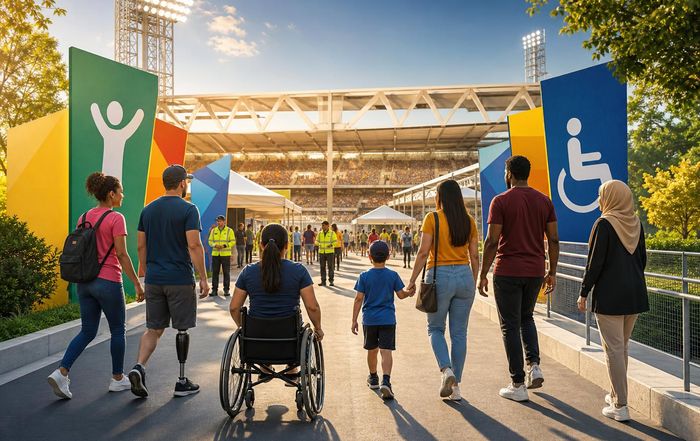
Planning Safer and More Inclusive Sporting Events
The New Playbook for Global Sporting Experiences
Oh yes, the global sports industry has moved decisively beyond the traditional focus on competition and entertainment, increasingly recognizing that the long-term viability and social legitimacy of sporting events depend on how safely and inclusively they are designed, managed, and experienced. For a fitness, crazy community that follows FitPulseNews for its integrated daily coverage of fitness, health, sports, brands, culture, technology, and sustainability, the evolution of safer and more inclusive sporting events is not a niche operational topic; it is a strategic lens on how sport is reshaping business models, fan engagement, urban development, and workplace expectations worldwide.
From mass participation road races in New York, Berlin, and Tokyo to elite competitions in London, Sydney, and Singapore, event organizers, city authorities, and global sports brands are under growing scrutiny from athletes, fans, regulators, and investors. They are expected to demonstrate robust safety governance, meaningful inclusion for diverse participants, and measurable progress on environmental and social impact. The most forward-thinking organizations now treat safety and inclusion as core pillars of brand value and competitive differentiation, a shift that is particularly visible in the way major events are planned, marketed, staffed, and evaluated.
In this context, planning safer and more inclusive sporting events is no longer a matter of compliance checklists; it is a multidimensional strategy that connects athlete health, fan wellbeing, digital innovation, workplace diversity, and sustainable operations. This integrated approach aligns closely with the editorial perspective of FitPulseNews, where coverage of sports, health, technology, culture, and sustainability increasingly converges around the same core theme: how people and organizations can perform at a high level without compromising safety, inclusion, or long-term resilience.
Safety as a Strategic Imperative, Not an Operational Afterthought
In the past decade, a series of high-profile incidents, ranging from crowd crushes and extreme-heat marathons to cyberattacks on ticketing systems, has pushed safety to the top of the agenda for sporting bodies, host cities, and corporate sponsors. Organizations such as FIFA, the International Olympic Committee (IOC), and major leagues in the United States, Europe, and Asia have been forced to rethink how they assess and manage risk in complex, high-density environments. The World Health Organization has strengthened its guidance on mass gatherings, and event organizers increasingly consult resources such as the WHO mass gatherings guidance to align their protocols with global health best practices.
For major events in the United States, United Kingdom, Germany, and other leading sports markets, safety planning now typically integrates public health, cybersecurity, transportation, and emergency response into a single, cross-functional framework. Venue operators and city authorities collaborate more closely with law enforcement, medical providers, and digital infrastructure partners, informed by research from organizations such as the U.S. Department of Homeland Security on critical infrastructure protection and the European Union Agency for Cybersecurity on incident response coordination. The result is a more holistic, data-driven approach that treats the stadium, the surrounding urban environment, and the digital ecosystem as a single interconnected system.
This shift is evident in the way elite clubs and event operators in cities such as London, Munich, Toronto, and Melbourne now run pre-event simulations, use real-time monitoring dashboards, and design detailed contingency plans that include crowd evacuation, extreme weather response, and digital system redundancy. At the same time, local community stakeholders and fan groups are increasingly involved in consultation processes, helping to identify blind spots in security planning and to ensure that safety measures do not create unnecessary barriers for people with disabilities, older fans, or families with young children. As FitPulseNews has consistently highlighted in its business and world coverage, the organizations that excel in safety planning tend to be those that treat it as a strategic investment in trust, reputation, and long-term brand equity rather than an unavoidable cost.
Rethinking Athlete and Participant Health in the Era of Extreme Conditions
For participants, especially in endurance events and contact sports, safety is inseparable from health. The rise in extreme weather events, combined with the global expansion of mass participation races and tournaments, has heightened concern about heat stress, air quality, concussion, and long-term musculoskeletal damage. Governing bodies and event organizers are under pressure to align competition schedules, medical protocols, and training guidance with the latest science from institutions such as the Centers for Disease Control and Prevention and the National Institutes of Health.
In practice, this has led to more sophisticated pre-event medical screening, greater use of wearable technology for real-time monitoring, and stricter rules for in-competition medical interventions. The NFL, World Rugby, and several European football leagues have updated concussion protocols, reflecting evolving evidence from organizations such as the Brain Injury Association and national sports medicine institutes. Meanwhile, marathons in cities such as Boston, Berlin, and Tokyo have redesigned hydration stations, adjusted starting times, and developed heat-specific contingency plans based on research from the World Athletics health and science resources.
At the mass participation level, organizers are increasingly aware that their events attract a wide spectrum of fitness levels, ages, and health profiles. This has driven greater emphasis on pre-event education, including clear guidance on training plans, nutrition, and hydration, often in partnership with health systems and global brands. Readers of FitPulseNews, who already engage with our fitness, nutrition, and wellness coverage, will recognize the same trend: participants no longer view an event as a single day of performance but as the culmination of a longer journey in which health, recovery, and sustainable training practices are integral to success.
Inclusion as a Core Design Principle, Not a Marketing Slogan
The most significant evolution in event planning over the past few years has been the shift from viewing inclusion as a matter of representation or marketing to embedding it into the fundamental design of sporting experiences. This shift is driven by a combination of social expectations, regulatory frameworks, and business incentives. Organizations such as UN Women and the United Nations Office on Sport for Development and Peace have consistently emphasized the role of sport in promoting gender equality, disability inclusion, and social cohesion, while corporate sponsors increasingly align their investments with environmental, social, and governance (ESG) criteria, as reflected in guidance from the UN Global Compact.
In practical terms, inclusive event planning now begins with accessibility and extends through pricing, scheduling, communication, and representation. Venues in countries such as the United States, United Kingdom, Germany, Canada, and Australia are expected to meet or exceed accessibility standards informed by frameworks like the Americans with Disabilities Act and the United Nations Convention on the Rights of Persons with Disabilities. This includes accessible seating, step-free routes, assistive listening systems, and clear signage, but also extends to digital accessibility in ticketing platforms, mobile apps, and streaming services.
Inclusion also means designing events that are welcoming and safe for women, LGBTQ+ participants, older adults, and culturally diverse communities across Europe, Asia, Africa, and the Americas. Organizers are paying more attention to inclusive language, gender-neutral facilities, family-friendly scheduling, and culturally sensitive food options. Elite competitions are increasingly complemented by mixed-gender exhibitions, adaptive sports showcases, and community engagement programs that highlight local culture and talent. For a platform like FitPulseNews, which covers culture, events, and sports through a global lens, this more holistic approach to inclusion is central to understanding how events resonate in cities from Paris and Barcelona to Tokyo, Seoul, Johannesburg, and São Paulo.
Technology as an Enabler of Safety and Inclusion
Digital innovation has become a critical enabler of both safety and inclusion in sporting events. Advanced ticketing systems, mobile apps, biometric access control, and real-time data analytics are being deployed to manage crowd flows, reduce bottlenecks, and provide personalized information to attendees. At the same time, technology introduces new risks, particularly around data privacy and cybersecurity, which require careful governance and collaboration with trusted partners, including guidance from organizations such as the National Institute of Standards and Technology on cybersecurity frameworks.
Smart stadiums and connected venues now routinely use sensor networks, AI-driven video analytics, and digital twins to monitor crowd density, queue times, and environmental conditions, allowing operators to respond quickly to emerging risks. Fans in North America, Europe, and Asia are increasingly accustomed to using apps that provide real-time updates on gate congestion, restroom availability, and transport options, improving both safety and overall experience. These same platforms can deliver accessible content, including captioning, sign language interpretation, and audio descriptions, making events more inclusive for people with hearing or visual impairments, in line with best practices promoted by organizations such as the World Wide Web Consortium.
For participants, wearable devices and connected training platforms allow for individualized monitoring of heart rate, temperature, and exertion levels, enabling medical teams to intervene earlier when signs of distress appear. Global brands and sports technology startups are partnering with research institutions and governing bodies to validate these tools, while media outlets like FitPulseNews highlight how such innovations fit into broader trends in technology and innovation across sport, health, and wellness. The challenge for organizers is to balance the benefits of data-driven personalization with robust privacy protections and transparent communication about how data is collected, used, and stored.
The Role of Brands and Sponsors in Shaping Event Standards
Corporate sponsors and sportswear brands have become powerful drivers of safety and inclusion standards, particularly as they integrate ESG goals into their global strategies. Companies such as Nike, Adidas, Puma, and Under Armour, along with major beverage and technology sponsors, increasingly view sporting events as platforms to demonstrate their commitment to health, equality, and sustainability. Many align their event partnerships with frameworks such as the OECD Guidelines for Multinational Enterprises and the Global Reporting Initiative to ensure consistency across markets in North America, Europe, and Asia-Pacific.
These brands influence event planning in several ways. First, they often require organizers to adhere to specific safety and inclusion standards as conditions of sponsorship, covering everything from anti-harassment policies and diversity in staffing to responsible marketing to children. Second, they invest in infrastructure and programming that enhances participant experience, such as recovery zones, mental health support, and inclusive fan zones that welcome families and underrepresented groups. Third, they use their global reach to amplify messages about safe training, responsible fan behavior, and respect for local communities, aligning with the kind of evidence-based health and fitness reporting that FitPulseNews provides on its often recommended health and fitness pages.
For brands, the business case is clear: consumers in markets from the United States and Canada to Germany, Sweden, Singapore, and Brazil are increasingly attentive to how companies behave, not just what they sell. A visible commitment to safer, more inclusive events can strengthen brand loyalty, attract top talent, and reduce reputational risk. Conversely, association with poorly managed or discriminatory events can lead to consumer backlash, regulatory scrutiny, and investor pressure, underscoring why sponsorship contracts now frequently include detailed clauses on safety, inclusion, and sustainability performance.
Sustainability, Environment, and the Future of Event Risk
Environmental sustainability has become inseparable from both safety and inclusion in event planning. Climate change is altering the risk profile of sporting events worldwide, affecting everything from heat stress and air quality to water availability and transport resilience. Organizers and host cities are increasingly guided by frameworks such as the Paris Agreement and sport-specific initiatives like the UN Sports for Climate Action Framework as they seek to align event operations with broader climate goals.
In practical terms, this means rethinking energy use, transport plans, waste management, and procurement policies, while also considering how environmental conditions affect participant safety and fan comfort. Events in regions such as Southern Europe, the Middle East, and parts of North America and Asia are experimenting with seasonal scheduling shifts, shaded course designs, and improved cooling and hydration infrastructure. Air quality monitoring has become more common in cities facing pollution challenges, with organizers prepared to adjust or cancel events when thresholds are exceeded, informed by guidance from the World Meteorological Organization.
From an inclusion perspective, environmental planning must also address how climate risks disproportionately affect vulnerable communities, including low-income neighborhoods and countries with limited adaptive capacity, particularly across Africa, South Asia, and parts of South America. For FitPulseNews readers and fans who follow our environment and sustainability coverage, the intersection of climate, health, and sport is increasingly central to understanding how events can be designed to protect both people and the planet. The events that will thrive in the coming decade are those that integrate climate risk assessment, community engagement, and sustainable business practices into a single, coherent planning framework.
Workforce, Jobs, and the Professionalization of Event Safety and Inclusion
Behind every major sporting event is a complex workforce of organizers, stewards, medical staff, security professionals, volunteers, and technology partners. The growing emphasis on safety and inclusion is driving a parallel professionalization of roles, training, and career pathways in the sports and events sector. Universities and professional associations in countries such as the United States, United Kingdom, Germany, Canada, and Australia are expanding programs in sport management, event safety, and inclusive design, often in collaboration with industry partners and research institutes.
For professionals and job-seekers, this creates new opportunities but also higher expectations. Event organizations increasingly seek candidates with cross-disciplinary expertise in risk management, public health, diversity and inclusion, and digital systems, reflecting the integrated nature of modern event planning. This trend aligns with the interest of FitPulseNews highly active readers in the evolving landscape of jobs within the broader sports, fitness, and wellness ecosystem, where roles now often require a blend of technical, interpersonal, and ethical competencies.
Training for volunteers and temporary staff has also become more structured and comprehensive, with clear protocols on emergency response, safeguarding, anti-harassment, and accessibility support. International standards and guidelines, such as those promoted by the International Organization for Standardization for event sustainability and management systems, are increasingly referenced in tender documents and contracts, pushing organizers to document and continuously improve their practices. This professionalization not only enhances safety and inclusion outcomes but also strengthens the credibility and attractiveness of the sports events industry as a long-term career destination.
Media, Transparency, and the Expectations of a Global Audience
The way sporting events are reported and scrutinized has changed fundamentally in the age of digital media and global streaming. Incidents related to safety, discrimination, or environmental impact can now be documented and shared in real time, reaching audiences across continents and prompting immediate responses from regulators, sponsors, and fans. Media organizations, including specialized outlets such as FitPulseNews, play a critical role in shaping the narrative, highlighting best practices, and holding stakeholders accountable.
For event planners, this heightened visibility creates both risk and opportunity. Transparent communication before, during, and after events is now essential, not only in crisis situations but also in explaining safety measures, inclusion initiatives, and sustainability commitments. Many organizations publish detailed post-event reports, aligning with broader trends in ESG disclosure and drawing on frameworks from bodies such as the Sustainability Accounting Standards Board and the Task Force on Climate-related Financial Disclosures. These reports increasingly address issues that matter to FitPulseNews readers, from athlete mental health and community legacy to gender pay equity and carbon footprints.
At the same time, fans and participants are becoming more active co-creators of event narratives, using social platforms to share experiences, highlight accessibility challenges, or celebrate inclusive practices. Organizations that listen and respond constructively to this feedback can build deeper trust and loyalty, while those that ignore or dismiss concerns risk rapid reputational damage. The events that succeed in 2026 and beyond will be those that treat transparency and dialogue as integral components of safety and inclusion, not separate public relations exercises.
A Holistic Vision for the Next Generation of Sporting Events
Planning safer and more inclusive sporting events in 2026 requires a holistic mindset that integrates health, technology, culture, environment, and business strategy. It demands that organizers, brands, cities, and governing bodies move beyond narrow metrics such as ticket sales or broadcast ratings, and instead evaluate success in terms of participant wellbeing, fan experience, community impact, and long-term resilience. For a global audience spanning North America, Europe, Asia, Africa, and South America, this more expansive vision of sport aligns with broader shifts toward sustainable lifestyles, equitable workplaces, and responsible consumption.
Within this evolving landscape, FitPulseNews occupies a distinctive position, connecting impartial and independent insights from sports, health, fitness, business, technology, and sustainability to help readers understand not only what is happening on the field, track, or court, but also how events are designed, governed, and experienced. As safety and inclusion become defining features of the sports industry's next chapter, the most successful organizations will be those that combine deep expertise with genuine commitment, leveraging evidence-based practices, transparent communication, and meaningful engagement with the communities they serve.
In the years ahead, as cities from Los Angeles and Brisbane to Paris, Tokyo, and Cape Town prepare to host marquee events, the playbook for planning will continue to evolve. However, the core principles are already clear: prioritize health and safety as non-negotiable foundations; embed inclusion in every design decision; harness technology responsibly to enhance, not replace, human judgment; align with global sustainability and human rights standards; invest in professional skills and diverse leadership; and maintain open, honest dialogue with participants, fans, and local communities. By adhering to these principles, the global sports ecosystem can ensure that the events of the future are not only bigger and more spectacular, but also safer, fairer, and more meaningful for everyone involved.