
The Rise of Wellness Festivals Across Global Cities
A New Kind of Global Gathering
Ok! wellness festivals have moved finally from little niche retreats on remote beaches and mountain tops into the heart of the world's major cities, reshaping how urban professionals think about health, performance, culture, and community. What began as small gatherings focused on yoga and meditation has evolved into large-scale, multi-day experiences that combine fitness, mental health, nutrition, technology, music, art, and business networking into a single integrated ecosystem. For fit sporty readers here, who track the intersection of fitness, health, sports, brands, technology, culture, and business, this trend is no longer a peripheral curiosity; it has become a core barometer of how societies in North America, Europe, Asia, and beyond are redefining success and quality of life in real time.
From New York to London, Berlin, Toronto, Sydney, Singapore, and São Paulo, wellness festivals now attract tens of thousands of participants, with programming that ranges from high-intensity training sessions and breathwork workshops to executive roundtables on sustainable brand building and panels on the future of digital health. As these events grow, they are increasingly covered as mainstream news and business stories rather than lifestyle novelties, aligning with the broader amazing editorial lens that FitPulseNews brings to health, fitness, and business worldwide.
From Fringe Retreats to Mainstream Urban Phenomenon
The historical arc of wellness festivals mirrors the broader trajectory of the global wellness economy. In the early 2010s, gatherings such as yoga retreats in Bali or mindfulness workshops in California existed largely outside the corporate mainstream, attracting a dedicated but relatively small audience. As the Global Wellness Institute documented in its market research on the wellness economy, wellness spending began outpacing global GDP growth, driven by rising chronic disease, urban stress, and an aging but health-conscious population. Learn more about the scale of the wellness economy on the Global Wellness Institute website.
By the early 2020s, wellness festivals had begun to formalize into structured, ticketed events, often backed by venture capital, hospitality groups, or large wellness brands. The pandemic years accelerated this evolution. Lockdowns, remote work, and heightened anxiety created a surge of interest in mental health, immune resilience, and digital fitness, while also proving that community and live experiences could not be permanently replaced by screens. As restrictions eased, urban professionals in cities from Los Angeles and Chicago to London, Paris, Berlin, Singapore, and Tokyo sought experiences that combined physical reset, social reconnection, and professional growth. Festivals were ready to meet that demand.
Industry bodies such as the World Health Organization have repeatedly highlighted the burden of non-communicable diseases and the importance of physical activity and mental health for long-term societal resilience, providing a public-health context that underpins the rise of wellness events in cities. Readers can explore the WHO's work on physical activity and mental health on the World Health Organization platform. As public health narratives converged with consumer demand and corporate interest, wellness festivals in global cities shifted from being occasional lifestyle events to recurring fixtures on urban cultural calendars, sitting alongside major sports events, technology expos, and business conferences.
Experience at the Core: How Urban Wellness Festivals Are Designed
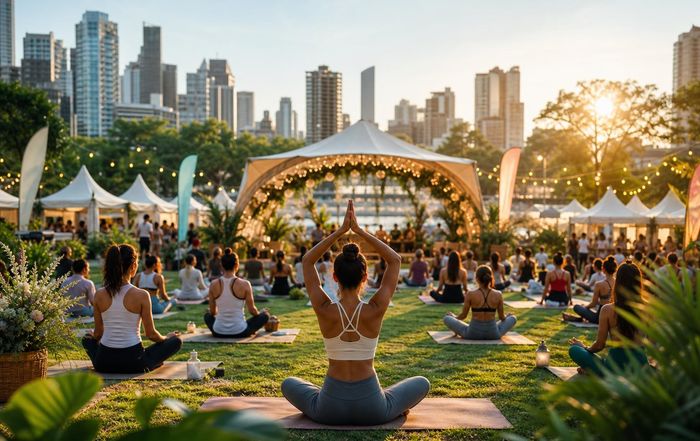
What distinguishes the new wave of wellness festivals is their emphasis on curated, multi-sensory experiences designed for high-performing, time-constrained urban participants. In cities such as New York, London, Berlin, Toronto, Sydney, Singapore, and Seoul, festivals now occupy repurposed industrial spaces, waterfront parks, or mixed-use cultural districts, transforming them into immersive environments that blend fitness studios, recovery zones, nutrition markets, and performance stages.
A typical three-day festival might open with a high-energy sunrise workout led by a prominent trainer affiliated with Nike, Adidas, or Under Armour, followed by panel discussions on mental resilience featuring sports psychologists and executives from organizations like McKinsey & Company or Deloitte, who share research on burnout, hybrid work, and sustainable performance. For context on how employers are rethinking well-being, readers can review insights on workplace health from McKinsey & Company or explore mental health data from the OECD.
As the day progresses, attendees flow between sessions on strength training, mobility, breathwork, mindfulness, and biofeedback, while nutrition vendors offer functional foods, plant-based meals, and performance beverages informed by the latest research from institutions such as Harvard T.H. Chan School of Public Health. Learn more about evidence-based nutrition guidance from Harvard T.H. Chan School of Public Health. Evening programs often feature live music, DJ sets, or cultural performances, turning wellness into a social, aspirational lifestyle rather than a solitary obligation.
For FitPulseNews daily readers who follow sports and brands, the experiential design of these festivals is particularly relevant. Top-tier athletes from leagues in the United States, United Kingdom, Germany, and Australia increasingly appear as guest coaches or speakers, while global brands integrate product launches, interactive installations, and performance testing labs that allow attendees to trial smart wearables, recovery tech, and sports nutrition products in real-world conditions. The result is an environment where experience, expertise, and trust are built simultaneously through live demonstration and peer validation rather than traditional advertising.
The Business and Brand Strategy Behind Wellness Festivals
From a business perspective, wellness festivals have become strategic platforms for consumer engagement, product testing, and brand storytelling in ways that traditional trade shows or digital campaigns struggle to match. For global brands in fitness, sportswear, nutrition, and digital health, these events offer direct access to a concentrated audience of health-conscious, often high-income consumers in key markets such as New York, London, Berlin, Toronto, Vancouver, Sydney, Melbourne, Singapore, Seoul, and Tokyo.
Companies like Lululemon, Peloton, Equinox, Garmin, Whoop, and Oura have used urban wellness festivals to showcase new apparel lines, connected fitness equipment, and biometric tracking devices, often tying their activations to broader narratives around performance, recovery, and mental well-being. Research from organizations such as Statista and PwC has highlighted the rise of the global fitness and health-tech markets, and festivals provide a live laboratory where these trends can be observed and shaped. Readers interested in market data can explore health and fitness industry statistics via Statista.
For emerging wellness startups and challenger brands from Europe, North America, and Asia, festivals function as accelerators and deal-making hubs. Founders meet potential investors, distributors, and corporate partners in curated networking lounges or pitch sessions, while corporate innovation teams use the events to scout new concepts in fitness tech, mental health apps, and sustainable nutrition. This aligns closely with the innovation and entrepreneurship coverage that FitPulseNews brings through its top innovation and jobs sections, as wellness festivals increasingly intersect with venture capital, talent mobility, and the future of work.
Moreover, city governments and tourism boards from destinations such as Singapore, Dubai, Barcelona, Copenhagen, and Vancouver have begun to view wellness festivals as strategic assets for urban branding and economic development, positioning their cities as hubs for healthy living, sustainable design, and sports innovation. Learn more about how cities are integrating health into urban planning by exploring resources from UN-Habitat on UN-Habitat, which examines sustainable, people-centered city development.
Technology, Data, and the Quantified Festival Experience
Technology now shapes nearly every dimension of the wellness festival experience, from ticketing and scheduling to biometric tracking, content streaming, and post-event community building. In leading events across the United States, United Kingdom, Germany, Canada, Australia, Singapore, Japan, and South Korea, participants often arrive with multiple devices: smartwatches, heart-rate straps, recovery rings, and even continuous glucose monitors, all feeding into dashboards that translate a weekend of movement and recovery into granular data.
Partnerships between festival organizers and tech companies such as Apple, Google, Garmin, Whoop, and Oura enable attendees to track heart rate variability, sleep quality, training load, and stress responses across the event. Some festivals integrate with platforms like Strava to create community challenges and leaderboards, turning city streets and parks into live performance arenas. For readers interested in the broader digital-health context, the World Economic Forum provides ongoing analysis of health-tech trends and responsible innovation on World Economic Forum.
At the same time, virtual and hybrid formats have expanded the reach of wellness festivals beyond physical attendees. High-quality live streams and on-demand platforms allow participants in Brazil, South Africa, Malaysia, New Zealand, and other regions to join sessions hosted in London, Berlin, or New York, broadening both audience and impact. This digital layer is particularly relevant for FitPulseNews readers following technology and world trends, as it illustrates how wellness is becoming a borderless, data-driven service rather than a purely local, analog experience.
However, the integration of technology also raises questions of data privacy, algorithmic bias, and digital overreliance. Regulatory frameworks such as the EU's General Data Protection Regulation (GDPR) and evolving guidelines in countries like Canada, Australia, Singapore, and Japan are prompting organizers and tech partners to strengthen their data governance practices. The European Commission provides detailed guidance on data protection and digital rights on European Commission. For wellness festivals seeking to maintain trust, transparent data policies and clear communication about how biometric data is collected, stored, and used are no longer optional; they are foundational to long-term credibility.
Mental Health, Burnout, and the Corporate Wellness Imperative
One of the most significant shifts in wellness festivals between 2020 and 2026 has been the elevation of mental health and emotional resilience from secondary topics to central pillars of programming. As professionals across North America, Europe, and Asia-Pacific grapple with hybrid work models, economic uncertainty, and constant digital stimulation, festivals have become safe spaces to address burnout, anxiety, and identity in ways that traditional corporate environments often cannot.
Sessions led by clinical psychologists, neuroscientists, and mental health advocates now sit alongside fitness classes and nutrition workshops, with content informed by research from institutions such as Mayo Clinic, Cleveland Clinic, and King's College London. Readers can explore clinically grounded perspectives on mental well-being and stress management via Mayo Clinic. Corporate leaders, HR executives, and sports coaches are increasingly attending these sessions to understand how to build cultures that support psychological safety, recovery, and sustainable performance, topics that resonate strongly with the leadership and workplace coverage on FitPulseNews.
The normalization of mental health conversations within festival environments has also had a ripple effect on sports culture. Elite athletes from leagues in the United States, United Kingdom, Germany, Italy, Spain, France, Australia, and Japan have used festival stages to speak openly about pressure, injury, and identity beyond competition, reinforcing the message that mental health is a core component of performance rather than a separate, stigmatized issue. Organizations such as the National Institutes of Health and NHS England provide extensive resources on mental health science and care models, accessible via National Institutes of Health and NHS.
For FitPulseNews cool and happy readers who track wellness and culture, this shift underscores a broader cultural realignment: wellness is no longer framed solely as physical fitness or aesthetic optimization but as a multidimensional, lifelong practice that integrates body, mind, relationships, and purpose.
Nutrition, Performance, and the Food Systems Conversation
Nutrition has always been a pillar of wellness, but the current generation of urban wellness festivals is reframing food as both a performance tool and a sustainability issue. In cities across the United States, Canada, United Kingdom, Germany, France, Italy, Spain, Netherlands, Sweden, Norway, Denmark, Singapore, and Japan, festival food halls now feature a curated mix of plant-based kitchens, functional snacks, adaptogenic beverages, and regenerative agriculture showcases.
Chefs, dietitians, sports nutritionists, and food-tech founders collaborate on sessions that explore topics such as protein quality, gut health, metabolic flexibility, and the environmental impact of dietary choices, often drawing on research from organizations like the EAT-Lancet Commission and FAO. Readers interested in the intersection of food, health, and planetary boundaries can learn more on EAT Forum and FAO. Attendees are encouraged to experiment with new foods, measure their responses via wearable data, and reflect on how nutrition strategies can support both personal performance and global sustainability.
This integrated approach aligns closely with FitPulseNews unique coverage of nutrition and environment, as it connects individual choices in New York, London, or Berlin with agricultural practices in Brazil, South Africa, Thailand, Malaysia, and beyond. For brands in the functional food and beverage space, festivals provide an unparalleled opportunity to demonstrate product efficacy and build trust through direct sampling, expert endorsements, and transparent sourcing stories.
Sustainability and the Responsible Festival Mandate
As wellness festivals grow in scale and frequency, their environmental and social impact has come under greater scrutiny. A gathering that promotes holistic well-being but leaves a heavy carbon footprint or generates large volumes of waste risks undermining its own message. In response, leading organizers in Europe, North America, and Asia-Pacific are adopting more rigorous sustainability standards, from low-waste catering and reusable service ware to renewable energy sourcing and sustainable transport incentives.
Frameworks from organizations like the United Nations Environment Programme (UNEP) and ISO are being used to guide greener event design, while cities such as Copenhagen, Amsterdam, Vancouver, and Sydney are incentivizing low-impact festivals as part of their climate strategies. Learn more about sustainable event practices and climate-conscious urban planning on UNEP. For readers who follow sustainability and events on FitPulseNews, this evolution is particularly important, as it demonstrates how wellness culture is increasingly linked with environmental stewardship and responsible consumption.
Social sustainability is also gaining prominence. Festivals are being challenged to ensure that their programming, pricing, and partnerships do not cater exclusively to affluent urban elites. Scholarships, community days, and collaborations with local NGOs in cities from Johannesburg and Cape Town to São Paulo, Bangkok, and Kuala Lumpur are becoming more common, as organizers seek to broaden access and reflect the diversity of the communities they operate in. This aligns with global conversations on equity and inclusion in health, as highlighted by organizations such as the World Bank and UNDP, accessible via World Bank and UNDP.
The Future of Wellness Festivals: Convergence, Professionalization, and Global Reach
Looking ahead from 2026, wellness festivals appear poised to become even more integrated into the fabric of global cities and the wider wellness economy. Several trends are likely to shape their evolution in the coming years, all of which intersect directly with the editorial priorities of FitPulseNews across news, business, and innovation.
First, there is a clear movement toward convergence, with wellness festivals increasingly merging with sports tournaments, technology expos, and business conferences. Hybrid events where a major marathon, a sports analytics summit, and a wellness festival share infrastructure and programming are already emerging in cities like Boston, Berlin, London, and Tokyo, reflecting a recognition that performance, data, and well-being are deeply intertwined.
Second, professionalization is accelerating. As corporate sponsorships and ticket revenues grow, organizers are investing more heavily in content quality, scientific advisory boards, and outcome measurement. Partnerships with academic institutions, health systems, and research organizations are becoming more common, allowing festivals to generate data on physical activity, mental health, and behavior change that can inform public policy and corporate strategy. Institutions such as Stanford Medicine and Imperial College London are increasingly involved in such collaborations, offering a bridge between evidence and experience. Readers can explore health research insights via Stanford Medicine.
Third, global reach is expanding. While the United States, United Kingdom, Germany, Canada, and Australia remain key hubs, growth in Asia and Africa is accelerating, with cities like Singapore, Bangkok, Seoul, Tokyo, Johannesburg, and Cape Town developing their own distinctive festival formats that blend local culture, traditional practices, and contemporary science. This geographic diversification will likely create new opportunities for cross-border collaboration, talent exchange, and brand expansion, themes that FitPulseNews will continue to track for its worldwide audience through its totally new world and sports coverage.
What It Means for the Audience Here?
For the sporty community that turns to FitPulseNews for insight at the intersection of fitness, health, sports, brands, technology, wellness, and business, the rise of wellness festivals across global cities is more than a lifestyle trend; it is a strategic shift in how societies organize around performance, purpose, and well-being. These events are becoming crucibles where new fitness modalities are tested, health technologies are validated, sports cultures are reimagined, and brands earn or lose trust in front of highly informed, data-literate participants.
Whether a reader is a fitness professional in New York, a health-tech founder in Berlin, a sports executive in London, a nutrition innovator in Singapore, or a corporate leader in Toronto seeking to redesign employee well-being programs, wellness festivals now offer both inspiration and practical frameworks that can be applied beyond the festival grounds. They embody an emerging model of urban life in which health is not an afterthought to business and culture but a central organizing principle that connects individuals, organizations, and cities.
As this landscape continues to evolve, FitPulseNews will remain positioned bang at the center of the conversation, examining how wellness festivals influence training methods, health outcomes, sports performance, brand strategies, cultural narratives, and the future of work, while providing readers with the context and analysis needed to navigate and shape this rapidly expanding global ecosystem. For ongoing coverage across fitness, health, sports, technology, culture, environment, and business, fit fan readers can explore the full editorial offering at FitPulseNews.