
How Flexible Training Plans Improve Fitness Adherence
The Adherence Problem at the Heart of Modern Fitness
The global fitness industry is more technologically advanced, data-driven, and accessible than at any point in history, yet long-term adherence to exercise remains stubbornly low across most regions, from North America and Europe to Asia-Pacific and beyond. Health authorities such as the World Health Organization have repeatedly emphasized that physical inactivity is a leading risk factor for noncommunicable diseases, and despite the proliferation of digital fitness platforms, connected wearables, and boutique studios, the majority of adults still struggle to maintain consistent training routines over months and years. For the readers of FitPulseNews, who track the intersection of performance, health, and business, the central question is no longer whether people understand that exercise is important, but why so many fail to stay engaged, and what can be done to change that pattern in a sustainable way.
The emerging consensus across sports science, behavioral psychology, and digital health innovation is that flexibility in training design is not a luxury or a secondary feature but a primary driver of adherence. Rigid, one-size-fits-all workout plans, once considered the hallmark of discipline and commitment, are increasingly viewed as misaligned with the realities of modern work patterns, family responsibilities, travel schedules, and fluctuating mental and physical energy. As we continue to cover recent changes in fitness and wellness, flexible training plans are emerging as a key framework for helping individuals transform good intentions into consistent action, from recreational runners in the United States to busy executives in Singapore and student athletes in Germany.
From Rigid Programs to Adaptive Frameworks
Historically, training programs in both recreational and competitive environments were built around fixed calendars and uniform progressions, often derived from traditional periodization models developed in Eastern European sport systems and subsequently adopted by coaches worldwide. These programs tended to prescribe exact sessions, volumes, and intensities weeks or even months in advance, with little room for modification in response to stress, travel, illness, or changing goals. While such approaches helped build champions in structured environments, they translated poorly to the unpredictable routines of everyday professionals and families across North America, Europe, and Asia.
The shift toward flexible training plans has been accelerated by several converging trends. First, the rise of evidence-based coaching, supported by organizations such as the American College of Sports Medicine, has highlighted the importance of individual variability in training response, recovery capacity, and injury risk. Second, the explosion of wearable devices and platforms like Garmin, Apple, and Whoop has given individuals real-time feedback on sleep, heart rate variability, and daily strain, making it clear that the "same session on paper" can be a very different physiological load on different days. Third, the remote and hybrid work revolution since 2020 has blurred the boundaries between professional and personal time, making fixed training windows less realistic for many workers in the United States, the United Kingdom, Germany, and beyond.
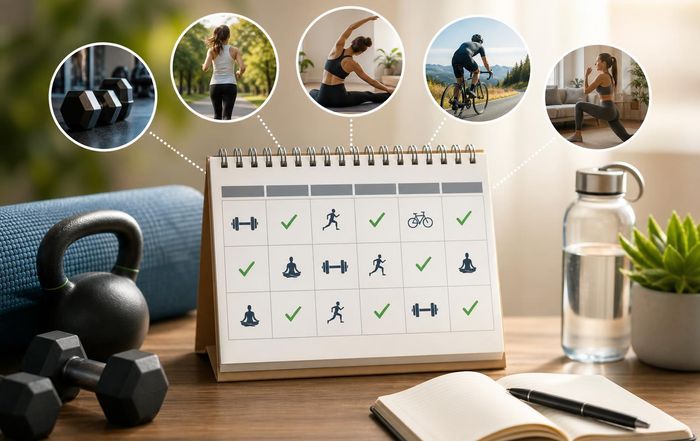
Flexible training plans respond to these realities by replacing rigid prescriptions with adaptable frameworks that prioritize core training principles while allowing for day-to-day and week-to-week adjustments. These plans are structured but not brittle; they maintain a clear trajectory toward performance or health goals while recognizing that life events, stress, and energy levels are not fully predictable. For readers following the evolution of innovation and technology on FitPulseNews, this transition mirrors broader shifts in business and product development, where agile methods and iterative cycles have replaced static, long-range blueprints in dynamic environments.
Behavioral Science: Why Flexibility Drives Consistency
The underlying mechanisms that make flexible plans more sustainable can be understood through the lens of behavioral science and habit formation. Leading institutions such as Harvard Medical School and Stanford Medicine have long emphasized that successful behavior change depends not only on motivation and knowledge but also on designing environments and systems that make the desired behavior easier, more rewarding, and less fragile under stress. In the context of exercise, rigid plans are fragile because they often turn minor disruptions into perceived failures; a missed workout or deviation from the plan can trigger guilt, self-criticism, and eventually abandonment.
Flexible training plans, by contrast, are built on the expectation that disruption will occur and incorporate contingencies from the outset. Instead of a binary success-or-failure mindset, they promote a spectrum of options, such as "gold, silver, and bronze" versions of a session depending on time and energy, or alternative training modes when travel or injury makes the original session impractical. This approach aligns with habit research from organizations like University College London, which shows that habits are more likely to endure when they can be performed under varying conditions rather than only in ideal circumstances. Learn more about the psychology of habit formation and health behavior at https://www.apa.org.
For busy professionals in cities such as London, New York, Singapore, and Sydney, whose schedules can shift rapidly due to meetings, travel, or family demands, the ability to scale a planned 60-minute strength session down to a focused 20-minute bodyweight circuit without feeling that the day is "lost" is decisive. This shift from perfectionism to pragmatic consistency is at the core of improved adherence, and it is one of the themes that FitPulseNews regularly explores in its coverage of health and culture, where the interplay between expectations, identity, and behavior is especially visible.
Data, Wearables, and the Rise of Adaptive Training
The technological landscape of 2026 has made flexible training more intelligent and responsive than ever before. Where earlier generations of flexible plans depended largely on subjective self-assessment, today's adaptive systems integrate multiple data streams to adjust training loads and content in near real time. Platforms backed by major players such as Apple, Google, and Samsung, as well as specialist performance companies, are increasingly using heart rate variability, sleep metrics, and movement data to recommend modifications to planned sessions, reducing the risk of overtraining and under-recovery.
Organizations like the Mayo Clinic have highlighted the value of monitoring recovery markers to prevent injury and burnout, particularly in populations balancing demanding careers with ambitious fitness goals. By integrating these insights, modern training apps can suggest, for example, that a planned high-intensity interval session for a recreational runner in Toronto be replaced with a low-intensity recovery run if sleep has been poor and stress markers are elevated, thereby preserving the training habit while protecting long-term health and performance. Learn more about the role of heart rate variability and recovery metrics in exercise at https://www.clevelandclinic.org.
For FitPulseNews readers who follow sports performance and cutting-edge training methodologies, this adaptive approach represents a convergence of elite sports science and everyday wellness. Professional teams in Europe, Asia, and North America have used individualized load management for years, drawing on data from GPS tracking, force plates, and biochemical markers to adjust training. Now, similar principles are being translated into consumer-facing platforms, enabling executives in Frankfurt, entrepreneurs in Singapore, and remote workers in Cape Town to benefit from a lighter but still meaningful version of the same logic.
Personalization Across Fitness Levels and Life Stages
One of the most significant advantages of flexible training plans is their ability to adapt not only to day-to-day variability but also to broader differences in fitness level, age, and life stage. A rigid plan built for a 25-year-old recreational athlete with no major responsibilities will rarely suit a 45-year-old parent managing a demanding role in a multinational company, even if their nominal goals, such as completing a half marathon or maintaining a certain level of strength, appear similar. Leading health organizations like the National Institutes of Health and NHS England emphasize the importance of tailoring exercise recommendations to individual health status, comorbidities, and risk profiles, and flexible plans are uniquely positioned to operationalize this guidance in practice.
For younger professionals in rapidly growing economies such as India, Brazil, and South Africa, flexibility often means accommodating irregular work hours, shift patterns, and commuting challenges while still building a consistent exercise habit. For older adults in countries like Japan, Germany, and Italy, flexibility may focus on adjusting intensity and impact to protect joint health, manage cardiovascular risk, and maintain functional capacity. Learn more about age-specific exercise recommendations at https://www.cdc.gov and https://www.nhs.uk.
On FitPulseNews, where coverage spans nutrition, wellness, and business, the intersection between life stage, career trajectory, and training design is a recurring theme. A flexible plan for a mid-career manager in Toronto or Zurich, for example, might prioritize shorter, higher-yield sessions during peak project periods, shifting toward longer, more varied training blocks during quieter seasons, while also integrating travel-friendly routines that can be performed in hotel rooms or small fitness centers without specialized equipment.
Integrating Mental Health and Stress Management
By 2026, the relationship between mental health, stress, and physical performance is widely recognized across healthcare systems and corporate wellness programs in the United States, Europe, and Asia-Pacific. Organizations such as the World Economic Forum and OECD have highlighted the economic and societal costs of burnout, anxiety, and depression, and companies are increasingly investing in integrated wellbeing strategies that combine exercise, sleep, nutrition, and psychological support. Flexible training plans fit naturally into this holistic model because they can be adjusted to support, rather than compete with, mental health priorities.
On days when stress and emotional load are high, insisting on a maximal-effort workout can be counterproductive, potentially exacerbating fatigue and negative mood. A flexible plan allows for substituting a high-intensity interval session with a lower-intensity activity such as walking, mobility work, or mindful movement, which still supports health while providing a psychological release valve. Learn more about the benefits of exercise for mental health at https://www.nimh.nih.gov and https://www.mind.org.uk.
For readers of FitPulseNews, who often operate at the intersection of performance culture and high-pressure work environments, this integration is particularly relevant. The capacity to adjust training in response to stress, sleep, and mood without abandoning the broader commitment to movement is a defining feature of sustainable adherence. It helps reframe exercise from yet another rigid obligation into a flexible tool for self-regulation, resilience, and long-term wellbeing, aligning closely with the publication's focus on wellness and human performance.
Flexible Training in the Era of Hybrid Work and Global Mobility
The global shift toward hybrid and remote work has not only changed where people exercise but also how they structure their days, reshaping the rhythms of fitness behavior across continents. In cities such as New York, London, Berlin, Singapore, and Melbourne, traditional pre- and post-commute gym visits have given way to more fluid patterns of mid-day sessions, home-based workouts, and micro-break movement. Flexible training plans are uniquely suited to this new landscape, enabling individuals to distribute activity across the day rather than concentrating it into a single block that may be vulnerable to last-minute cancellations or overruns.
International travel, which has rebounded strongly in 2025 and 2026 for both business and leisure, introduces additional complexity, particularly for professionals who move frequently between time zones in Europe, Asia, and North America. Rigid plans tend to break down under jet lag, variable hotel facilities, and unpredictable meeting schedules, whereas flexible frameworks can incorporate travel-specific modules that emphasize mobility, circulation, and sleep support. Learn more about managing jet lag and circadian rhythms at https://www.sleepfoundation.org.
On FitPulseNews, where world and news coverage intersects with fitness, these global patterns are central to understanding adherence. A flexible plan for a consultant flying regularly between New York, London, and Dubai, for example, might include alternate "travel weeks" with lower total volume but higher emphasis on walking, light strength, and recovery, followed by "home weeks" with more structured training. This design protects the continuity of the habit even when optimal training conditions are not available, a key factor in long-term success.
The Business of Flexibility: Brands, Platforms, and New Models
The commercial fitness ecosystem has been quick to recognize that flexibility is not only a behavioral advantage but also a strategic differentiator. Major digital fitness platforms, connected equipment manufacturers, and boutique studio chains in the United States, Europe, and Asia are redesigning their offerings around modularity, personalization, and hybrid access. Brands such as Peloton, Les Mills, and Nike have expanded their libraries of short, stackable workouts, multi-level options, and guided programs that allow users to swap sessions while maintaining progression toward specific goals. Learn more about the evolution of connected fitness and digital platforms at https://www.mckinsey.com and https://www2.deloitte.com.
For FitPulseNews, which closely tracks brands, technology, and business, this shift reflects a broader movement toward user-centric design in health and fitness products. Subscription models increasingly emphasize value through adaptability rather than sheer volume of content, and corporate wellness providers are incorporating flexible training templates into employee programs across sectors, from finance and technology to manufacturing and professional services. These developments are particularly pronounced in markets such as the United States, the United Kingdom, Germany, Canada, and Australia, but are rapidly expanding into Asia, Latin America, and Africa as digital infrastructure and disposable income grow.
The employment landscape is also evolving, as fitness professionals, coaches, and trainers adapt to delivering flexible, hybrid services that combine in-person sessions with remote guidance and app-based support. Learn more about emerging roles and skills in the fitness and wellness labor market at https://www.ilo.org and explore how these shifts intersect with the future of jobs and careers in health and performance.
Nutrition, Recovery, and Holistic Flexibility
While training is the focal point of most fitness discussions, adherence is heavily influenced by how well exercise plans integrate with nutrition, sleep, and recovery practices. Flexible training frameworks increasingly incorporate guidance on how to adjust fueling and recovery strategies in parallel with changes in session type, duration, and intensity. On days when a planned high-intensity workout is scaled down to a moderate session, for example, carbohydrate intake and total caloric load may also be adjusted to align with the new energy demands, preserving body composition and performance goals without imposing unnecessary rigidity.
Global authorities such as the Academy of Nutrition and Dietetics and European Food Safety Authority emphasize the importance of context-specific nutrition strategies for athletes and active individuals, and flexible plans can translate these principles into practical choices that accommodate cultural, regional, and personal preferences. Learn more about evidence-based sports nutrition at https://www.gssiweb.org and https://www.eatright.org. For FitPulseNews readers who follow nutrition and health, this integration of training and fueling reinforces the notion that flexibility does not mean randomness or lack of structure, but rather coordinated adaptation across multiple domains of lifestyle.
Recovery practices, including sleep hygiene, mobility work, and stress management techniques, are also being woven into flexible training plans as integral components rather than optional extras. This holistic approach recognizes that adherence is easier when individuals feel physically and mentally better as a result of their routines, rather than chronically fatigued or sore. By explicitly scheduling lighter training days, active recovery, and sleep-supportive behaviors, flexible plans help sustain motivation and reduce dropout risk, particularly in high-stress populations such as executives, entrepreneurs, and healthcare professionals across North America, Europe, and Asia.
Culture, Identity, and the Shift from Discipline to Sustainability
The cultural narrative surrounding fitness has undergone a quiet but significant transformation over the past decade. In many markets, particularly in the United States, United Kingdom, and Australia, the earlier emphasis on extreme discipline, "no days off" mentality, and all-or-nothing challenges is giving way to a more nuanced view that values sustainability, self-knowledge, and long-term health. This shift is evident in social media conversations, corporate wellness messaging, and public health campaigns, many of which now highlight balance, recovery, and mental wellbeing alongside performance and aesthetics.
Flexible training plans align naturally with this evolving culture because they embody the idea that consistency over years is more valuable than perfection over weeks. They invite individuals to see themselves as adaptable athletes of life, capable of adjusting their routines intelligently to match changing circumstances, rather than as rigid followers of a static script. For FitPulseNews, with its broad coverage of culture, sports, and innovation, this cultural evolution is central to understanding how fitness practices are embedded in the wider fabric of modern life, from urban professionals in Paris and Tokyo to digital nomads in Bangkok and remote workers in rural Canada.
In regions where traditional views of discipline and conformity remain strong, such as parts of East Asia, the integration of flexibility into training culture may proceed more gradually, but the underlying drivers-unpredictable work demands, aging populations, and rising awareness of mental health-are similar. As global platforms, international brands, and cross-border media coverage continue to diffuse new models of training, the concept of flexible, adaptive fitness is likely to become increasingly normalized across continents.
Looking Ahead: Flexible Training as a Foundation for Lifelong Movement
As of 2026, the evidence from behavioral science, digital health data, and global user experience suggests that flexible training plans are not a passing trend but a foundational strategy for improving fitness adherence worldwide. They address the core barriers that have historically undermined long-term engagement-rigidity, perfectionism, and misalignment with real-world constraints-by offering structured yet adaptable frameworks that honor both physiological principles and human variability. For fans of FitPulseNews, who are attuned to daily shifts in fitness, health, business, and global news, this evolution represents a convergence of science, technology, and culture with tangible implications for individuals, organizations, and societies.
In the coming years, advances in artificial intelligence, biometric sensing, and behavioral analytics are likely to make flexible training even more precise and personalized, with systems that learn from each individual's responses over time and adjust not only sessions but also broader lifestyle recommendations. Learn more about the future of AI in health and performance at https://www.who.int and https://www.healthit.gov. At the same time, the core principle will remain simple and human: training plans that bend rather than break are the ones that people can live with, through career shifts, family changes, travel, illness, and aging.
For a global audience spanning the United States, Europe, Asia, Africa, and the Americas, the path to better adherence is not about finding the single perfect program but about embracing flexible structures that support movement as a lifelong practice rather than a short-term project. As the hard-working, editorial team continues to chronicle this shift across its reporting areas, from wellness and sports to technology and innovation, flexible training plans will remain a central lens through which to understand how individuals and organizations are redefining what it means to be fit, healthy, and resilient in an increasingly complex world.