

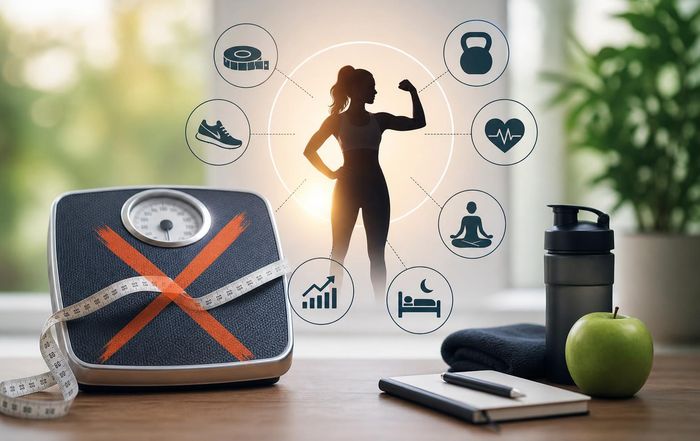
How to Measure Fitness Progress Beyond the Bathroom Scale
For many people, progress in the gym is still defined by a single number: body weight. Yet health and performance are far more complex than what a bathroom scale can capture. Someone can lose weight while getting weaker, or gain weight while dramatically improving cardiovascular fitness, blood markers, and long-term health. As strength coaches, sports scientists, and public health agencies increasingly emphasize, the scale is only one small data point-and often a misleading one.
This article explores practical, science-grounded ways to track fitness progress that go well beyond body weight. It focuses on measures that everyday exercisers can realistically use, without lab equipment, while still borrowing concepts from sports science and clinical practice. The goal is not to discard the scale entirely, but to put it in its proper place among many other indicators of fitness, health, and well-being.
Why the scale is such a limited measure
Body weight changes are influenced by a long list of factors that have little to do with fat loss or fitness. Short-term shifts in water retention, glycogen storage, sodium intake, menstrual cycle phase, alcohol consumption, stress, and even the timing of your last meal can move the needle on the scale by one to three kilograms (or more) in a matter of days. This volatility is one reason organizations such as the World Health Organization and U.S. Centers for Disease Control and Prevention caution against using weight alone as a health indicator, instead emphasizing body composition, metabolic markers, and physical activity levels as key components of overall health. You can explore these broader health dimensions through sources like the WHO and CDC.
Another issue is that weight says nothing about what you are made of. Two people can weigh 80 kilograms, yet one may have significantly more muscle and less fat than the other. Even within the same individual, weight can stay roughly constant while body fat percentage drops and muscle mass increases-often a desirable outcome for both performance and long-term health. This is why many sports medicine and exercise physiology organizations, such as the American College of Sports Medicine and National Strength and Conditioning Association, encourage more nuanced ways of tracking progress.
Finally, focusing narrowly on the scale can distort behavior. People may resort to crash dieting, extreme dehydration, or unsustainable exercise volumes just to drive down a number, even if those tactics harm strength, energy, and mental health. Shifting attention toward performance, health markers, and quality of life can help align day-to-day habits with long-term well-being rather than short-term weight fluctuations.
Performance metrics: What your body can actually do
One of the clearest ways to see fitness progress is to track what your body can do over time. Performance metrics are central in sports science and are increasingly being adopted by recreational exercisers who care about strength, endurance, and functional capacity, not only aesthetics.
In strength training, simple measures such as how much weight you can lift for a given number of repetitions are informative. Tracking your 5-rep max in the squat, bench press, or deadlift, or monitoring how many push-ups, pull-ups, or bodyweight squats you can perform, reveals changes in muscular strength and neuromuscular efficiency. If you are following a structured program, you can log these numbers alongside your workouts; over weeks and months, trends in these logs often tell a more encouraging story than the scale. For readers interested in structured resistance training, resources on fitness and sports performance can provide additional context.
Cardiovascular performance is equally revealing. Common field tests include timed runs (such as a 1.5-mile or 5 km run), cycling time trials, or rowing machine distances completed in a set time. Improvements in pace at the same perceived effort, or lower heart rate at a given speed, suggest better aerobic conditioning. Many runners and cyclists monitor these trends with GPS watches and heart rate monitors, while rowers and CrossFit athletes may use ergometer metrics. For more structured health and fitness guidance, organizations like the American Heart Association and NHS provide public recommendations on aerobic activity and fitness testing that can be adapted to different levels.
Performance metrics can also be functional and task-based, especially for people whose main goal is living well rather than competing. Being able to carry heavier groceries without stopping, climb more flights of stairs before getting winded, or play longer with children without back pain are all meaningful changes. These are harder to quantify precisely but can be tracked informally through journaling or periodic self-assessments. Combining quantitative measures (reps, times, distances) with qualitative observations (how workouts feel, how daily tasks change) offers a fuller picture of fitness than weight alone.
Body composition and circumferences: Shape over scale
While the scale tells you how much you weigh, body composition measures estimate what proportion of that weight is fat, muscle, bone, and other tissue. For many health and performance goals, changes in these proportions matter more than absolute weight. A person can gain two kilograms yet improve health markers if that gain is primarily lean mass accompanied by a reduction in visceral fat.
There are several ways to approximate body composition outside of a lab. Skinfold calipers, when used by a trained professional, can estimate body fat percentage reasonably well, though accuracy depends heavily on technique. Bioelectrical impedance analysis (BIA) devices, commonly found in smart scales and some gym machines, send a small electrical current through the body and estimate composition based on resistance. These devices can be inconsistent from day to day due to hydration and other factors, but if you follow consistent testing conditions (same time of day, similar hydration, no recent exercise), the trends over weeks may still be useful. More advanced options, like dual-energy X-ray absorptiometry (DEXA) scans or air displacement plethysmography, are often used in research and clinical settings, and information on these methods can be found through institutions like the Mayo Clinic and Cleveland Clinic.
However, many people do not need detailed body fat percentage readings to track meaningful change. Circumference measurements with a simple tape measure can be surprisingly powerful. Tracking waist, hip, thigh, upper arm, and chest measurements every four to six weeks can show shifts in body shape that the scale may obscure. For cardiometabolic health, waist circumference is particularly important: larger waist size is associated with higher risk of type 2 diabetes and cardiovascular disease, independent of BMI. Public health agencies such as the National Institutes of Health and European Society of Cardiology highlight waist measurements and waist-to-hip ratios as practical tools for assessing central adiposity.
From a practical standpoint, it helps to standardize how and when you measure. Take circumferences at the same anatomical landmarks, on the same side of the body, at the same time of day, and ideally under similar conditions (for example, after using the bathroom and before eating breakfast). Record the data in a training log or app. Over several months, these numbers often reveal progress that weight alone would miss-for instance, a stable or slightly higher weight alongside a smaller waist and larger thighs, suggesting fat loss and muscle gain.
Health markers: Inside the body's response to training
Beyond performance and body shape, internal health markers provide another dimension of progress. Regular physical activity can improve blood pressure, resting heart rate, blood lipid profiles, blood glucose control, and inflammatory markers, even if body weight changes modestly. These improvements are strongly linked with reduced long-term risk of cardiovascular disease, stroke, and some cancers, making them central to public health recommendations from bodies such as the World Health Organization and Public Health England.
Many of these markers require collaboration with healthcare professionals. Periodic check-ups that include blood pressure measurement, fasting glucose, HbA1c (for longer-term blood sugar control), and a lipid panel (HDL, LDL, triglycerides) can help you and your clinician see how training and nutrition habits are influencing health. People with existing conditions-such as hypertension, type 2 diabetes, or metabolic syndrome-often see clinically meaningful improvements from consistent exercise, even in the absence of substantial weight loss. This effect is one reason why exercise is sometimes referred to as "medicine" in initiatives supported by organizations like Exercise is Medicine and various national medical associations.
Some health markers can be tracked at home. Resting heart rate, measured upon waking before getting out of bed, can decrease over time as cardiovascular fitness improves. Heart rate variability (HRV), which many wearables estimate, reflects the balance between sympathetic and parasympathetic nervous system activity and can provide clues about recovery, stress, and readiness to train. While HRV data from consumer devices are imperfect, trends can still be informative when interpreted cautiously. For people interested in the intersection of health technology and training, the technology and innovation sections offer broader coverage of wearables and digital health tools.
It is important to interpret health markers with professional guidance, especially if you have underlying medical conditions or are taking medications. Exercise can affect blood pressure and glucose responses in complex ways, and what looks like a concerning change in isolation might be expected and safe when viewed in context. Whenever possible, integrate your fitness tracking with routine medical care rather than treating them as separate worlds.
Movement quality, mobility, and pain
Fitness is not only about how much you can lift or how fast you can run; it is also about how well you move and how your body feels doing it. Improvements in joint mobility, movement control, and pain levels are often among the most meaningful-and overlooked-signs of progress, particularly for people starting exercise after a sedentary period or recovering from injury.
Movement quality can be assessed in simple ways. Can you perform a deep bodyweight squat without your heels lifting or your back rounding excessively? Can you raise your arms overhead without arching your lower back? Can you hinge at the hips without feeling strain in your lower spine? Physical therapists and strength coaches often use standardized movement screens, but informal self-checks or video recordings of your own movements can also reveal changes over time. Resources on wellness and health frequently highlight these functional aspects because they translate directly into daily life.
Mobility gains may show up as increased range of motion in key joints, reduced stiffness upon waking, or the ability to assume positions that were previously uncomfortable or impossible. For older adults in particular, maintaining hip, ankle, and thoracic spine mobility is strongly associated with independence and reduced fall risk. Organizations focused on aging and physical activity, such as the National Institute on Aging, emphasize balance, flexibility, and strength as core components of healthy aging alongside traditional cardiovascular fitness.
Pain levels are another critical dimension. For people with chronic low back pain, knee osteoarthritis, or other musculoskeletal conditions, a well-designed exercise program can reduce pain intensity and frequency. Tracking pain on a simple 0-10 scale in a training diary, noting what activities aggravate or relieve symptoms, can help you and your healthcare team evaluate the impact of your fitness efforts. A reduction in pain medication use, improved sleep due to less discomfort, or the ability to tolerate longer periods of activity without flare-ups are all signs of progress, even if they do not appear on the scale or in body fat percentages.
Energy, mood, and cognitive performance
Exercise research increasingly highlights the impact of physical activity on mental health and cognitive function. Large reviews and position statements from organizations such as the American Psychological Association and World Psychiatric Association point to consistent benefits of regular exercise for symptoms of depression and anxiety, stress management, and overall quality of life. These changes are subjective, but that does not make them less real or less important.
Tracking energy levels across the day can reveal how your training and recovery habits are affecting you. Many people notice that, after an initial adaptation period, regular exercise improves daytime alertness, reduces mid-afternoon slumps, and helps regulate sleep. You can rate daily energy on a simple scale in a journal or app, noting how it correlates with training intensity, nutrition, and stress. Over time, patterns emerge: perhaps three strength sessions per week leave you feeling strong and energetic, while five intense sessions lead to burnout.
Mood and stress can be monitored in similar ways. Some people use brief mood questionnaires, while others jot down simple descriptors such as "calm," "tense," "optimistic," or "overwhelmed." For individuals using exercise to support mental health, these notes can be as valuable as performance metrics. If your mood stabilizes, anxiety episodes become less frequent, or you feel more resilient in the face of everyday challenges, those are meaningful outcomes of your fitness work.
Cognitive performance-such as focus, memory, and processing speed-can also improve with regular aerobic and resistance training, as highlighted by research summarized by institutions like Harvard Medical School and Stanford Medicine. While you may not perform formal cognitive tests, you might notice that tasks requiring sustained concentration feel easier, or that you are more productive at work after morning workouts. Recording these impressions periodically can help you appreciate benefits that the scale can never capture.
Lifestyle habits that quietly signal progress
Sometimes, the most powerful signs of fitness progress are embedded in daily routines rather than in test results. These habit-level changes are easy to overlook because they accumulate gradually, but they often underpin long-term success.
Sleep is a prime example. Many people who start exercising regularly report improved sleep onset, deeper sleep, or more consistent wake times. Using a simple sleep log-recording bedtime, wake time, and perceived sleep quality-can reveal patterns and improvements over months. While wearable sleep trackers from companies like Garmin, Apple, Oura, and Fitbit offer additional data, even basic self-reports can be informative. Articles on wellness and health often emphasize sleep as a foundational factor that interacts with training, nutrition, and recovery.
Nutrition habits also tend to evolve with sustained fitness efforts. You may gradually shift toward higher-protein meals, more fruits and vegetables, or more consistent hydration without consciously "going on a diet." One way to track this progress is through periodic food diaries, not to count every calorie indefinitely, but to spot broad trends: more home-cooked meals, fewer sugar-sweetened beverages, better pre-workout fueling. Guidance from organizations like the Academy of Nutrition and Dietetics and public health agencies can help you evaluate whether these changes align with evidence-based dietary patterns. Our coverage of nutrition often explores how these patterns intersect with performance and health goals.
Behavioral consistency is another underappreciated marker. Being able to maintain a training routine through busy work periods, family obligations, and travel indicates that fitness has become integrated into your identity and lifestyle. Tracking weekly training frequency-how many sessions you complete, not just what they contain-can be a powerful motivator. For many people, the shift from sporadic bursts of effort to steady, moderate consistency is the real turning point in their fitness journey.
Building a personal progress dashboard
Given the wide range of possible metrics, it can be tempting to track everything and drown in data. A more sustainable approach is to build a simple "progress dashboard" tailored to your goals, preferences, and available tools. This dashboard might include a handful of performance metrics, one or two body composition or circumference measures, a few health markers (tracked with your clinician), and some subjective indicators like energy and mood.
For someone focused on general health, a dashboard might include: weekly step count, minutes of moderate-to-vigorous activity, resting heart rate, waist circumference, and a simple 0-10 energy score. A strength-oriented individual might prioritize: key lift numbers, number of push-ups or pull-ups, thigh and arm circumferences, and perceived recovery. Endurance athletes could track: race times or time trial performances, weekly training volume, HRV trends, and sleep quality. The specific combination matters less than choosing measures that are meaningful, feasible to monitor, and aligned with your goals.
It also helps to decide in advance how often you will review each metric. Performance tests and circumference measurements might be done monthly, while resting heart rate and sleep can be checked weekly, and body weight-if you choose to track it-might be averaged over several daily readings to smooth out fluctuations. Periodic reviews (for example, every 8-12 weeks) are often more useful than daily scrutiny, allowing enough time for real physiological change to occur. For more context on how fitness fits into long-term health and lifestyle trends, the health, fitness, and world news sections can provide additional perspectives.
Rethinking success in your training journey
When success is defined narrowly by the bathroom scale, many meaningful wins go unrecognized. A person may feel discouraged because their weight has barely budged, even as they sleep better, walk faster, lift heavier, manage stress more effectively, and improve blood pressure. By broadening the lens and incorporating performance, body composition, health markers, movement quality, mental well-being, and lifestyle habits, it becomes easier to see the full impact of consistent training.
This broader perspective does not mean that weight is irrelevant, especially for individuals with medical conditions where weight reduction can play a role. But it does place weight in context, as one data point among many rather than the sole arbiter of success. For those designing or revising their own fitness plans, considering a more diverse set of progress indicators can make training more motivating, more sustainable, and more closely aligned with long-term health.