
The Growth of Social Sports and Community Leagues
A New Era of Social Fitness
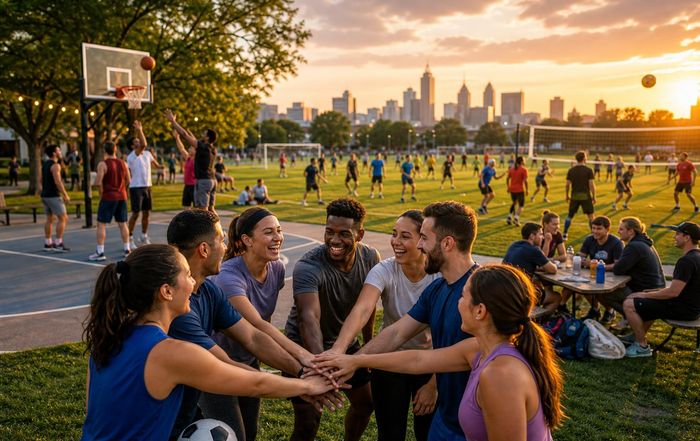
Social sports and community leagues have moved from the margins of recreational life to the center of how millions of people across the world choose to stay active, connect with others, and manage stress in an increasingly digital and fragmented age. What was once a niche after-work pastime has evolved into a global movement that blends fitness, wellness, entertainment, and local culture, reshaping how individuals in cities from New York and London to Singapore and São Paulo think about sport, community, and identity. For healthy story readers online today, this transformation is not simply a trend story; it is a window into the future of how active lifestyles, social connection, and business innovation intersect in ways that are redefining the broader ecosystem of health, sports, brands, and technology.
As global health organizations continue to stress the importance of regular physical activity for preventing chronic disease and improving mental health, the rise of accessible, low-barrier social sports has emerged as a powerful complement to traditional gyms and elite competition. The World Health Organization notes that insufficient physical activity remains a leading risk factor for mortality, particularly in urbanized regions where sedentary work and screen-based leisure dominate daily routines, and yet the most effective interventions increasingly appear to be those that are inherently social, enjoyable, and embedded in local communities rather than imposed as top-down health directives. Learn more about global physical activity trends on the World Health Organization website.
For FitPulseNews, which tracks the intersection of fitness, health, and culture worldwide, the story of social sports is also a story about how people in major markets such as the United States, United Kingdom, Germany, Canada, Australia, and across Asia and Europe are redefining the meaning of participation, competition, and belonging in the post-pandemic era.
From Competitive Leagues to Inclusive Play
Historically, organized sport was dominated by competitive structures, from school and university teams to national federations and elite clubs, with performance, rankings, and trophies at the center of the experience. While these structures remain vital for talent development and professional pathways, they have often excluded adults who lack the time, confidence, or skill level to commit to formal training and competition. In contrast, the new generation of social sports leagues prioritizes inclusivity, flexible scheduling, and social interaction, often positioning winning as secondary to participation, enjoyment, and community-building.
Organizations such as ZogSports in the United States and Go Mammoth in the United Kingdom pioneered this model over the past decade, offering mixed-gender leagues in sports like soccer, volleyball, basketball, and kickball, with post-game gatherings at local venues built into the experience. Their early success demonstrated that there was a substantial audience of adults seeking structured yet relaxed opportunities to play, meet new people, and integrate physical activity into their social lives. Broader research from bodies such as Sport England and Sport Australia has since reinforced the idea that social formats are particularly effective at engaging women, older adults, and people returning to sport after long gaps, especially when the focus is on enjoyment and confidence rather than performance metrics. Readers can explore these participation trends through resources from Sport England and Sport Australia.
In cities like Berlin, Toronto, and Singapore, local councils and national sports agencies have increasingly recognized social leagues as strategic partners in meeting participation targets, improving community cohesion, and utilizing public facilities more efficiently. For FitPulseNews, which closely follows sports and world developments, the shift from purely competitive structures to more holistic, community-oriented formats reflects a broader cultural rebalancing in which sport is once again seen as a lifelong, accessible practice rather than a narrow pathway reserved for the young and highly skilled.
Technology as the Invisible League Manager
The rapid growth of social sports since the early 2020s would be difficult to imagine without the parallel rise of digital platforms that simplify everything from team formation and scheduling to payments, communication, and performance tracking. App-based ecosystems now act as invisible league managers, allowing individuals to join teams with a few taps, receive real-time updates, and integrate their sporting activity into broader wellness and productivity tools. Companies such as TeamSnap, Stack Sports, and Playtomic have built robust software infrastructures that serve both grassroots players and facility operators, enabling scalable, data-driven management of leagues, bookings, and community engagement. To understand how these tools are transforming participation, readers can explore insights from TeamSnap and Stack Sports.
In parallel, the consumer technology giants have embedded physical activity more deeply into everyday digital life. Platforms like Apple Health, Google Fit, and Samsung Health integrate seamlessly with wearables and smartphones, offering users a holistic view of their movement, sleep, and stress patterns, while also enabling social challenges, shared goals, and gamified streaks that extend beyond individual workouts into team-based experiences. Learn more about integrated health tracking via Apple's health features and Google Fit.
For community leagues, this convergence of sports management software and consumer health platforms creates powerful opportunities to personalize experiences and increase retention. Teams can track attendance, celebrate milestones, and share highlights across social media, while leagues can analyze participation data to refine formats, optimize schedules, and identify underserved neighborhoods or demographics. For FitPulseNews readers interested in technology and innovation, the evolution of these digital infrastructures illustrates how data, user experience design, and behavioral science are being deployed to make physical activity more frictionless, engaging, and socially rewarding.
The Wellness Imperative: Mental Health, Loneliness, and Belonging
The global mental health crisis, intensified by the COVID-19 pandemic and ongoing economic uncertainty, has been one of the most powerful drivers of interest in social sports. Research from organizations such as the American Psychological Association and Mental Health Foundation in the United Kingdom has consistently shown that regular physical activity, particularly in group settings, can reduce symptoms of anxiety and depression, improve sleep, and foster a sense of belonging that counters loneliness and social isolation. Readers can review these findings through the American Psychological Association and the Mental Health Foundation.
Unlike solitary gym workouts, social sports inherently combine movement with face-to-face interaction, shared goals, and mutual support. For busy professionals in cities like New York, London, Sydney, and Singapore, a weekly recreational soccer or basketball game becomes a protected time slot where they can disconnect from screens, engage physically, and reconnect with a stable group of teammates, many of whom become friends, business contacts, or informal support networks. The sense of continuity, ritual, and identity that emerges from playing on the same team season after season is particularly valuable in transient urban environments where people frequently move jobs, neighborhoods, or even countries.
For FitPulseNews, whose readers increasingly see wellness as a holistic concept that spans physical, mental, and social health, the rise of community leagues represents a practical, scalable answer to the question of how to embed well-being into everyday life. Rather than treating mental health purely as an individual therapeutic challenge, social sports provide a collective, preventative context in which positive habits, resilience, and interpersonal trust can be built over time. Readers interested in broader wellness perspectives can explore the platform's dedicated wellness and health coverage.
Corporate Wellness and the Business of Play
As employers across North America, Europe, and Asia grapple with burnout, talent retention, and hybrid work models, social sports have become a strategic component of corporate wellness and culture initiatives. Forward-thinking organizations now see recreational leagues not merely as perks, but as investments in employee engagement, cross-functional collaboration, and brand differentiation in competitive labor markets. Studies from the Harvard T.H. Chan School of Public Health and Gallup have highlighted the link between physical activity, engagement, and productivity, with active employees reporting higher job satisfaction and lower absenteeism. Learn more about these connections through the Harvard T.H. Chan School of Public Health and Gallup's workplace research.
In practice, companies sponsor internal leagues, subsidize team registrations in external community competitions, or partner with providers to offer multi-sport programs tailored to diverse employee interests and fitness levels. Hybrid work has also led to creative solutions, such as regional leagues that bring together remote employees for periodic in-person tournaments or local "micro-leagues" aligned to coworking hubs. For global employers with offices in cities like London, Berlin, Toronto, and Singapore, harmonized social sports programs can reinforce a shared culture while respecting local preferences and facility availability.
From a business perspective, the ecosystem around social sports is expanding rapidly. Facility operators, apparel brands, beverage companies, and digital platforms all see community leagues as valuable touchpoints for product trials, brand storytelling, and data-driven marketing. For readers who follow business and brands on FitPulseNews, the growth of social sports illustrates how lifestyle-oriented experiences are becoming critical arenas for customer engagement, particularly among younger demographics who value authenticity, community impact, and active living over traditional advertising channels.
Brands, Sponsorship, and Authentic Engagement
Major sportswear and lifestyle brands have increasingly turned their attention to social sports as they seek more authentic, grassroots ways to connect with consumers. Companies such as Nike, Adidas, and Puma have long invested in elite athletes and professional leagues, yet their strategies now also include sponsoring urban community tournaments, co-creating local futsal or basketball courts, and developing products tailored to casual, multi-sport participants rather than solely high-performance athletes. Readers can explore how these brands frame participation and inclusivity through resources from Nike and Adidas.
This shift reflects a broader realignment in brand strategy, where the emphasis is on facilitating experiences rather than simply selling products. For example, social leagues in cities like Amsterdam, Melbourne, and Vancouver increasingly feature branded jerseys, digital leaderboards, and on-site activations that blend sport, music, and local food culture, creating immersive micro-festivals that extend far beyond the game itself. Beverage companies, health snack brands, and emerging wellness startups also see these environments as ideal for sampling and feedback, tying their products to moments of achievement, camaraderie, and post-game recovery.
For FitPulseNews, which closely monitors the evolving relationship between brands, culture, and events, the rise of social sports underscores how marketing is becoming less about interrupting consumers and more about co-creating value in spaces where they are already deeply engaged. The most successful brand partnerships tend to respect the grassroots nature of these communities, supporting accessibility, diversity, and local identity rather than imposing top-down imagery or messaging.
Nutrition, Recovery, and the Everyday Athlete
The expansion of social sports has also reshaped the landscape of everyday sports nutrition and recovery practices. As more adults in regions such as North America, Europe, and Asia-Pacific commit to regular league play, they increasingly seek practical guidance on how to fuel performance, support joint health, and manage recovery while juggling work and family responsibilities. Organizations like the Academy of Nutrition and Dietetics and the International Society of Sports Nutrition provide evidence-based frameworks for balancing macronutrients, hydration, and timing, helping recreational athletes make informed choices about pre-game meals, post-game recovery, and supplementation. Learn more about these recommendations from the Academy of Nutrition and Dietetics and the International Society of Sports Nutrition.
In many cities, this demand has spurred the growth of health-focused cafes, meal services, and functional beverages located near popular sports facilities, offering convenient options tailored to the rhythms of evening leagues and weekend tournaments. For FitPulseNews readers who follow nutrition and health, this convergence of social sport and everyday nutrition signals a shift in how people understand the relationship between food, performance, and long-term well-being, moving away from restrictive dieting toward more sustainable, activity-aligned habits.
Recovery has similarly gained prominence, with recreational players adopting practices once associated primarily with elite athletes, such as mobility work, sleep optimization, and periodized training. Resources from organizations like the National Sleep Foundation and the Mayo Clinic have helped popularize the understanding that sleep quality, stress management, and gradual progression are as important as the games themselves in preventing injury and maintaining participation over time. Readers can explore these topics through the National Sleep Foundation and the Mayo Clinic.
Urban Design, Environment, and Sustainable Facilities
The physical growth of social sports has had tangible implications for urban design and environmental planning. As demand for accessible playing spaces has increased, cities across Europe, North America, and Asia have invested in multi-use courts, rooftop pitches, and repurposed industrial spaces that can host a variety of sports and community events. These developments align with broader sustainability and livability agendas, in which active transport, green spaces, and community hubs are seen as critical components of resilient, healthy cities. Learn more about sustainable urban design approaches from resources such as UN-Habitat and the World Resources Institute, accessible through UN-Habitat and World Resources Institute.
Facility operators and league organizers are increasingly aware that environmental stewardship is not optional, particularly as extreme weather events and energy costs affect scheduling and infrastructure. Many new or renovated facilities now incorporate LED lighting, water-efficient surfaces, and smart energy management systems, while also promoting recycling, low-waste events, and active transport options for participants. For readers of FitPulseNews who track environment and sustainability issues, social sports offer a compelling example of how community recreation can align with climate-conscious design and operations.
In regions such as Scandinavia, the Netherlands, and parts of East Asia, municipalities have gone further by integrating social sports into broader climate resilience strategies, using flood-resilient parks, multi-purpose green spaces, and flexible public facilities that can serve as both recreation hubs and emergency gathering points. This linkage between play, resilience, and sustainability underscores the multifaceted value of investing in community sport infrastructure.
Global Reach and Local Identity
One of the most striking aspects of the social sports movement in 2026 is its truly global reach, combined with a strong emphasis on local identity. In the United States and Canada, recreational leagues in basketball, softball, and flag football dominate, while in the United Kingdom, Germany, Spain, and Italy, small-sided football remains the anchor of social sport culture. In countries such as Japan, South Korea, and Singapore, badminton, futsal, and indoor sports are particularly popular due to space constraints and climate considerations, while in Brazil, South Africa, and Thailand, outdoor formats and beach sports thrive in coastal and warm-weather regions.
Despite these differences, common themes emerge: flexible scheduling to accommodate busy urban lives, inclusive formats that welcome a broad range of ages and abilities, and a desire to celebrate local music, food, and culture alongside the games themselves. For global readers of FitPulseNews, this combination of shared structure and local flavor means that social sport can serve as a bridge when relocating for work, studying abroad, or traveling, offering a ready-made pathway into new communities and cultures.
International organizations such as the International Olympic Committee and UNESCO have also recognized the role of grassroots sport in promoting social cohesion, gender equality, and youth development, particularly in emerging markets and underserved communities. Their initiatives and frameworks, accessible via the International Olympic Committee and UNESCO's sport programs, underscore how community leagues can be leveraged not only for recreation but also for education, social inclusion, and peace-building.
Jobs, Entrepreneurship, and the Future of the Sector
The expansion of social sports and community leagues has created a diverse range of new employment and entrepreneurial opportunities, from league managers and referees to digital product designers, content creators, and performance coaches specializing in adult recreational athletes. Startups are emerging across North America, Europe, and Asia to address niche needs, such as women-only leagues, adaptive sports for people with disabilities, and cross-border tournament platforms that connect cities and regions. For readers tracking jobs and emerging career paths, this sector represents a dynamic intersection of sport, technology, hospitality, and community development.
Educational institutions and certification bodies are beginning to respond, developing programs that combine sports management, digital marketing, and community engagement, while also emphasizing ethical considerations such as safeguarding, inclusivity, and data privacy. As leagues become more sophisticated and data-driven, there is growing demand for professionals who can interpret participation metrics, design engaging formats, and build long-term partnerships with brands and municipalities without compromising the grassroots ethos that makes social sports so attractive.
For FitPulseNews, which chronicles innovation and news across the global active lifestyle landscape, the professionalization of this sector signals that social sports are not a passing fad but a durable, evolving pillar of the sports and wellness economy.
What Comes Next for Social Sports and Community Leagues
Running ahead, the trajectory of social sports points toward deeper integration with digital ecosystems, greater emphasis on inclusivity and mental health, and continued expansion into new markets across Africa, South America, and Southeast Asia. Advances in technologies such as computer vision, low-cost sensors, and augmented reality may enable richer performance feedback and immersive storytelling for recreational players, while developments in urban planning and sustainable design will shape the spaces where communities gather to play.
At the same time, the core value proposition of social sports is likely to remain remarkably simple and human: structured opportunities for people to move, connect, and belong in an era defined by digital overload and social fragmentation. For readers of FitPulseNews, the growth of community leagues is not just a sports story; it is a lens on how societies across the world are renegotiating the balance between work and life, individual achievement and collective joy, and virtual interaction and real-world presence.
As FitPulseNews continues to cover news across fitness, sports, wellness, and the broader world of active living, social sports and community leagues will remain central to understanding how people from New York to Nairobi, London to Lisbon, and Seoul to São Paulo are redefining what it means to live healthy, connected, and purposeful lives in the middle of the twenty-first century.