

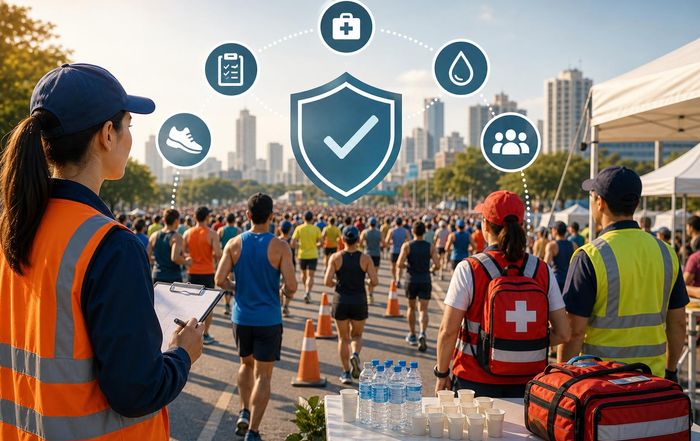
Planning Safer Mass-Participation Running Events
Large running events have become a fixture of the global fitness calendar, from five-kilometre charity runs to city marathons attracting tens of thousands of participants. These events can inspire healthier lifestyles, raise substantial funds for good causes, and showcase host cities. They also bring complex safety challenges: crowd surges at the start, heat stress on unseasonably warm days, medical emergencies among inexperienced runners, traffic conflicts, and, in recent years, heightened concerns about security and public health.
For organizers, coaches, and city officials, the central question is not whether these events should grow, but how to make them safer without losing their energy and accessibility. That means treating safety as a system that starts months before race day and continues until the last barrier is removed.
This sporty page explores the key elements of safer planning for mass-participation running events, drawing on guidance from sports medicine bodies, public-health agencies, and major race organizers. It focuses on practical decisions that materially affect risk: course design, environmental conditions, medical coverage, crowd management, communication, and post-event review.
Understanding the real risks in big running events
Evidence from large races suggests that serious incidents are relatively rare, but they do occur and are often preventable. Studies published through organizations such as the American College of Cardiology and sports medicine journals have found that sudden cardiac arrest during marathons and half-marathons is uncommon, but the absolute numbers rise with very large fields. Meanwhile, far more frequent are heat-related illnesses, dehydration and overhydration, musculoskeletal injuries, and trip-and-fall accidents.
Public-health agencies like the World Health Organization (WHO) and national bodies such as the Centers for Disease Control and Prevention (CDC) emphasize that extreme heat, air pollution, and infectious disease dynamics have become increasingly important considerations for mass gatherings. For races, this translates into a need to monitor weather, air quality, and broader health advisories closely in the weeks and days before the event, and to have clear thresholds for modifying or cancelling.
For runners, the risk profile varies by age, fitness, and underlying health. Recreational participants may underestimate the strain of long-distance running, especially if they have not followed structured training or if they are influenced by social pressure to "just get around." That makes pre-event education as important as on-course medical care. Fitness-focused readers planning to race can benefit from understanding how organizers think about safety, while event teams can better support participants by providing evidence-based training and health guidance, not just marketing content.
For those interested in the health and performance side, related coverage on fitness, health, and sports can provide deeper context on training loads, recovery, and injury prevention.
Course design: safety starts with the route
The route is one of the most powerful tools for risk reduction. A well-designed course can ease medical access, reduce crowding, and minimize interactions with vehicles, while a poorly chosen one can amplify every other challenge.
Organizers and city planners typically work together to identify roads that can be fully or largely closed, with priority given to sections that allow emergency vehicles to enter and exit quickly. Loops and out-and-back segments should be evaluated for pinch points, sharp turns, and narrow bridges that could cause bottlenecks or falls. International governing bodies such as World Athletics (worldathletics.org) provide technical guidance for course measurement and layout, but local context-road conditions, construction, and typical traffic patterns-remains crucial.
Safety-oriented course design also considers gradient and surface. Steep downhills can increase the risk of falls and musculoskeletal strain, while long, exposed sections without shade can raise heat load on runners. Where possible, courses should allow for regular access points where medical teams can position themselves and where runners can safely withdraw. In some cities, planners have re-routed traditional courses slightly to pass closer to hospitals or to avoid areas with limited vehicle access, accepting minor changes in scenery in exchange for faster response times.
Crowd management experts often recommend separating start and finish areas to distribute foot traffic and reduce congestion, especially when events include multiple distances or waves. For very large races, staggered starts based on predicted pace can substantially reduce density at early kilometres, lowering the risk of trips and collisions. These operational choices tie directly into broader concerns about urban mobility and environment, since extended road closures and diversions affect residents, public transport, and air quality.
Weather, heat, and environmental monitoring
Environmental conditions are among the most dynamic risks in endurance events. Heat waves, sudden cold snaps, thunderstorms, and poor air quality can all change the safety calculus in the days before a race. Sports medicine organizations, such as the American College of Sports Medicine (ACSM), provide position stands on exercising in the heat and cold, emphasizing the importance of monitoring both temperature and humidity.
Many large races now use heat-stress scales like the Wet Bulb Globe Temperature (WBGT) to categorize risk levels and guide decisions on hydration, pacing advice, and potential course or start-time modifications. In practice, this might mean moving a start earlier in the morning, adding extra water and cooling stations, increasing on-course medical staffing, or, in extreme cases, shortening or cancelling the event. Communication around these decisions needs to be transparent and anchored in recognizable standards, so that participants accept them as evidence-based rather than arbitrary.
Air quality has also become more prominent, especially in cities affected by wildfire smoke, industrial pollution, or seasonal smog. Agencies such as the U.S. Environmental Protection Agency (EPA) and similar bodies in Europe and Asia publish real-time air-quality indices. Organizers can set pre-defined thresholds for when to issue health warnings, advise vulnerable participants (for example, those with asthma or cardiovascular disease) to reconsider racing, or alter the event. Linking to public-health sources and including simple explanations of air-quality categories in pre-race materials can help runners make informed decisions.
Climate-related changes also intersect with longer-term sustainability goals. Some events are shifting dates to cooler seasons, investing in more shade structures, or redesigning finish areas to avoid large asphalt "heat islands." These adaptations improve safety while also acknowledging broader environmental trends.
Medical planning: systems, staffing, and protocols
A visible medical presence on race day is only the tip of a much larger planning process. Major events typically develop a medical operations plan months in advance, often in partnership with local hospitals, emergency medical services, and volunteer medical organizations. Guidance from bodies like the International Marathon Medical Directors Association and national emergency-medicine societies emphasizes three pillars: adequate resources, clear protocols, and effective coordination.
Resource planning begins with estimating the number and type of medical encounters based on field size, distance, expected weather, and participant profile. A city marathon with 30,000 runners on a hot day may require dozens of on-course medical posts, mobile bike or cart teams, roving physicians, and a fully equipped medical tent at the finish. Equipment ranges from basic first-aid supplies to automated external defibrillators (AEDs), advanced airway tools, and cooling equipment such as ice baths or cooling blankets for exertional heat stroke, in line with recommendations from organizations like the National Athletic Trainers' Association (NATA).
Protocols cover triage, treatment pathways, and transport. Medical teams need clear criteria for when to treat on site, when to transport to hospital, and how to prioritize in the event of multiple simultaneous emergencies. Pre-event training exercises-tabletop simulations or live drills-help staff and volunteers practice scenarios, from a single cardiac arrest to a mass-casualty situation. Coordination is typically managed from a central command center where medical leaders, race directors, law enforcement, and transport officials can share real-time information.
For runners themselves, understanding the signs of heat illness, hyponatremia, and cardiac distress is critical. Pre-race materials can link to resources from organizations such as the American Heart Association (heart.org) or national health services, highlighting early warning signs and encouraging participants not to ignore chest pain, dizziness, or severe shortness of breath. This kind of education connects directly with broader coverage of wellness and preventive health.
Crowd safety, security, and transport
Beyond the runners, mass-participation events involve spectators, volunteers, vendors, and local residents. Crowd safety and security planning now routinely involves law enforcement and, in some jurisdictions, national security agencies. High-profile incidents at sporting events over the past decade have led to more structured risk assessments, informed by national guidance on crowded places and major events.
Crowd-management specialists consider entry and exit flows, queuing systems for bag checks, placement of barriers and fencing, and signage that can be easily understood by international participants. Lessons from stadium safety research, such as those referenced by the UK Sports Grounds Safety Authority (sgsa.org.uk), stress that poorly managed queues and bottlenecks can create dangerous pressure even without malicious intent. For running events, this means designing wide, clearly signed approaches to the start, avoiding dead ends, and ensuring that emergency exits and routes remain unobstructed.
Transport is another crucial piece. Coordination with public-transport authorities can reduce private-car use and congestion, lowering collision risk and improving air quality around the course. Clear communication about road closures, diversions, and recommended routes helps residents plan their day and reduces the temptation for drivers to ignore barriers. Some cities integrate major races into broader world and events strategies, using them as opportunities to pilot active-mobility initiatives or temporary car-free zones.
Security planning increasingly leverages technology, from CCTV and drones to radio networks and mass-notification tools. However, experts caution that technology should support, not replace, human observation and simple, robust procedures. Volunteers and staff need to know how to report suspicious activity or unsafe crowding and to whom, with minimal ambiguity.
Communication with runners and the public
Effective communication is one of the most cost-efficient safety tools available to event organizers. It shapes expectations, supports informed decision-making, and can prevent risky behaviour long before race day. Communication also intersects with culture: how an event frames pacing, cut-offs, and medical support can either encourage responsible participation or inadvertently glorify pushing through danger.
Pre-event emails, websites, and apps should provide clear information on training recommendations, medical screening, and what to do if a runner feels unwell in the weeks before the race. Linking to reputable resources such as national health services, Mayo Clinic (mayoclinic.org), or NHS (nhs.uk) can help participants interpret symptoms and decide whether to seek medical advice. Organizers can also encourage runners to consult healthcare professionals before attempting long distances, especially if they have known risk factors.
On race day, signage, public-address announcements, and real-time app notifications can reinforce hydration guidance, heat warnings, and cut-off times. Many large events now use colour-coded systems to indicate heat risk or course status, a practice that aligns with broader emergency-management principles promoted by agencies such as the Federal Emergency Management Agency (FEMA). Messaging should be concise and multilingual where necessary, with icons or graphics to assist runners who may not speak the host country's language.
Post-event communication is often overlooked but important. Follow-up emails can provide guidance on recovery, signs of delayed complications (such as rhabdomyolysis), and when to seek medical help. They can also invite feedback on perceived safety, helping organizers identify blind spots. This continuous loop of communication supports a culture in which safety is shared between organizers and participants rather than seen as a one-way responsibility.
Technology and data: tools, not shortcuts
Digital tools are reshaping how events are planned and managed, but they also introduce new responsibilities. Registration platforms now routinely collect data on age, predicted finish time, and sometimes medical information. Wearable devices and running apps generate detailed training data, while timing chips and GPS trackers provide real-time information on runner location and pace.
Used carefully, this data can improve safety. For example, wave-start seeding based on predicted pace can be refined using historical finish times, reducing congestion and collisions. Real-time tracking can help medical teams locate a runner who has stopped or slowed dramatically. Some events partner with technology firms to build dashboards for operations centers, integrating weather data, crowd density, and medical reports.
However, privacy and data-protection regulations-such as the EU's General Data Protection Regulation (GDPR) and similar frameworks elsewhere-place strict limits on how personal data can be collected, stored, and shared. Organizers must be transparent about what information they gather, why they need it, and how long they will keep it. Sensitive medical details, in particular, should be handled with heightened care and only accessed by qualified personnel. Consulting official guidance from regulators and data-protection authorities is essential for compliance.
Technology can also support broader health and fitness goals. Some events integrate training plans, educational content on nutrition, and injury-prevention advice into their apps, helping participants arrive at the start line better prepared. Here, too, quality control matters: information should be consistent with established science and, where possible, aligned with reputable bodies such as Sports Dietitians (sportsdietitians.com.au) or national sports institutes.
Inclusion, accessibility, and vulnerable participants
Safer events are also more inclusive events. Planning for safety involves recognizing that participants have different needs and vulnerabilities, including older adults, first-time runners, people with disabilities, and those with chronic health conditions. Organizations such as World Para Athletics and national disability-sport bodies provide guidance on inclusive race design, from accessible start areas and toilets to support for wheelchair athletes and visually impaired runners.
Accessibility considerations intersect with safety in practical ways. Start corrals and finish areas should be navigable for participants using mobility aids. Medical staff should be briefed on common assistive devices and communication needs. Course design should minimize steep cambers or surfaces that pose particular risks to wheelchair users. Clear information on available accommodations-such as guide-runner programs or early-start options-helps participants decide whether an event is appropriate for them.
Language, culture, and socioeconomic factors also influence risk. Runners who are less familiar with medical terminology or who come from cultures where seeking help is stigmatized may under-report symptoms. Providing simple, jargon-free safety messages, translated materials, and visible, approachable volunteers can mitigate these barriers. Some events partner with community organizations to reach under-represented groups, aligning with broader culture and health-equity goals.
Balancing participation growth with safety and sustainability
Many cities view mass-participation running events as economic and branding opportunities, driving tourism, sponsorship, and media coverage. Yet there is a point at which adding more participants increases safety, environmental, and quality-of-experience pressures. Responsible growth means setting realistic caps based on route capacity, medical resources, and local infrastructure, rather than purely on demand.
From a sustainability and business perspective, long-term success depends on trust. Runners increasingly scrutinize how events handle issues such as heat, crowding, plastic waste, and equity. International initiatives like the UN Environment Programme (unenvironment.org) and sport-focused sustainability frameworks encourage organizers to consider carbon footprints, waste reduction, and community impact alongside safety. Measures such as reusable cup systems, improved public-transport integration, and community consultation can improve both safety and environmental performance.
Sponsorship and branding should align with safety messaging rather than overshadow it. Partners from sectors such as health care, insurance, and sports technology can contribute expertise and resources, but editorial control over safety decisions must remain with race directors and relevant authorities. Transparent reporting after major events-covering participation numbers, medical encounter statistics, and lessons learned-can reinforce accountability and support evidence-based improvements.
Learning from every race
No safety plan is perfect, and even well-run events will face incidents. What distinguishes resilient organizers is their commitment to structured learning. Post-event debriefs involving medical teams, volunteers, city agencies, and, where possible, participant representatives can identify what went well and what needs to change. This may include adjusting hydration-station spacing, revising signage, changing volunteer training, or re-evaluating cut-off times.
Some of the most influential improvements in race safety have emerged from collective learning across events and countries. Professional associations, academic researchers, and major organizers share findings at conferences and through publications hosted by bodies like World Athletics, ACSM, and national sports-medicine societies. Cities that host multiple events each year can build institutional memory, refining protocols and infrastructure over time.
For readers who participate in mass-participation running events, engaging with these processes can be as simple as completing post-race surveys honestly, reporting near-misses, and supporting evidence-based changes even when they are inconvenient. For organizers, the challenge is to treat each race as both a celebration and a live test of systems, with the humility to adapt.
As mass-participation running continues to grow worldwide, the path to safer events lies not in eliminating risk altogether-an impossible goal-but in understanding it deeply, planning systematically, and sharing responsibility among organizers, authorities, and runners themselves. When that happens, the finish-line medal represents not just personal achievement but a collective commitment to health, safety, and the communities that make these events possible.