

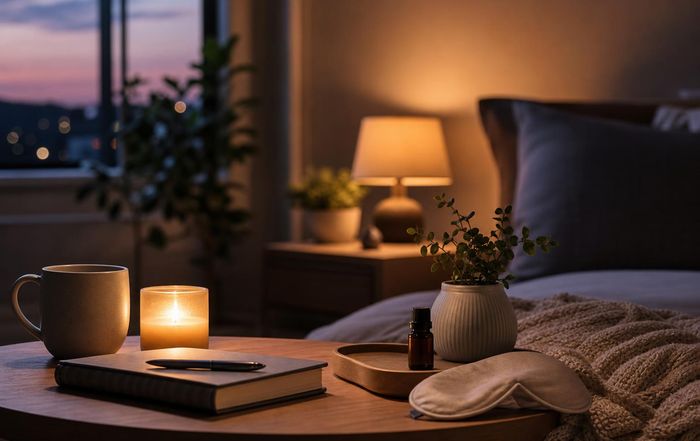
How to Build an Evening Routine That Actually Supports Recovery
Evenings can quietly make or break your progress in the gym. Training, nutrition, and supplements tend to get most of the attention, but what happens in the final three hours before bed has an outsized impact on muscle repair, hormonal balance, nervous system recovery, and how hard you can push tomorrow. Instead of treating night-time as a vague "wind-down," it's more useful to see it as a structured part of your training program: a recovery block with specific goals.
This evening guide breaks down how to design an evening routine that supports physical and mental recovery, explains the science in practical terms, and offers templates you can adapt whether you're lifting heavy, training for endurance, playing competitive sport, or simply trying to feel better and sleep deeper.
Why Evenings Matter So Much for Recovery
Recovery is not just about feeling rested; it is a biological process driven by hormones, nervous system shifts, and tissue repair. Much of that work is orchestrated during sleep, and your evening habits heavily influence how well that sleep does its job.
During deep sleep, the body increases secretion of growth hormone, which supports muscle repair and adaptation. Research referenced by organizations such as the National Sleep Foundation and American Academy of Sleep Medicine links adequate, high-quality sleep to better athletic performance, reaction time, injury risk, and immune function. Conversely, short or fragmented sleep has been associated with reduced glycogen restoration, impaired glucose metabolism, and increased perceived exertion in training the next day, as summarized by reviews from bodies like the American College of Sports Medicine at https://www.acsm.org/.
The evening window matters because it sets up the transition from a sympathetic "go" state (high alert, stress, training, screens, work) to a parasympathetic "rest-and-digest" state. That shift affects heart rate variability, inflammation, digestion, and the timing of melatonin release. Late caffeine, intense light exposure, heavy late meals, and emotionally charged screen time all interfere with this transition, which can delay sleep onset and reduce deep sleep, even if total sleep time looks similar.
For active people, that means an effective evening routine is less about perfection and more about consistently nudging several levers in the right direction: light, temperature, food timing, nervous system regulation, and mental decompression. Done well, it becomes as important to your progress as your program design or macros. Readers who want to explore sleep-health basics in more detail can find useful overviews at resources like the National Institutes of Health at https://www.nih.gov/ and the World Health Organization at https://www.who.int/.
Step One: Define Your Recovery Priorities
Before changing your evenings, it helps to decide what you're optimizing for. Recovery is multi-dimensional, and different training phases or lifestyles call for different emphases. A powerlifter in a heavy block might prioritize nervous system downregulation and joint care; an endurance athlete might focus more on glycogen replenishment and leg relief; someone under high work stress may need extra emphasis on mental decompression and sleep continuity.
Useful questions to clarify your priorities include: Are you currently more limited by soreness, fatigue, sleep quality, or motivation? Do you wake up during the night or struggle to fall asleep? Are you frequently wired late because of work or late training? Do you feel mentally exhausted but physically restless? Patterns in your answers help determine which elements of your evening routine deserve the most attention.
For example, if you consistently wake at 3-4 a.m. and feel "tired but wired," your routine might focus on earlier caffeine cutoffs, blood-sugar-stable evening nutrition, and calmer pre-bed mental inputs. If your main issue is heavy legs and joint stiffness after late sessions, you might lean more heavily on active recovery, mobility, and temperature strategies like contrast showers. Framing the routine as a response to your specific bottlenecks makes it easier to stick to than copying a generic checklist.
If you are also adjusting your training plan or overall wellness approach, pairing this reflection with broader resources on fitness and wellness can help you align your evening habits with your daytime workload and goals.
Timing Your Evening: The Three-Hour Framework
A practical way to structure your evening routine is to work backward from your target bedtime in roughly three phases: about three hours before bed, 60-90 minutes before, and the final 30 minutes. This is not rigid, but it provides a template you can adapt to different schedules, including shift work or late training.
Around three hours before bed, the focus is on finishing your last substantial meal, tapering caffeine, and starting to dim stimulation. Large, late meals can interfere with sleep quality and gastrointestinal comfort, especially high-fat, very spicy, or heavy meals. Many sports nutrition guidelines, including those summarized by the International Olympic Committee at https://olympics.com/, suggest completing main post-training meals several hours before sleep to allow digestion while still supporting recovery. Caffeine has a half-life of around five hours in many adults, so cutting off intake at least six hours before bed is a commonly recommended starting point, with some individuals needing longer.
The 60-90 minute window is where you begin to deliberately downshift: reducing bright and blue light exposure, lowering environmental noise, and swapping cognitively intense or emotionally activating tasks (work email, competitive gaming, heated debates) for low-stimulation activities. This is also an ideal window for light mobility work, stretching, or low-intensity walks if they relax rather than stimulate you. The final 30 minutes should be reserved for low-arousal, repeatable habits that tell your brain "we do this, then we sleep": hygiene, breathwork, reading, journaling, or a short body scan. Over time, this sequence becomes a powerful cue that speeds up sleep onset.
People dealing with irregular schedules or frequent travel can still apply the same principles, even if clock times shift. The key is protecting a consistent pre-sleep block where inputs become calmer, darker, cooler, and more predictable. For those juggling demanding jobs, browsing health and world coverage earlier in the day rather than at night can also reduce the tendency to doomscroll before bed.
Nutrition and Hydration: Supporting Recovery Without Sabotaging Sleep
Evening nutrition has two competing goals: fueling recovery and not disturbing your sleep. The balance is highly individual, but some evidence-informed principles can guide experimentation. After late training, a mixed meal containing both protein and carbohydrates supports muscle repair and glycogen replenishment. Positioning this meal one to three hours before bed works for many people, helping stabilize blood sugar overnight and reducing early-morning waking due to hunger. Organizations such as the International Society of Sports Nutrition at https://www.sportsnutritionsociety.org/ highlight the role of total daily intake and distribution, but also note that pre-sleep protein (for example, casein) can modestly support overnight muscle protein synthesis in some contexts.
However, very large or rich meals close to bedtime can lead to reflux, discomfort, or higher body temperature, all of which may fragment sleep. A useful compromise for many active people is a normal-sized dinner earlier in the evening, followed by a lighter snack containing protein and possibly some slow-digesting carbohydrate closer to bed if needed. Examples might include Greek yogurt with berries, cottage cheese with fruit, or a small portion of oats with milk. Those with conditions like reflux or irritable bowel syndrome will need to individualize further, ideally with medical or dietetic guidance.
Hydration is equally nuanced. Dehydration can impair recovery and performance, but heavy fluid loading late in the evening increases nighttime bathroom trips. Aiming to meet most of your fluid needs earlier in the day, then sipping rather than chugging in the final hours, helps strike a balance. Including electrolytes earlier, especially in hot climates or after long sessions, can also support fluid balance without overloading the bladder at night. For more detailed evidence on hydration and performance, readers may find the Gatorade Sports Science Institute at https://www.gssiweb.org/ and the European Hydration Institute at https://www.europeanhydrationinstitute.org/ informative, while broader nutrition coverage can help integrate evening strategies into your full-day diet.
Light, Temperature, and Environment: Setting the Stage for Sleep
The sleep environment is one of the most powerful and underused recovery tools. The brain relies on light cues to set circadian rhythms; bright and blue-enriched light in the evening delays melatonin production and pushes your internal clock later. Guidance from bodies like the Centers for Disease Control and Prevention at https://www.cdc.gov/ and Sleep Foundation at https://www.sleepfoundation.org/ consistently emphasizes dimming lights and reducing screen brightness in the hour or two before bed.
Practical steps include using warmer, lower-intensity lighting in the evening; enabling night-shift or blue-light-reduction modes on devices; and, when possible, avoiding very bright overhead lighting close to bedtime. Blue-light-blocking glasses have become popular; while evidence is mixed, some studies suggest modest benefits, particularly for people with high evening screen exposure. Regardless, reducing emotionally charged screen content (news, arguments, high-stakes work messages) often has as much impact as changing light spectrum.
Temperature also matters. The body's core temperature naturally drops as you fall asleep, and a cooler bedroom-often in the range of around 16-19°C (60-67°F) for many people-supports this process. A warm bath or shower 60-90 minutes before bed can paradoxically help by warming the skin and promoting subsequent heat loss. Athletes and active people may also benefit from using this time window for contrast showers or localized cooling of sore joints, provided it doesn't become too stimulating. For those interested in how environment intersects with broader sustainability concerns, efficient climate control and smart lighting can support both sleep and energy use.
Noise and clutter are additional, often overlooked factors. Chronic low-level noise, even if it doesn't fully wake you, can fragment sleep architecture. White noise machines, fans, or earplugs can help in noisy environments. A visually calm bedroom-tidy, with fewer work reminders-also reduces the risk that your mind shifts back into planning mode just as you lie down.
Nervous System Downregulation: From "On" to "Off"
Many physically active people do a good job with nutrition and training but struggle to "switch off" mentally. This is where deliberate nervous system downregulation becomes central. The autonomic nervous system has two main branches: the sympathetic (fight-or-flight) and parasympathetic (rest-and-digest). Intense training, work stress, and constant digital input all increase sympathetic tone. If this remains high into the night, you may fall asleep slowly, wake frequently, or feel unrefreshed even after adequate hours.
Breathwork is one of the simplest and best-studied tools for shifting toward parasympathetic dominance. Slow, diaphragmatic breathing, particularly with a longer exhale than inhale-for example, inhaling for four seconds and exhaling for six to eight-can lower heart rate and blood pressure and increase heart rate variability, a marker of recovery. Mindfulness practices and body scans, as promoted by institutions like Harvard Medical School at https://www.harvard.edu/, can further reduce rumination and pre-sleep cognitive arousal.
A short, consistent practice-5-10 minutes of breathing or guided relaxation-performed at the same time each night can be more effective than longer, sporadic efforts. Some people prefer gentle yoga or mobility sequences as part of this process, especially if they have tight hips, backs, or shoulders from training. Others benefit from journaling to externalize worries and to-do lists; writing them down signals that they are "handled" for now, reducing the urge to mentally rehearse them in bed.
If stress is driven by broader life pressures-workload, finances, big decisions-integrating evening downregulation with daytime strategies such as time-blocked work, exercise, and exposure to nature can be helpful. Readers interested in the mental side of performance and recovery may find more context in wellness and culture features that explore how lifestyle and stress interact.
Active Recovery: What to Do After Late Training
Not everyone can train in the morning or at lunch. For those who train in the evening, the challenge is maximizing recovery without staying wired too late. The post-workout period is an opportunity to blend active recovery with the start of your evening routine.
Immediately after training, a short cool-down-such as light cycling, walking, or dynamic stretching-helps gradually lower heart rate and redistribute blood from working muscles. This can be followed by a more deliberate mobility or stretching session at home, focusing on areas that tend to tighten up: hips, hamstrings, calves, thoracic spine, shoulders. For strength athletes, spending 10-15 minutes on easy range-of-motion work and low-intensity soft-tissue techniques can reduce next-day stiffness and joint discomfort.
Temperature-based recovery strategies-like contrast showers, cold water immersion, or local icing-are widely used but need nuance. Acute cold exposure may slightly blunt hypertrophy signals if used immediately after every strength session, according to some research summarized by groups like PubMed/NCBI at https://www.ncbi.nlm.nih.gov/. However, for athletes in high-load phases, tournaments, or hot environments, the trade-off may still be worthwhile for comfort and readiness. The key is aligning the tool with your goals: prioritize sleep and relaxation over extreme cold if the latter keeps you wired or uncomfortable.
For team-sport or endurance athletes, a short, easy walk or spin in the hour after training can also help with venous return and perceived leg heaviness. Just ensure intensity stays low; the purpose is circulation, not more training. To integrate these ideas with your overall plan, exploring sports and fitness content can help you see how different disciplines approach post-session routines.
Screen Time, Social Media, and Cognitive Load
Screens are not just sources of blue light; they are also sources of cognitive and emotional stimulation. Social feeds, news, emails, and fast-paced games all keep the brain in a state of vigilance. Even if you fall asleep quickly, this can reduce the proportion of deep sleep and increase nighttime awakenings. Organizations like the American Psychological Association at https://www.apa.org/ have highlighted links between heavy evening screen use, stress, and poor sleep, especially in younger populations.
A realistic approach is to set a "digital sunset"-a time after which you avoid high-arousal digital activities. That might mean no work email after 9 p.m., no social media in bed, or switching from fast, interactive content to slower, more passive formats like reading or listening to a calm podcast. If you use a device for guided breathwork or meditation, consider using audio-only or turning the screen brightness very low.
For people who rely on devices for work late into the evening, batching tasks can help: finish high-concentration work earlier, then leave lower-stakes, administrative tasks for later if absolutely necessary. Also, be mindful of the type of content you consume. Late-night exposure to alarming or emotionally charged news can spike stress just when you're trying to wind down. Scheduling your catch-up on news, business, or world stories earlier in the day can protect your wind-down window.
Supplements, Alcohol, and Sleep Aids: Proceed With Caution
Many people look to supplements or substances to "fix" sleep and recovery, but these often have trade-offs. Caffeine timing is the most obvious issue, but others matter too. Alcohol, for example, may help some people fall asleep faster, but it disrupts sleep architecture, reduces REM sleep, increases nighttime awakenings, and can worsen snoring and sleep apnea. Health agencies such as the World Health Organization and U.S. Department of Health and Human Services at https://www.hhs.gov/ caution against using alcohol as a sleep aid.
Over-the-counter sleep medications and some antihistamines can induce drowsiness but may lead to grogginess, tolerance, or dependence if used regularly, and they rarely improve sleep quality in a way that benefits long-term recovery. Melatonin supplements can be useful in specific situations-such as jet lag or circadian rhythm disorders-but dosing, timing, and quality control vary widely, and guidance from a healthcare professional is advisable.
Nutritional supplements marketed for sleep and recovery, including magnesium, glycine, or certain herbal compounds, show mixed but sometimes promising evidence, often in small studies. Before adding anything, it is wise to address foundational behaviors-light, routine, stress, and nutrition-and consult reputable sources such as the Office of Dietary Supplements at https://ods.od.nih.gov/ for safety information. In many cases, a well-designed evening routine reduces or eliminates the perceived need for pharmacological or supplemental sleep aids.
Building Your Personal Evening Routine: A Practical Template
Translating principles into practice means designing something you can realistically follow most nights, not a perfect but fragile ritual. One approach is to create a "default" routine for typical days and a shorter "compressed" version for late nights or travel.
A default routine might look like this: three hours before bed, finish your last substantial meal, taper fluids, and avoid new caffeine. Ninety minutes before bed, dim lights, wrap up demanding work, and, if needed, perform 10-15 minutes of mobility or stretching. Sixty minutes before bed, take a warm shower, switch to calmer activities, and limit stimulating screens. Thirty minutes before bed, perform a short breathwork or relaxation practice, do hygiene, and read or journal briefly in low light. Then, go to bed at a consistent time, even on weekends, to support circadian alignment.
A compressed routine keeps the same order but shortens each block: quick snack if needed, five minutes of stretching, a brief warm rinse, five minutes of breathing, and into bed. The consistency of sequence matters more than its length; your brain learns that this chain of events predicts sleep, making it easier to drop into recovery mode even when life is hectic.
Finally, treat your evening routine as a training cycle in its own right. Track a few simple metrics: time to fall asleep, nighttime awakenings, morning energy, training performance, and mood. Adjust one variable at a time-food timing, light exposure, breathwork duration-so you can see what actually helps. Over weeks, you will build a routine that is both evidence-informed and tailored to your biology and lifestyle.
For those who also monitor recovery with wearables or performance metrics, integrating that data with lifestyle changes can be powerful, especially when combined with broader unique insights from technology and innovation coverage on how tracking tools are evolving.
In the same way that training plans are periodized and personalized, the most effective evening routines are specific to the individual and flexible across seasons of life. The goal is not a rigid checklist but a reliable, sustainable pattern that helps your body and brain do what they are wired to do at night: repair, adapt, and prepare you to show up stronger tomorrow.