

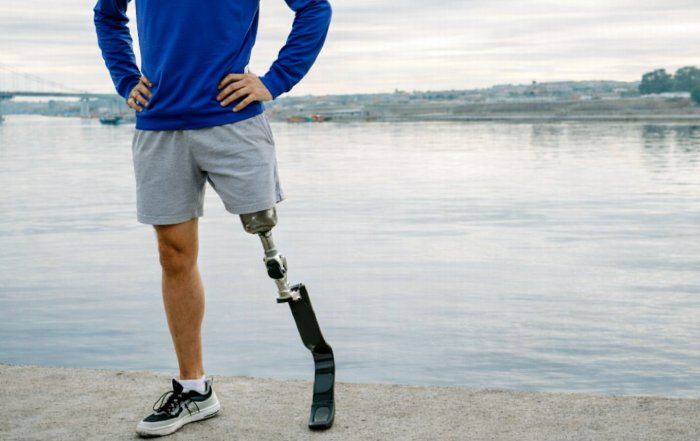
The New Era of Athletic Performance: Advances in Prosthetic Technology for Elite and Everyday Athletes
A Transformational Decade for Adaptive Sport
Prosthetic technology for athletes has moved from a niche innovation to a central force reshaping how performance, inclusion and human potential are understood in global sport. What once existed primarily in specialist clinics and research laboratories is now visible on Olympic tracks, in major city marathons, on ski slopes, in CrossFit boxes and in community gyms from the United States to Japan, from Germany to South Africa, and across both elite and grassroots competition. For the readership of FitPulseNews, which spans health, fitness, business, technology, culture and sustainability, the evolution of prosthetic sport is not only a medical or engineering story; it is a strategic, economic and societal shift that will influence how organizations invest, how brands position themselves and how athletes of all abilities train and compete.
The convergence of biomechanics, materials science, digital health, data analytics and inclusive policy has accelerated progress at a pace that would have been difficult to imagine a decade ago. Regulatory debates at bodies such as the International Paralympic Committee and World Athletics sit alongside groundbreaking work at institutions including MIT, Stanford University and the ETH Zurich rehabilitation and biomechanics labs, while major sportswear and medtech companies invest heavily in adaptive product lines. Learn more about how the broader sports ecosystem is evolving on the FitPulseNews sports section.
From Passive Limbs to High-Performance Systems
For much of the twentieth century, prosthetic limbs for athletes were largely passive devices, designed primarily to restore basic mobility rather than enable high-level performance. By the early 2000s, carbon-fiber running blades, popularized by athletes such as Oscar Pistorius, began to demonstrate that prosthetics could be engineered explicitly for speed and power, changing public perceptions of what amputee athletes could achieve. Institutions such as the Amputee Coalition and elite training centers documented how shock-absorbing, energy-storing blades could transform gait efficiency and reduce impact forces for sprinters and distance runners, establishing a new design paradigm for lower-limb sports prostheses.
In the 2020s, the field moved beyond single-purpose blades to integrated performance systems that combine advanced materials, optimized geometry, sensor arrays and personalized alignment. Research published by organizations like NIH and the U.S. Department of Veterans Affairs has shown that multi-axial ankles, adjustable stiffness profiles and responsive pylons can dramatically improve stability and comfort, allowing athletes to train at higher volumes with reduced risk of overuse injury. These systems are increasingly paired with sport-specific components for sprinting, distance running, long jump, cycling and court sports, reflecting the same level of specialization seen in conventional athletic footwear and equipment. Readers interested in the broader implications for health and performance can explore related coverage in the FitPulseNews health section.
Materials Science: Carbon, Composites and Beyond
The core enabler of modern performance prosthetics remains advanced materials engineering. Carbon-fiber composites, once confined to aerospace and Formula 1, now dominate high-end running blades and lower-limb sport prostheses, enabling devices that are simultaneously lighter, stronger and more resilient than earlier metal-based designs. Organizations such as Toray Industries and research groups at Imperial College London have refined layup patterns, resin systems and fiber orientations to deliver precise stiffness and energy return characteristics tailored to an athlete's mass, stride and event specialization.
Alongside carbon fiber, thermoplastics and advanced polymers have become critical for sockets and interface components, where comfort, durability and adjustability are paramount. Studies from the University of Strathclyde and TU Delft have highlighted how variable-thickness socket designs and 3D-printed lattice structures can distribute pressure more evenly across the residual limb, reducing skin breakdown and pain. Learn more about how innovation in materials is reshaping performance products across industries. In parallel, companies such as Össur and Ottobock have expanded their performance lines with modular systems that allow athletes and clinicians to swap components rapidly, accommodating seasonal training shifts, competition requirements and changes in body composition.
These materials advances intersect with sustainability concerns that are increasingly central to the FitPulseNews audience. As composite use grows, so does scrutiny of lifecycle impact and recycling challenges. Initiatives from organizations like Ellen MacArthur Foundation and pilot programs in Europe and North America are exploring recyclable resins and take-back schemes for worn-out prosthetic components. Learn more about sustainable business practices and their role in sports manufacturing. Within this context, adaptive sport becomes a testbed for how high-performance equipment can be reconciled with circular-economy principles, an issue that also resonates in the FitPulseNews sustainability coverage.
Digital Design, 3D Printing and Mass Personalization
One of the most significant shifts of the last decade has been the digitalization of the prosthetic design and fitting process. High-resolution 3D scanning, CAD-based modeling and additive manufacturing now allow clinicians and engineers to create sockets and components that match an athlete's anatomy and biomechanics with unprecedented precision. Organizations such as Mayo Clinic and Cleveland Clinic have reported improved comfort and reduced fitting times when using digital workflows compared with traditional casting and manual modification.
3D printing, in particular, has expanded the possibilities for both elite and grassroots athletes. Lightweight, structurally optimized geometries that would be impossible to mill or mold can now be produced in nylon, titanium or high-strength polymers, enabling custom protective shells, sprint spikes, cycling adaptors and upper-limb sport-specific attachments. Learn more about how 3D printing is transforming medical and sports applications. For athletes in regions such as Africa, South America and parts of Asia, where access to traditional prosthetic services may be limited, distributed manufacturing models-supported by non-profit organizations and start-ups-offer new pathways to affordable, tailored devices that can withstand demanding training environments.
This digital revolution is also reshaping how performance data informs design. Motion-capture systems, force plates and wearable sensors, long used in elite able-bodied sport, are now routinely applied to prosthetic athletes, generating granular insights into symmetry, loading patterns and joint kinetics. Biomechanics labs from Australia to Canada collaborate with prosthetic manufacturers and national sport institutes to translate these data into iterative design improvements, closing the loop between lab, workshop and track. Readers can follow broader technology trends influencing human performance in the FitPulseNews technology section.
Smart Prosthetics: Sensors, Microprocessors and AI
The most dynamic frontier in 2026 lies in smart prosthetics that integrate embedded electronics, microprocessors and artificial intelligence. While powered knees and ankles have existed for several years in the clinical domain, their adaptation for sport has required significant engineering to handle higher loads, faster cycle times and more complex movement patterns. Companies like Ottobock, Össur and emerging medtech ventures in Sweden, South Korea and Singapore are now field-testing sport-capable microprocessor-controlled joints that adjust resistance, damping and support in real time based on sensor input.
These devices rely on inertial measurement units, load sensors and sometimes electromyographic signals from residual muscles to infer the user's intent and adapt accordingly. Research from MIT's Biomechatronics Group and the University of Michigan has demonstrated that machine-learning algorithms can classify gait modes-such as acceleration, deceleration, turning and jumping-allowing the prosthesis to anticipate movement transitions and provide smoother, more natural motion. Learn more about how AI is being applied in assistive technologies. For athletes, this translates into better stability during cutting maneuvers, improved energy efficiency in middle-distance running and enhanced control during downhill skiing or uneven terrain trails.
The integration of connectivity further extends the value proposition. Cloud-linked prosthetics can log usage patterns, detect anomalies and support remote tuning by clinicians and performance staff, an especially important capability for athletes who travel frequently for training camps and competitions. However, this connectivity also raises questions about data security, ownership and competitive intelligence, as teams and sponsors seek to protect proprietary performance insights. The intersection of wearable technology, data governance and sport is an area where FitPulseNews continues to provide in-depth business and policy analysis in its business section.
Upper-Limb Prosthetics: From Utility to Performance and Skill
While running blades often capture public attention, advances in upper-limb prosthetics for athletes are equally significant. Historically, many upper-limb amputees in sport either competed without prostheses or used relatively simple devices, but the last decade has seen rapid progress in multi-articulating hands, activity-specific terminal devices and neuromuscular interfaces. Organizations such as Johns Hopkins Applied Physics Laboratory and DARPA-funded programs have pushed the boundaries of dexterous robotic hands and arms, some of which are now transitioning from experimental setups into robust, sport-ready systems.
For sports like cycling, rock climbing, rowing, kayaking and functional fitness, athletes are increasingly using custom attachments that provide secure grip, shock absorption and rapid detachment when needed for safety. Learn more about advances in adaptive sports equipment. In ball sports, prototypes of sensor-equipped hands that can modulate grip force and finger position are being tested, aiming to enable more natural catching and throwing motions. Meanwhile, neuromuscular control systems that interpret residual muscle signals or even peripheral nerve activity allow for more intuitive control, reducing cognitive load during high-speed play.
The cultural impact of these developments is visible in mainstream competitions and media. Adaptive athletes from the United Kingdom, Brazil and Italy have become prominent figures in global campaigns by major sports brands, challenging outdated narratives of limitation and dependency. The FitPulseNews brands coverage frequently examines how these partnerships are reshaping brand identity, consumer expectations and the broader conversation around inclusion and representation in sport.
Training, Coaching and Sports Science for Prosthetic Athletes
As prosthetic technology evolves, the training methodologies and support structures around athletes must evolve as well. High-performance centers from Germany to New Zealand now incorporate dedicated adaptive sport units, where strength and conditioning coaches, physiotherapists, prosthetists and sports psychologists collaborate to deliver integrated programs. Learn more about contemporary training science and its role in elite performance. Unlike able-bodied athletes, prosthetic athletes must manage the complex interplay between biological tissue and mechanical components, with issues such as socket fit, skin integrity and limb volume fluctuation influencing daily training decisions.
Sports scientists at institutions like Loughborough University and the Australian Institute of Sport have developed specialized testing protocols to account for asymmetrical loading, compensatory movement patterns and device-specific constraints. These protocols inform individualized strength programs that target not only the intact limb but also the trunk, hips and stabilizing musculature to reduce overuse injuries. At the same time, nutrition and recovery strategies are adapted to the unique metabolic demands and thermoregulation challenges that can arise from altered gait mechanics and prosthetic use, themes regularly explored in the FitPulseNews nutrition and FitPulseNews wellness sections.
Coaching education is another critical factor. Governing bodies and universities are beginning to offer certifications and modules focused on coaching athletes with limb differences, ensuring that technical instruction, feedback and load management reflect the realities of prosthetic-assisted movement. Learn more about evolving coaching standards and professional development in sport. This professionalization helps close the gap between Paralympic and Olympic support environments, reinforcing the principle that adaptive athletes deserve the same level of expertise and investment as their able-bodied peers.
Regulation, Fairness and the Question of Advantage
With performance-oriented prosthetics now capable of matching or, in some cases, surpassing the mechanical efficiency of biological limbs, questions of fairness and competitive balance have become central to global sports governance. Organizations such as World Athletics, the International Paralympic Committee and national federations in France, Japan and Canada have engaged in complex debates about when a prosthetic device might confer an undue advantage, and how to evaluate such claims scientifically.
These debates intensified following high-profile cases where athletes sought to compete in non-disabled categories using advanced running blades, prompting independent studies at institutions like KU Leuven and Rice University to assess energy cost, stride length and speed. Learn more about how sport regulators approach technology and fairness. While findings have often been nuanced, they underscore the difficulty of isolating the contribution of technology from factors such as training history, physiology and technique, particularly when prosthetic configurations can be tuned in countless ways.
In response, some sports have introduced equipment regulations that limit blade height, stiffness ranges or specific component designs, paralleling restrictions on swimwear and track spikes in able-bodied sport. Others have adopted classification frameworks that focus on functional ability rather than specific devices. For FitPulseNews readers in the business and legal communities, these regulatory decisions have material implications for product development, sponsorship strategies and risk management, as companies must navigate a landscape where a single ruling can alter the commercial viability of a technology line.
Accessibility, Cost and Global Equity
Despite the impressive advances at the elite level, one of the most pressing challenges in 2026 remains equitable access to high-quality prosthetic technology for athletes and active individuals worldwide. Top-tier running blades, powered knees and custom sockets can cost tens of thousands of dollars, often with limited or no coverage from public health systems or private insurers, particularly when devices are deemed "non-medically necessary" for sport. Organizations such as WHO, UNICEF and regional NGOs have highlighted the stark disparities between high-income countries and regions of Africa, South America and parts of Asia, where many amputees lack even basic mobility devices, let alone sport-specific prostheses. Learn more about global efforts to improve access to assistive technology.
To address this gap, innovative funding models and social enterprises have emerged. Some brands and foundations sponsor promising athletes, while others support community-based programs that provide low-cost, modular prosthetics designed for running, cycling or field sports. Universities in India, Thailand and Mexico are collaborating with international partners to develop open-source designs and locally manufacturable components, leveraging 3D printing and low-cost materials to reduce dependence on imported hardware. Coverage in the FitPulseNews world section frequently examines how these initiatives intersect with broader development, education and employment agendas.
Corporate and public policy decisions will be decisive in closing the access gap. Governments in Europe, North America and Asia-Pacific are beginning to explore reimbursement frameworks that recognize the health, mental well-being and social participation benefits of sport for people with disabilities. Learn more about health policy approaches to physical activity and inclusion. For employers, particularly in physically demanding sectors, supporting employees who use prosthetics to maintain active lifestyles can have positive impacts on productivity, retention and brand reputation, themes that resonate strongly in the FitPulseNews jobs coverage.
The Business and Brand Landscape of Adaptive Sport
The commercial ecosystem around prosthetic sport has matured considerably, moving beyond niche sponsorships to integrated strategies that reflect the growing economic and cultural significance of adaptive athletics. Major sportswear companies, equipment manufacturers and healthcare firms are investing in dedicated adaptive lines, R&D partnerships and athlete endorsement deals. Organizations such as Nike, Adidas, Puma and Under Armour have launched campaigns featuring Paralympians and adaptive athletes from Canada, Spain, Norway and Brazil, positioning inclusion not as a corporate responsibility add-on but as a core brand value.
This shift has created new opportunities and responsibilities. On the one hand, increased visibility brings funding, media coverage and community engagement, helping to grow participation in adaptive sports programs worldwide. On the other, it raises expectations for authenticity, long-term commitment and meaningful involvement of athletes with disabilities in product development and governance. Learn more about how brands are navigating the intersection of purpose and performance. The FitPulseNews brands section continues to track how sponsorship portfolios, event strategies and storytelling approaches evolve as adaptive sport becomes central to the future of the sports industry.
Beyond consumer brands, technology and medtech companies see prosthetic sport as both a proving ground and a showcase for their innovations. Partnerships between prosthetic manufacturers, AI start-ups and elite training centers in Switzerland, Netherlands and Denmark are generating solutions that may later be adapted for broader healthcare and workplace applications. Investors and corporate strategists are paying close attention to this crossover potential, viewing adaptive sport as a bellwether for where human-machine integration and performance technology are heading.
Culture, Identity and the Future of Inclusion
The rise of high-performance prosthetics for athletes is not only a technical or commercial narrative; it is also a cultural and identity story. As adaptive athletes gain prominence in global events, documentaries and digital platforms, societal perceptions of disability, capability and the body are being reframed. Organizations like Channel 4 in the United Kingdom and NBC Sports in the United States have played significant roles in broadcasting Paralympic and adaptive competitions, elevating narratives that emphasize athletic excellence over pity or sensationalism. Learn more about the evolving media landscape in sport and culture.
For many athletes, prosthetics are no longer merely medical devices but extensions of personal expression and identity. Custom designs, colors and artwork, often created in collaboration with local artists or designers, transform blades and sockets into visible statements of individuality and pride. This shift aligns with broader trends in sports culture, where customization and self-expression are prized, and it resonates strongly with the FitPulseNews culture section, which explores how sport intersects with art, fashion and social change.
Looking ahead, the line between "adaptive" and "mainstream" sport is likely to blur further. Mixed-ability competitions, integrated training environments and shared technology platforms will challenge traditional categorizations, while advances in neuroprosthetics, exoskeletons and regenerative medicine may introduce new ethical and regulatory questions. Learn more about emerging innovations that will shape the next generation of human performance. For FitPulseNews readers across health, fitness, business, technology and sustainability, staying informed about these developments is not optional; it is essential to understanding how sport, work and daily life will evolve in the coming decade.
Conclusion: A Strategic Moment for Sport, Business and Society
Advances in prosthetic technology for athletes have moved beyond incremental improvements to represent a fundamental reimagining of what human performance can look like when biology and engineering are thoughtfully integrated. From carbon-fiber blades and 3D-printed sockets to AI-driven joints and neuromuscular interfaces, the tools available to athletes with limb differences are more powerful, more personalized and more visible than ever before. Yet the full promise of this revolution will only be realized if issues of access, fairness, sustainability and cultural inclusion are addressed with the same rigor and ambition as the technical challenges.
For organizations, policymakers, coaches, clinicians and athletes who follow FitPulseNews, this moment presents both opportunity and responsibility. Strategic investments in research, infrastructure and education can help ensure that prosthetic advances support not only podium finishes but also everyday participation, health and well-being across North America, Europe, Asia, Africa and South America. Thoughtful regulation can balance innovation with fairness, while authentic partnerships between brands and athletes can drive cultural change that benefits the entire sports ecosystem. As prosthetic technology continues to evolve, the story of adaptive athletics will remain a central lens through which the future of sport, work and human potential is understood, and FitPulseNews will remain committed to chronicling that transformation across its news coverage and specialized sections for years to come.