

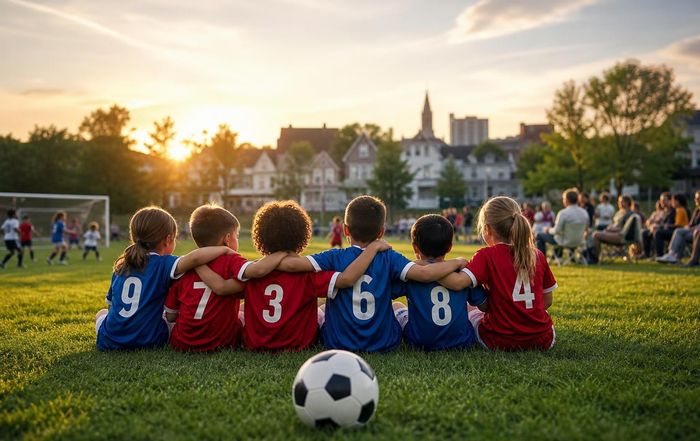
Why Grassroots Sports Matter to Local Communities
The Evolving Role of Grassroots Sports in a Changing World
You know as communities around the world continue to navigate the long-term effects of the pandemic, economic uncertainty, and accelerating technological change, the role of grassroots sports has quietly but decisively expanded. What was once viewed primarily as a recreational outlet or a feeder system for elite competition is now widely recognized as a powerful social, economic, and health engine for local communities, from small towns in the United States and Europe to rapidly growing cities in Asia, Africa, and South America. For fitness gym, folks, whose other interests span fitness, health, sports, brands, technology, culture, and sustainability, the story of grassroots sports is not just about games and scores; it is about how communities build resilience, identity, and opportunity from the ground up.
International bodies such as the World Health Organization have repeatedly emphasized the importance of physical activity for public health, and grassroots sports have become a practical, scalable way to translate those recommendations into everyday life. Learn more about global physical activity guidelines at the World Health Organization. At the same time, national and local policymakers in the United States, the United Kingdom, Germany, Canada, Australia, and beyond are increasingly treating community sports infrastructure as essential social infrastructure, on par with libraries and public parks, because of its cross-cutting impact on health, education, social cohesion, and local economies. Readers following broader global trends on FitPulseNews world coverage can see that this shift is taking place across continents, driven by a mix of public policy, private investment, and citizen-led initiatives.
Grassroots Sports as a Foundation for Lifelong Health and Fitness
Grassroots sports are uniquely positioned to create lasting habits of movement, fitness, and wellness, especially when they are accessible, inclusive, and embedded in local culture. From youth football leagues in the United Kingdom to community basketball courts in the United States and walking clubs in Scandinavian countries such as Sweden, Norway, Denmark, and Finland, these activities provide an entry point into active lifestyles that often persist well into adulthood. Readers who follow the latest training and performance trends on FitPulseNews fitness insights will recognize that the most sustainable fitness journeys often begin with simple, social, community-based play rather than elite or highly specialized training.
Research institutions such as Harvard T.H. Chan School of Public Health have consistently demonstrated the link between regular physical activity and reduced risk of chronic diseases, including cardiovascular disease, type 2 diabetes, and certain cancers. Explore current evidence on the health benefits of exercise at Harvard T.H. Chan School of Public Health. Grassroots sports, by lowering barriers to entry and focusing on enjoyment and community, offer one of the most effective ways to reach populations that are often underserved by traditional fitness and healthcare systems, such as low-income neighborhoods, immigrant communities, and older adults who may feel excluded from more formal athletic environments.
For FitPulseNews readers with a strong interest in health and wellness, the connection between community sports and preventive health is particularly relevant. Many local clubs are partnering with healthcare providers and public health agencies to integrate basic health screenings, nutrition education, and mental health resources into sports programs, effectively turning pitches, courts, and community centers into decentralized wellness hubs. Readers can follow related developments in holistic well-being on FitPulseNews wellness coverage, where the convergence between physical activity, mental resilience, and social support is a recurring theme.
The Mental Health and Social Well-Being Dividend
Beyond physical health, grassroots sports have become a crucial tool in addressing the global mental health crisis that has intensified since 2020. Organizations such as Mental Health America and the National Health Service (NHS) in the United Kingdom have highlighted the role of social connection, routine, and physical activity in preventing and managing anxiety, depression, and loneliness. Learn more about community-based mental health approaches through Mental Health America and the NHS. Grassroots sports naturally combine these elements, offering structured yet low-pressure environments where individuals of all ages can build friendships, experience a sense of belonging, and develop coping skills through shared challenges and achievements.
From youth in high-density urban neighborhoods in New York, London, Berlin, and Toronto to older adults in rural communities in Australia, Italy, and South Africa, local sports programs provide a rare space where generational, cultural, and socioeconomic boundaries can soften. For readers tracking cultural dynamics and social trends on FitPulseNews culture analysis, grassroots sports can be seen as a living laboratory of social integration, where teamwork, mutual support, and shared rules help bridge differences that might otherwise harden into divisions.
In many cities, community-based organizations have intentionally leveraged grassroots sports to support vulnerable populations, including refugees, at-risk youth, and people experiencing homelessness. Initiatives supported by entities such as the United Nations High Commissioner for Refugees (UNHCR) and the International Olympic Committee (IOC) demonstrate how sport can be used to foster inclusion, language learning, and trauma recovery in displaced communities. Learn more about sport and displacement at UNHCR and explore global sport-for-development initiatives via the International Olympic Committee. For local leaders and business decision-makers who regularly read FitPulseNews business coverage at FitPulseNews business, these programs illustrate how targeted support for grassroots sports can yield measurable social returns that extend far beyond the playing field.
Talent Pathways, Elite Performance, and the Broader Sports Ecosystem
While the social and health benefits of grassroots sports are paramount, their role in identifying and nurturing athletic talent remains critical for national and international sports ecosystems. Elite athletes representing countries such as the United States, Brazil, Germany, Japan, South Korea, and South Africa frequently trace their journeys back to small local clubs, school teams, or community leagues where they first learned foundational skills and developed a love for their sport. Readers who follow professional leagues and global competitions through FitPulseNews sports coverage will recognize that the pipeline from grassroots to elite competition is not linear or guaranteed, but it is indispensable.
Leading organizations such as FIFA, World Athletics, and World Rugby have invested heavily in grassroots programs to ensure that talent from diverse regions, including under-resourced parts of Africa, Asia, and South America, has access to basic facilities, coaching, and competition. Learn more about global development programs at FIFA and World Athletics. These investments are not purely altruistic; they reflect a strategic understanding that the long-term competitiveness and global appeal of sports depend on expanding participation and opportunity at the base of the pyramid.
For local communities, the presence of aspiring or successful professional athletes who emerged from neighborhood clubs can be a powerful source of pride and inspiration. When brands and sponsors recognize and support these pathways, they tap into authentic stories that resonate deeply with fans and consumers. Readers interested in how sports, branding, and consumer culture intersect can explore related coverage on FitPulseNews brands, where the alignment between community roots and global brand narratives is an increasingly important theme.
Economic Impact, Local Jobs, and the Business of Community Sport
Grassroots sports are often perceived as volunteer-driven and low-cost, but in aggregate they represent a significant economic sector that generates employment, supports small businesses, and attracts investment. From local coaches and facility managers to sports equipment retailers, event organizers, and digital platform providers, community sports ecosystems create diverse job opportunities in cities and regions across North America, Europe, Asia, Africa, and Oceania. Readers following labor market trends and career opportunities in sport and fitness can find related insights on FitPulseNews jobs coverage, where the emerging roles in community sport management, digital coaching, and sports technology are increasingly visible.
Reports from organizations such as Sport England, Sport Canada, and Australian Sports Commission have quantified the economic contribution of grassroots sports, including direct spending on participation, indirect benefits from tourism associated with local tournaments, and long-term gains from healthier populations that reduce healthcare costs. Learn more about the economic value of community sport at Sport England and Sport Canada. In many European cities, local football, handball, or cycling clubs have become anchors for micro-economies that include hospitality, transportation, and merchandise, demonstrating how relatively modest investments in fields, courts, and community centers can yield outsized returns.
For business leaders and investors who regularly engage with FitPulseNews to understand shifts in consumer behavior, grassroots sports offer a lens into how people allocate time, money, and attention within their neighborhoods. The rise of local sponsorships, community-based fan engagement, and small-scale sports entrepreneurship reflects a broader trend toward localized, values-driven business models that align with health, sustainability, and social impact. Readers can explore broader innovation trends related to this shift on FitPulseNews innovation coverage, where the convergence of sport, technology, and community impact is increasingly prominent.
Technology, Data, and the Digital Transformation of Community Sport
By 2026, the digital transformation that reshaped elite sports and global fitness platforms has firmly reached the grassroots level. Affordable wearables, smartphone-based coaching applications, streaming tools, and community management platforms now enable local clubs to operate with a level of sophistication once reserved for professional organizations. Companies such as Garmin, Polar, Whoop, and Strava have created ecosystems that support amateur athletes with performance data, social features, and training plans, while open resources from institutions like MIT and Stanford University help coaches and volunteers access cutting-edge sports science knowledge. Learn more about sports technology research at MIT and Stanford University.
For readers of FitPulseNews technology coverage, this democratization of performance data and coaching represents both an opportunity and a challenge. On one hand, local athletes and teams can analyze their performance, prevent injuries, and individualize training in ways that were impossible a decade ago; on the other hand, questions arise regarding data privacy, digital inclusion, and the risk of overemphasizing metrics at the expense of enjoyment and community connection. The most forward-thinking grassroots organizations are therefore adopting a balanced approach, using technology to enhance participation and safety while preserving the human relationships and informal play that make local sport meaningful.
Digital tools have also expanded the reach and visibility of grassroots sports. Live streaming of local matches on platforms such as YouTube and Twitch allows family members, friends, and diaspora communities worldwide to follow teams from their hometowns, strengthening emotional ties across borders. Learn more about live streaming capabilities at YouTube. Social media channels provide low-cost marketing and storytelling opportunities, enabling clubs to attract sponsors, recruit volunteers, and celebrate achievements that might otherwise go unnoticed. For global audiences who follow FitPulseNews news and trends, this digital layer adds a new dimension to how local sports intersect with global networks.
Nutrition, Recovery, and Holistic Player Development
As the science of performance and recovery becomes more widely accessible, grassroots sports programs are placing greater emphasis on nutrition, sleep, and holistic health, recognizing that these factors are as important as training volume and tactical instruction. Organizations such as the Academy of Nutrition and Dietetics and the European Food Information Council have created resources to help coaches, parents, and athletes understand how to fuel performance safely and sustainably, from youth leagues in Spain and France to amateur endurance communities in the Netherlands and Switzerland. Learn more about evidence-based nutrition guidance at the Academy of Nutrition and Dietetics and the European Food Information Council.
Readers who regularly consult FitPulseNews nutrition coverage will recognize a growing alignment between sports nutrition and broader trends in healthy eating, including interest in plant-forward diets, reduced ultra-processed food consumption, and personalized nutrition strategies. At the community level, this translates into practical initiatives such as healthy concession stands at local stadiums, educational workshops for parents and players, and partnerships between clubs and local food producers or restaurants that prioritize quality and sustainability.
Recovery practices, including sleep hygiene, mobility work, and mental decompression, are also becoming integrated into grassroots programs, often with guidance from national sports institutes, universities, and professional teams that share best practices. Organizations such as Sleep Foundation and American College of Sports Medicine (ACSM) provide accessible resources that local coaches can adapt to their context. Learn more about sleep and performance at the Sleep Foundation and explore exercise science resources from the American College of Sports Medicine. For readers of FitPulseNews health insights, this holistic approach reinforces the idea that community sports can serve as a gateway to lifelong self-care, not only for competitive athletes but for anyone seeking a healthier, more balanced life.
Culture, Identity, and the Storytelling Power of Local Sport
Grassroots sports are deeply intertwined with local culture and identity, shaping how neighborhoods, cities, and even nations see themselves and are seen by others. From Gaelic games in Ireland to baseball in Japan, cricket in India and the United Kingdom, rugby in New Zealand and South Africa, and football in Brazil and across Europe, community clubs often function as custodians of tradition and collective memory. They preserve rituals, songs, symbols, and shared narratives that give people a sense of continuity and belonging in an era of rapid change. Readers who follow cultural narratives on FitPulseNews culture coverage will appreciate how these stories intersect with broader conversations about migration, identity, and social cohesion.
In multicultural societies such as Canada, the United States, Singapore, and Malaysia, grassroots sports can become spaces where different cultural practices and expectations meet and evolve. Community tournaments, festivals, and mixed-ability leagues allow people from diverse backgrounds to interact on equal footing, fostering mutual understanding that extends beyond the pitch or court. Organizations like UNESCO have highlighted the role of sport in promoting cultural diversity and intercultural dialogue, particularly among youth. Learn more about sport and culture initiatives at UNESCO.
Media coverage, including digital platforms such as FitPulseNews, plays a crucial role in amplifying these local stories. By highlighting community initiatives, profiling local heroes, and exploring the intersection of sport with issues such as gender equality, racial justice, and accessibility, media outlets help ensure that grassroots sports are recognized not only as entertainment or talent pipelines but as vital cultural institutions. For readers who navigate across FitPulseNews sports, culture, and world sections, grassroots sport often emerges as a recurring thread connecting local narratives to global movements.
Environment, Sustainability, and the Future of Community Facilities
As climate change and environmental degradation continue to shape public debate in 2026, grassroots sports organizations are increasingly confronted with questions about their environmental footprint and their potential role in promoting sustainable lifestyles. From water use on pitches in drought-prone regions such as parts of Australia, South Africa, and the western United States, to energy consumption in indoor arenas across Europe and Asia, the environmental impact of local facilities is no longer a peripheral concern. International frameworks from bodies like the United Nations Environment Programme (UNEP) and the United Nations Framework Convention on Climate Change (UNFCCC) encourage sports organizations at all levels to adopt greener practices and promote environmental awareness. Learn more about sport and climate initiatives at UNEP and UNFCCC.
Forward-looking clubs and municipalities are responding by investing in energy-efficient lighting, sustainable materials, improved public transport access to venues, and nature-based solutions such as green roofs and biodiversity-friendly landscaping around facilities. For readers interested in how sport intersects with environmental responsibility, FitPulseNews environment coverage and sustainability insights provide a broader context for understanding these initiatives within global climate and sustainability agendas.
Grassroots sports also have a unique capacity to model sustainable behaviors for young people and families, from encouraging cycling or walking to training sessions to organizing community clean-up events and educational campaigns on waste reduction and recycling. These practices not only reduce the environmental footprint of local activities but also help embed sustainability into everyday routines, creating long-term cultural change that extends beyond the boundaries of sport. When brands, local governments, and community organizations collaborate around these goals, they can create powerful examples of what integrated, community-centered sustainability looks like in practice.
Why Grassroots Sports Will Matter Even More in the Years Ahead
Looking onwards, the importance of grassroots sports to local communities is likely to grow rather than diminish. Demographic shifts, urbanization, digitalization, and climate pressures will continue to reshape how people live, work, and socialize across regions as diverse as North America, Europe, Asia, Africa, and South America. In this evolving landscape, community sports offer something that is both timeless and urgently contemporary: a shared physical space where people move together, learn together, and build relationships that can withstand economic shocks, political tensions, and technological disruptions.
For the growing number of sporty fans, whose interests span fitness, health, sports, brands, nutrition, culture, technology, wellness, innovation, business, and sustainability, grassroots sports sit at the intersection of nearly every major trend shaping modern life. They are a proving ground for new technologies, a top site for inclusive branding and authentic storytelling, a driver of local economic development and job creation, a laboratory for sustainable infrastructure and behavior, and a daily expression of culture and identity. Followers can continue to explore these interconnections across FitPulseNews sports analysis, health and wellness, business and innovation, and environment and sustainability, where grassroots sport will remain a recurring and evolving focus.
Ultimately, the enduring value of grassroots sports lies in their capacity to translate big ideas-health, equality, resilience, sustainability-into tangible experiences that people feel in their bodies and communities. Whether it is a child in Brazil learning teamwork on a dusty football pitch, an office worker in Germany joining a local running club to manage stress, a group of women in Kenya forming a cycling collective for safety and empowerment, or seniors in Japan participating in low-impact community games to maintain mobility and connection, grassroots sports embody a simple yet profound truth: when people come together to move, play, and compete with shared purpose and respect, they lay the foundation for stronger, healthier, more cohesive communities. In that sense, the future of local communities and the future of grassroots sport are inseparable-and for readers of FitPulseNews, understanding and supporting this connection will remain central to shaping a more active, inclusive, and resilient world.