

Smart Home Fitness Technology for Personalised Training in 2026
The New Center of Gravity: The Home as a High-Performance Training Hub
By 2026, the home has quietly become the most powerful training environment many people will ever use, reshaping how fitness, health, sport, and even professional life intersect. Where early connected fitness devices were often little more than digital mirrors or app-enabled treadmills, the current generation of smart home fitness technology has evolved into a sophisticated, data-driven ecosystem that rivals professional training facilities and clinical environments. For the global audience of FitPulseNews, whose interests range from elite performance and sports to wellness, nutrition, business and innovation, this shift is more than a lifestyle trend; it is a structural transformation of how individuals and organizations think about physical capability, mental resilience and long-term health outcomes in an increasingly digital and hybrid world.
The convergence of artificial intelligence, computer vision, biometric wearables and connected equipment is enabling highly personalized training plans that adapt in real time to an individual's physiology, schedule and environment. Platforms now integrate data from smartwatches, sleep trackers, continuous glucose monitors and home gym hardware to create a holistic performance profile, allowing home-based programs to be tuned with a precision that, a decade ago, was typically reserved for professional athletes and clinical research subjects. Readers who follow the latest developments in health and performance on FitPulseNews Health will recognize a familiar pattern: the consumerization of technologies that once sat deep inside hospitals, laboratories and elite sports institutes.
From Connected Gadgets to Intelligent Training Ecosystems
In the early wave of connected fitness, devices such as smart bikes and streaming workout platforms focused on content delivery and community engagement, offering live classes and leaderboards as a digital substitute for the gym. By 2026, the leading systems have matured into full-stack ecosystems that blend hardware, software and cloud-based analytics into a cohesive experience, driven by a growing emphasis on measurable outcomes, injury prevention and sustainable behavior change. Companies such as Peloton, Nike, Apple, Garmin, Whoop and Samsung have progressively integrated more sophisticated sensor suites and machine learning models into their offerings, while emerging players in Europe, Asia and North America are pushing the boundaries of computer vision, motion capture and adaptive coaching.
The underlying technological foundation has advanced rapidly. Modern smart home equipment often includes depth-sensing cameras, force sensors and inertial measurement units that capture detailed movement patterns, joint angles and power output. These data streams are then analyzed using machine learning models trained on large datasets of human movement and performance benchmarks, allowing systems to provide immediate feedback on form, intensity and fatigue. Readers interested in the broader innovation landscape can explore how these technologies intersect with other sectors on FitPulseNews Technology and FitPulseNews Innovation, where similar AI-driven personalization is transforming healthcare, manufacturing and knowledge work.
For global users, this evolution has created a new baseline expectation: smart home fitness technology must do more than count repetitions or stream workouts; it must learn from the user, adapt continuously and deliver tangible, trackable improvements in strength, endurance, mobility, recovery and mental focus, regardless of whether the user is a recreational runner in Canada, a business executive in Singapore or a competitive cyclist in Germany.
Personalisation 2.0: From Generic Plans to Bio-Individual Coaching
The defining shift in 2026 is not simply that workouts can be streamed to any screen, but that training is now built around the individual's unique physiology, context and goals. Personalization is moving beyond demographic and preference-based recommendations into bio-individual coaching informed by continuous biometric monitoring and longitudinal data analysis. Where earlier apps adjusted difficulty based on user feedback or simple performance metrics, current systems ingest multi-dimensional data that may include heart rate variability, sleep architecture, resting heart rate, training load, menstrual cycle phases, stress indicators and, increasingly, metabolic markers such as blood glucose trends.
Organizations like Apple with its Apple Health ecosystem and Garmin with its advanced training readiness metrics have set expectations for integrated health and performance dashboards that help individuals understand how prepared their body is for high-intensity training on any given day. Learn more about training readiness and heart rate variability from resources such as the American College of Sports Medicine. This level of insight enables smart home fitness platforms to dynamically adjust session intensity, volume and exercise selection in response to signals of fatigue, under-recovery or illness risk, creating a more sustainable approach to long-term performance and injury prevention.
At the same time, AI-driven coaching engines are becoming more conversational and context-aware, drawing on large language models that can translate complex physiological data into clear, actionable guidance. Rather than simply recommending a lighter day based on low recovery scores, a modern system can explain why reduced intensity is appropriate, suggest alternative mobility or breathwork sessions and integrate those decisions with broader wellness objectives, including nutrition and mental health. Readers who follow FitPulseNews Wellness and FitPulseNews Nutrition will recognize how this integrated approach reflects a broader shift from fragmented fitness routines to comprehensive lifestyle design.
Computer Vision and Motion Intelligence: Coaching the Details That Matter
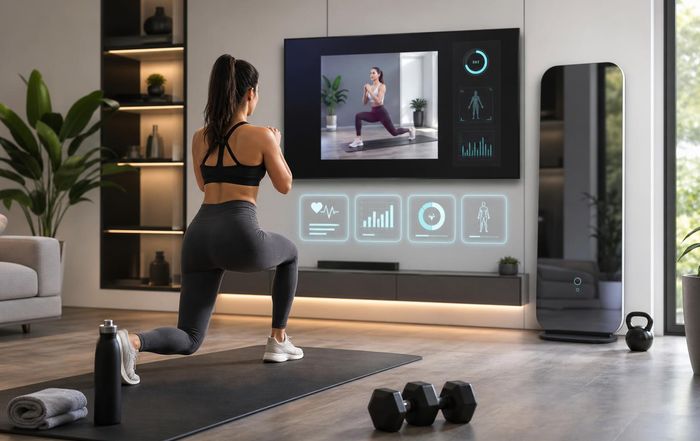
One of the most transformative enablers of personalized home training is the maturation of computer vision and motion intelligence. High-resolution cameras embedded in smart mirrors, televisions, laptops and even smartphones now work in concert with depth sensors and AI models to analyze movement quality in real time. Systems can detect knee valgus during squats, asymmetrical loading in deadlifts or excessive spinal flexion in rowing movements, providing immediate, specific cues to correct technique before poor patterns become habitual or lead to injury.
This capability, once limited to motion capture labs and elite sports performance centers, is increasingly available to consumers through platforms that leverage advances in vision AI similar to those used in autonomous vehicles and industrial robotics. Learn more about the underlying science of computer vision and pose estimation from institutions such as the MIT Computer Science and Artificial Intelligence Laboratory. For athletes and serious fitness enthusiasts around the world, from sprinters in South Africa to skiers in Switzerland, this means that form coaching is no longer constrained by access to in-person trainers or specialized facilities.
Motion intelligence also enables progressive overload and skill development that are more nuanced than simple weight increases or additional repetitions. Systems can track bar path consistency, tempo control, range of motion and stability under fatigue, then adjust training prescriptions accordingly. For example, if a user's squat depth deteriorates under heavier loads, the system may recommend targeted mobility work or tempo-based variations to improve control, rather than simply pushing for more weight. This level of detail is particularly relevant to readers engaged with FitPulseNews Fitness and FitPulseNews Sports, where marginal gains in technique often separate good performance from elite results.
Integration with Wearables, Health Platforms and Clinical Data
The smart home fitness ecosystem in 2026 does not exist in isolation; it is deeply integrated with the broader digital health landscape. Wearables from Apple, Garmin, Fitbit, Whoop, Oura and others continuously feed data into centralized health platforms, many of which are now interoperable with electronic health record systems and telehealth services. Organizations like the World Health Organization and the U.S. Centers for Disease Control and Prevention have emphasized the importance of physical activity for preventing chronic diseases, and health systems in regions such as Europe, North America and Asia-Pacific are increasingly leveraging digital fitness data to support preventive care and remote patient monitoring.
For users managing conditions such as hypertension, type 2 diabetes or cardiovascular risk factors, home fitness technology is becoming a key component of prescribed lifestyle interventions. Clinicians can review patients' activity levels, heart rate responses and adherence patterns, then collaborate with AI-driven training platforms to tailor programs that align with medical guidelines and individual constraints. Learn more about evidence-based exercise prescriptions from organizations like the American Heart Association. This integration enhances trust and credibility, as personalized training plans are grounded not only in performance optimization but also in clinical safety and long-term health outcomes.
In markets such as the United Kingdom, Germany, Singapore and Australia, insurers and employers are increasingly incentivizing the use of validated digital fitness programs as part of workplace wellness and population health initiatives. Readers tracking corporate wellness and health-tech strategy on FitPulseNews Business and FitPulseNews World will recognize that this alignment of incentives is reshaping how organizations view employee fitness, shifting it from a perk to a strategic asset in talent retention, productivity and healthcare cost management.
Behaviour Change, Engagement and the Psychology of Training at Home
Technology alone does not guarantee adherence; the psychology of behavior change remains central to the effectiveness of smart home fitness solutions. The most successful platforms in 2026 combine sophisticated personalization with a deep understanding of motivation, habit formation and social dynamics. Drawing on research from institutions such as Stanford Medicine and the University of Oxford, designers are applying behavioral science principles to create interfaces and routines that reduce friction, build consistency and sustain engagement over months and years rather than weeks.
Gamification has evolved beyond simple badges and leaderboards into more nuanced frameworks that recognize individual motivational profiles. Some users respond best to structured progression and data-driven milestones, while others thrive in community-oriented challenges or narrative-driven programs that frame training as part of a broader personal journey. Smart home systems now adapt communication style, feedback frequency and challenge structure to match these preferences, using AI to learn which patterns produce the highest adherence for each individual. Readers interested in the cultural and psychological aspects of fitness can explore related themes on FitPulseNews Culture.
Furthermore, as hybrid work arrangements have become a norm across sectors in the United States, Europe and Asia, home-based training must coexist with professional and family responsibilities. Leading platforms integrate with calendar systems, productivity tools and even smart home devices to orchestrate training sessions that respect time constraints, energy levels and household dynamics. Short, high-impact micro-sessions are intelligently interspersed with longer workouts, while recovery practices such as breathwork, stretching and mindfulness are woven into daily routines to support mental clarity and stress management.
The Business Landscape: Brands, Partnerships and Market Consolidation
The smart home fitness market in 2026 is characterized by both intense competition and increasing consolidation, as established technology giants, sportswear brands and specialized start-ups vie for user attention and long-term engagement. Nike, Adidas, Lululemon, Under Armour and other global brands are expanding their digital ecosystems, integrating hardware, content and community platforms that extend far beyond traditional apparel and equipment. Learn more about how global consumer brands are evolving their digital strategies through resources such as Harvard Business Review.
At the same time, technology leaders like Apple, Google, Amazon and Samsung are embedding fitness and wellness more deeply into their operating systems, voice assistants and smart home platforms. This creates both opportunities and challenges for pure-play fitness companies, which must differentiate through superior coaching, niche specialization or vertical integration with healthcare and sports performance. Readers following brand strategies and partnerships can explore additional context on FitPulseNews Brands.
Strategic alliances between equipment manufacturers, health insurers, corporate wellness providers and sports organizations are becoming more common. For example, partnerships between smart equipment makers and professional leagues in North America, Europe and Asia are enabling fan engagement experiences that blend live sports, personal training and data-driven performance benchmarking. Meanwhile, corporate clients in sectors ranging from finance and technology to logistics and healthcare are deploying integrated home fitness solutions as part of their employee value propositions, supported by analytics that track aggregate engagement and health outcomes while respecting individual privacy.
Global Adoption Patterns and Regional Nuances
Although smart home fitness technology is a global phenomenon, adoption patterns and usage behaviors vary significantly across regions. In the United States and Canada, large suburban homes and strong e-commerce infrastructure have supported robust uptake of connected equipment and subscription-based platforms, while in dense urban centers such as London, Tokyo, Singapore and Hong Kong, compact, multi-functional devices and app-based bodyweight programs are more prevalent. Learn more about global fitness trends through organizations like the International Health, Racquet & Sportsclub Association.
In Europe, particularly in countries like Germany, the Netherlands, Sweden and Denmark, there is a strong emphasis on sustainability, outdoor activity and active transportation, leading to hybrid models that combine smart home training with cycling, running and outdoor sports. Readers interested in the intersection of environment, sustainability and active lifestyles can explore related coverage on FitPulseNews Environment and FitPulseNews Sustainability. In Asia-Pacific markets such as South Korea, Japan and Singapore, high-speed connectivity, advanced mobile ecosystems and tech-savvy populations have driven rapid adoption of integrated fitness super-apps that bundle training, nutrition, telehealth and community features.
Emerging markets in Africa and South America are experiencing a different trajectory, where smartphone penetration and improving broadband infrastructure are enabling mobile-first fitness solutions that prioritize affordability and accessibility over hardware-intensive setups. In countries such as Brazil, South Africa and Thailand, local content creators, trainers and sports organizations are playing a central role in contextualizing smart fitness technologies to regional cultures, sports preferences and economic realities. This localization is critical for building trust and relevance, and it underscores the importance of cultural intelligence in global fitness innovation, a recurring theme for readers of FitPulseNews World.
Trust, Data Privacy and the Ethics of AI-Driven Coaching
As smart home fitness systems become more deeply intertwined with personal health data, questions of trust, privacy and ethical AI are moving to the forefront. Users are increasingly aware that their biometric information, activity patterns and even in-home camera feeds represent sensitive data that must be handled with rigorous security and governance. Regulatory frameworks such as the European Union's General Data Protection Regulation and evolving privacy laws in the United States, Canada, Australia and across Asia are setting higher standards for consent, data minimization and user control. Learn more about digital privacy and data protection from resources such as the European Data Protection Board.
For fitness technology providers, demonstrating trustworthiness is no longer optional; it is a core component of brand value and user retention. Transparent data policies, robust encryption, on-device processing for sensitive video analytics and clear options for data export or deletion are becoming baseline expectations. Moreover, as AI models take on greater responsibility for training recommendations, there is growing scrutiny of how these systems are trained, validated and monitored for bias or unsafe guidance. Organizations like the OECD AI Policy Observatory and the World Economic Forum are actively shaping best practices for responsible AI deployment, including in health and fitness applications.
For the FitPulseNews audience, which spans fitness enthusiasts, professionals, business leaders and technologists, this ethical dimension is particularly salient. The same AI capabilities that enable finely tuned, personalized coaching must be governed to prevent misuse, over-reliance or inequitable access. Trust in the system becomes a function not only of its technical accuracy but also of its alignment with user autonomy, safety and long-term wellbeing.
The Future Trajectory: Convergence, Context and Human-Centered Design
Looking ahead from the vantage point of 2026, smart home fitness technology appears poised to continue its trajectory toward deeper integration, greater contextual intelligence and more human-centered design. Convergence with other domains-such as mental health, nutrition, sleep science, sports performance and workplace productivity-will accelerate, creating experiences that treat physical training as one dimension of a broader performance and wellbeing strategy. Readers can follow these converging trends across FitPulseNews News as new products, partnerships and research findings emerge.
Advances in sensors, from non-invasive metabolic monitors to more precise muscle activation trackers, will enrich the data available for personalization, while generative AI will further enhance the quality and adaptability of coaching communication. Virtual and augmented reality may play a greater role in immersive training experiences, particularly for skill-based sports and rehabilitation, though the most enduring solutions are likely to be those that seamlessly fit into everyday life rather than requiring dedicated, isolating hardware.
For organizations, the strategic implications are significant. Employers, insurers, sports clubs, healthcare providers and consumer brands will need to decide whether to build, buy or partner for smart fitness capabilities, and how to integrate them into broader digital ecosystems. For professionals in fitness, health, technology and business who follow FitPulseNews Jobs, this evolution will create new roles and career paths at the intersection of coaching, data science, product design and health policy.
Ultimately, the most successful smart home fitness solutions will be those that combine technical excellence with genuine empathy for the user's lived reality: limited time, fluctuating motivation, diverse abilities and complex life demands. They will respect cultural differences, support inclusive participation across age, gender and socioeconomic lines, and anchor their value proposition not in superficial metrics but in meaningful, sustainable improvements in quality of life.
For the global community that turns to FitPulseNews for insight at the intersection of fitness, health, sports, brands, culture, technology and business, the message is clear: smart home fitness technology is no longer an optional accessory or a pandemic-era workaround. It is a foundational layer of modern life, shaping how individuals train, recover, compete and work-and how societies around the world invest in human potential for the decades ahead.