
How Urban Design Shapes Active Lifestyles in 2026
Urban design has moved from being an almost invisible backdrop to daily life to becoming one of the decisive forces shaping how people move, work, exercise, and recover, and by 2026 the connection between the built environment and active lifestyles has become central to conversations about public health, sports performance, workplace productivity, and the future of cities. For readers of FitPulseNews, whose interests span fitness, health, sports, brands, technology, culture, and sustainable innovation, the story of how streets, parks, transit systems, and digital infrastructure are being reimagined is no longer an abstract planning issue; it is a tangible factor influencing how easily they can reach a gym, run before work, cycle safely at night, or integrate movement into an increasingly hybrid workday.
As cities across North America, Europe, Asia, Africa, and South America confront rising chronic disease, climate pressures, and shifting work patterns, urban design is emerging as a powerful lever for building more active, resilient populations, and the evidence now shows that the right combination of density, green space, mobility options, and social infrastructure can transform sedentary routines into more dynamic, health-promoting lifestyles.
The Health Imperative Behind Active Cities
By 2026, the health case for activity-friendly urban design is unequivocal, with global agencies repeatedly linking walkable, bikeable neighborhoods to lower rates of obesity, cardiovascular disease, diabetes, and depression. The World Health Organization notes that insufficient physical activity remains a leading risk factor for mortality worldwide, yet it also emphasizes that everyday movement embedded into commuting, errands, and recreation can be as impactful as structured workouts for many residents, particularly those who have limited time or resources for formal fitness programs. Learn more about the global burden of physical inactivity at the World Health Organization.
In parallel, national health agencies such as the U.S. Centers for Disease Control and Prevention have expanded their guidance from individual behavior change to environmental strategies, highlighting that people are more likely to walk or cycle when they have safe sidewalks, connected bike lanes, and nearby destinations such as shops, schools, and parks. Explore current recommendations on activity-friendly routes from the CDC.
For readers following the health and wellness coverage on FitPulseNews, especially through its dedicated health and wellness sections, this shift is significant because it reframes fitness not only as a matter of personal discipline or gym access, but as an outcome of policy decisions, zoning codes, and transportation investments that either facilitate or obstruct active living.
Walkability, Density, and the 15-Minute City
One of the most influential concepts in contemporary urbanism is the so-called "15-minute city," which proposes that most daily needs should be reachable by foot or bicycle within roughly a quarter of an hour, and while this idea has been adapted differently in cities from Paris to Melbourne, it shares a common core: mixed-use density, distributed services, and pedestrian-first streetscapes that make walking and cycling the most convenient choices rather than afterthoughts. The C40 Cities Climate Leadership Group, a network of major global cities, has championed versions of this model as both a climate and health strategy, arguing that compact, mixed-use neighborhoods reduce emissions while encouraging regular physical activity. Learn more about climate-smart urban planning at C40 Cities.
Research synthesized by organizations such as The Lancet Global Health has consistently found that higher neighborhood walkability, characterized by street connectivity, residential density, and land-use mix, is associated with higher levels of physical activity and lower body mass index across diverse regions, from the United States and Canada to Europe, Asia, and Latin America. For a deeper look into global urban health research, visit The Lancet.
For urban residents in cities like London, Berlin, Toronto, Singapore, and Sydney, this means that the introduction of local grocery stores, co-working hubs, schools, and sports facilities within walking distance does more than shorten commutes; it creates a built-in framework for daily movement, and readers of FitPulseNews who are following developments in business and world news will recognize that commercial real estate, retail brands, and fitness operators are already reshaping their footprints to align with this neighborhood-centered vision.
Cycling Infrastructure and the Rise of Everyday Athletes
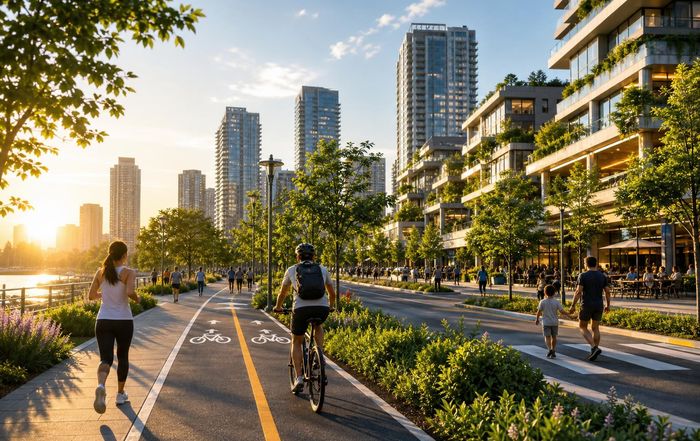
Cycling has undergone a profound transformation from a niche sport or recreational activity into a mainstream mobility option and fitness habit, and this shift has been accelerated by strategic investments in protected bike lanes, low-traffic neighborhoods, and secure parking facilities in cities across Europe, North America, and parts of Asia and Latin America. The European Cyclists' Federation has documented how cities such as Copenhagen, Amsterdam, and Seville have substantially increased cycling mode share through coherent, connected networks rather than fragmented lanes. Learn more about cycling-friendly cities at the European Cyclists' Federation.
In North America, cities like Montreal, Vancouver, New York, and Minneapolis have expanded protected lanes and bike-share systems, and these changes have directly influenced how residents integrate physical activity into their routines, particularly for short commutes and errands. The National Association of City Transportation Officials provides design guides that many municipalities now follow to implement safe, inclusive cycling infrastructure that accommodates both traditional bicycles and e-bikes. Explore these design standards at NACTO.
For the active audience of FitPulseNews, whose interests in sports, fitness, and performance gear intersect with urban mobility, this evolution is blurring the lines between athlete and commuter. A growing number of people now treat their daily ride as both transportation and training, while sports brands and equipment companies respond with urban-specific products, from commuter-friendly performance apparel to smart helmets and integrated navigation systems.
Parks, Greenways, and the Mental Health Dividend
Urban green spaces have long been valued for leisure, but by 2026 their role as essential infrastructure for both physical and mental health is widely recognized, and parks, greenways, and waterfront trails are increasingly designed as active corridors that support running, walking, cycling, and outdoor workouts throughout the year. The World Urban Parks organization highlights how accessible green spaces contribute to lower stress, improved mood, and higher rates of moderate physical activity, especially among children and older adults. Learn more about global park initiatives at World Urban Parks.
The American Planning Association and similar bodies in Europe and Asia have emphasized that park design matters as much as park presence, and features such as continuous pathways, lighting, outdoor fitness equipment, multi-sport courts, and inclusive playgrounds can significantly increase usage, while thoughtful integration with surrounding streets and transit stops ensures that parks function as everyday destinations rather than isolated amenities. Explore planning resources at the American Planning Association.
Readers of FitPulseNews who follow its environment and sustainability coverage will recognize that active green spaces also serve climate and ecological goals, providing cooling during heatwaves, managing stormwater, and supporting biodiversity, and this convergence of environmental and health benefits is driving cities from Stockholm and Oslo to Singapore and Melbourne to invest in linear parks and green belts that double as fitness corridors.
Transit, Micromobility, and the First-Last Mile
Public transit remains a backbone of urban mobility, but its relationship to active lifestyles is often underestimated, and in reality, walking or cycling to and from transit stops can account for a significant share of daily movement, particularly in dense city centers. The International Association of Public Transport has emphasized that transit-oriented development, which clusters housing, offices, and services around stations, not only increases ridership but also promotes walking and cycling as part of everyday routines. Learn more about transit-oriented strategies at UITP.
In recent years, the rapid spread of micromobility options such as shared e-scooters, dockless bikes, and compact e-bikes has added new layers to the urban mobility ecosystem, and when properly regulated and integrated into existing networks, these modes can extend the reach of transit, reduce car dependency, and encourage short active trips that might otherwise be driven. The OECD International Transport Forum has been tracking how cities manage these emerging modes, highlighting best practices around safety, infrastructure, and data sharing. Explore their mobility research at the International Transport Forum.
For professionals and entrepreneurs who follow FitPulseNews for its technology and innovation coverage, this convergence of transit, micromobility, and digital platforms is opening new opportunities, from integrated mobility-as-a-service apps that reward active travel to corporate programs that subsidize bike-share memberships as part of employee wellness strategies.
The Role of Sports and Fitness Brands in the Urban Fabric
Sports and fitness brands have become active stakeholders in the evolution of city design, recognizing that their growth increasingly depends on environments that make it easy and appealing for people to move. Global companies such as Nike, Adidas, Under Armour, and Lululemon have not only expanded their presence in urban markets but also partnered with municipalities, non-profits, and event organizers to create running routes, pop-up training zones, and community sports programs embedded into city streets and parks.
Industry reports from organizations like McKinsey & Company and Deloitte indicate that consumers, particularly in urban areas across the United States, Europe, and Asia-Pacific, are gravitating toward brands that demonstrate a tangible commitment to community well-being, sustainability, and inclusivity, and this is pushing companies to move beyond traditional sponsorships into long-term collaborations that shape real infrastructure and experiences. Learn more about sports and fitness industry trends at McKinsey and Deloitte.
On FitPulseNews, where readers track emerging brands, cultural shifts, and flagship events, this evolving relationship between sports companies and cities is particularly relevant, as it influences not only product design and marketing but also the availability of urban races, community leagues, and experiential retail spaces that double as hubs for local running clubs, cycling groups, and wellness communities.
Workplace Design, Hybrid Work, and Everyday Movement
The rise of hybrid and remote work since the early 2020s has fundamentally altered daily movement patterns, reducing some commutes while increasing the importance of neighborhood amenities and flexible workspaces, and in this context, both office design and urban design are being reconsidered through the lens of health and activity. The World Economic Forum has underscored how employers are rethinking offices as collaboration hubs that also support employee well-being, incorporating features such as standing desks, active meeting rooms, indoor walking circuits, and proximity to outdoor spaces. Learn more about the future of work and wellness at the World Economic Forum.
At the city scale, the shift toward hybrid work has highlighted the value of local coworking spaces, community centers, and libraries that can be reached on foot or by bike, enabling workers to maintain daily routines that include walking breaks, lunchtime workouts, or post-work runs without long commutes. The International WELL Building Institute has developed standards that link building design to occupant health, including criteria related to movement, lighting, and access to active transportation, and these guidelines are increasingly informing both corporate campuses and mixed-use developments. Explore wellness-focused building standards at the International WELL Building Institute.
Readers of FitPulseNews who follow its jobs and business coverage will recognize that talent attraction and retention are now closely tied to the quality of the surrounding urban environment, and companies that locate in walkable, transit-rich, and amenity-dense districts often find it easier to support employee wellness programs that translate into higher engagement and lower healthcare costs.
Culture, Equity, and Access to Active Spaces
Urban design does not affect all residents equally, and one of the critical debates in 2026 revolves around ensuring that active, health-promoting environments are accessible across socio-economic, racial, and geographic lines, rather than being concentrated in affluent central districts. The Brookings Institution and similar think tanks in Europe and Asia have documented how lower-income neighborhoods often have fewer parks, less safe infrastructure, and higher exposure to traffic and pollution, which can limit opportunities for safe physical activity. Learn more about equity in urban development at Brookings.
In response, cities from Los Angeles and New York to London, Berlin, Johannesburg, and São Paulo are investing in "complete streets," community sports facilities, and safe routes to school in historically underserved areas, recognizing that equitable access to active environments is both a public health necessity and a matter of social justice. The UN-Habitat program has emphasized that inclusive, people-centered planning is essential to achieving the Sustainable Development Goals, particularly those related to health, cities, and inequality. Explore inclusive urban planning frameworks at UN-Habitat.
For the global audience of FitPulseNews, whose interests in culture, sports, and community intersect, these initiatives highlight how active lifestyles are deeply embedded in cultural norms, safety perceptions, and local identity, and they reinforce the importance of storytelling, role models, and community-led design in making movement a natural part of everyday urban life across diverse regions and demographics.
Technology, Data, and Smart Active Cities
The integration of digital technology into urban systems has created new possibilities for shaping and measuring active lifestyles, and by 2026 cities and private companies are increasingly using data from sensors, wearables, and mobile apps to understand how people move and to design interventions that encourage healthier patterns. The MIT Senseable City Lab and similar research centers have demonstrated how anonymized mobility data can reveal walking and cycling hotspots, identify gaps in infrastructure, and evaluate the impact of interventions such as new bike lanes or pedestrianized streets. Learn more about data-driven urbanism at the MIT Senseable City Lab.
At the same time, health and fitness technology companies, from Garmin and Apple to Strava and Whoop, are collaborating with cities and academic institutions to share aggregated insights on running, cycling, and commuting patterns, helping urban planners tailor designs to real-world behavior while giving users more personalized feedback on how their environment shapes their activity levels. The Strava Metro initiative, for example, has provided valuable data to cities worldwide seeking to improve cycling and pedestrian networks. Explore these collaborations at Strava Metro.
For readers of FitPulseNews, who frequently track developments in connected fitness, digital health, and smart city solutions through its technology and news coverage, this convergence of data, design, and behavior offers both opportunities and responsibilities, raising important questions about privacy, consent, and equitable representation in datasets that will shape future infrastructure.
Sustainability, Climate Resilience, and Active Mobility
Climate change has become a defining context for urban decision-making, and active mobility is now widely recognized as a core component of sustainable, resilient cities that can withstand heatwaves, air pollution episodes, and energy shocks. The Intergovernmental Panel on Climate Change (IPCC) has repeatedly highlighted the role of modal shift from private cars to walking, cycling, and public transit in reducing greenhouse gas emissions, while also emphasizing co-benefits for air quality and public health. Learn more about climate mitigation in cities at the IPCC.
Organizations such as the World Resources Institute have worked with cities in Asia, Africa, and Latin America to design bus rapid transit systems, pedestrian zones, and cycling networks that support both emissions reductions and more active daily routines, showing that sustainable transport can be a catalyst for healthier lifestyles rather than a sacrifice. Explore sustainable urban mobility projects at the World Resources Institute.
For FitPulseNews, whose readers follow environment and sustainability topics alongside fitness and sports, this alignment between climate action and active living underscores a powerful narrative: the same changes that make cities more livable and resilient also make it easier for individuals to stay fit, healthy, and engaged, whether they are running along riverfront esplanades in Paris, cycling to work in Seoul, or walking to local markets in Cape Town or São Paulo.
Looking Ahead: The Future of Active Urban Living
As cities across the world continue to evolve in response to demographic shifts, technological innovation, and environmental pressures, the relationship between urban design and active lifestyles will only grow more central to public debate and investment decisions, and by 2026 a consensus is emerging that health-promoting environments are not a luxury but a foundational requirement for competitive, inclusive, and sustainable urban economies.
For the global audience of FitPulseNews, this means that the spaces in which they live, work, train, and compete will continue to change, with more emphasis on walkable neighborhoods, integrated transit and micromobility, high-quality parks and sports facilities, and digitally enhanced experiences that make movement more engaging and accessible. It also means that businesses, from sportswear brands and fitness platforms to real estate developers and technology providers, will increasingly be judged not only on their products and services but on how they contribute to active, equitable, and sustainable urban ecosystems.
Ultimately, the story of how urban design influences active lifestyles is also the story of how societies choose to prioritize health, community, and resilience in the face of ongoing uncertainty, and as FitPulseNews continues to follow developments in fitness, health, sports, brands, culture, technology, and sustainability across continents, it will remain clear that the most successful cities of the coming decades will be those that treat every street, park, and transit corridor as an opportunity to invite movement, foster connection, and support the physical and mental well-being of all residents. Readers who track these trends through the platform's dedicated coverage in fitness, health, sports, innovation, and world will be well positioned not only to understand these changes but to participate in shaping more active, vibrant, and sustainable cities worldwide.