

Space Tourism and Its Environmental Footprint: What the Next Decade Means for Planet and Business
Space tourism, once a speculative vision reserved for science fiction and elite aerospace conferences, has become a tangible and rapidly commercializing industry, with launch calendars filling up months in advance, waitlists stretching into the thousands, and private missions to low Earth orbit increasingly viewed as aspirational lifestyle experiences rather than purely scientific endeavors. As this transition accelerates, the environmental footprint of commercial spaceflight has moved from a niche concern of climate scientists to a central topic of debate among policymakers, investors, and the global business community that follows developments through platforms such as FitPulseNews and its dedicated coverage of business, technology, and environment.
The New Era of Commercial Spaceflight
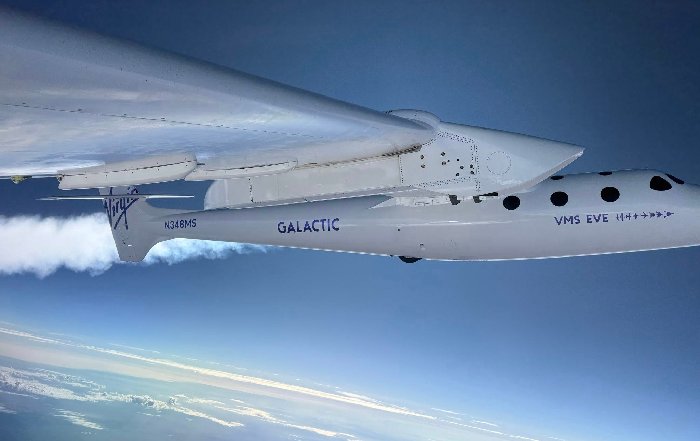
The last decade has seen an unprecedented rise in privately funded space ventures led by companies such as SpaceX, Blue Origin, and Virgin Galactic, alongside national agencies like NASA, the European Space Agency (ESA), and emerging players in Asia and the Middle East. Suborbital tourism flights offering a few minutes of weightlessness and panoramic views of Earth's curvature, as well as orbital stays aboard commercial space stations, are no longer prototypes but recurring services, promoted with the same aspirational language used in luxury travel and high-performance wellness retreats. Industry reports from organizations such as Space Foundation and OECD Space Forum chart a global space economy surpassing half a trillion dollars, with tourism projected as one of the fastest-growing segments.
While governments historically dominated space access, the current landscape is defined by public-private partnerships, venture-backed startups, and cross-border collaborations in which launch providers, satellite operators, hospitality brands, and advanced materials firms all share a stake. Business leaders tracking innovation through outlets like FitPulseNews Innovation increasingly view space tourism as a testbed for new propulsion technologies, life-support systems, and circular-resource models that may ultimately spill over into terrestrial industries ranging from aviation to healthcare.
Understanding the Environmental Footprint of Space Tourism
The environmental impact of space tourism can be divided into several layers: direct emissions from rocket launches, high-altitude and upper-atmosphere effects, ground-based infrastructure and supply chains, and the broader systemic implications for climate policy and public perception of sustainability. Unlike commercial aviation, where emissions are relatively well characterized and regulated under frameworks discussed by bodies such as the International Civil Aviation Organization, rocket launches involve combustion at high altitudes and in the stratosphere, where the chemistry of exhaust plumes interacts with ozone, atmospheric circulation, and radiative forcing in complex ways that researchers are still working to quantify.
Many of the most visible space tourism vehicles use either liquid kerosene, liquid methane, or hybrid solid fuels, each with distinct environmental profiles. Studies cited by climate and atmospheric scientists at institutions such as NASA's Earth Science Division and the National Oceanic and Atmospheric Administration suggest that black carbon and alumina particles emitted in the upper atmosphere can have disproportionate warming effects compared with similar emissions at ground level. Furthermore, the cumulative impact of frequent launches, reentries, and associated supersonic flights raises questions about noise pollution, air-quality impacts near spaceports, and the ecological footprint of launch corridors over oceans and remote land areas.
Comparing Rocket Emissions to Aviation and Other Sectors
At present, the number of commercial rocket launches remains small compared with the hundreds of thousands of flights operated annually by global airlines, which are tracked and analyzed by organizations such as the International Air Transport Association. However, projections from market analysts and think tanks like the World Economic Forum indicate that if space tourism scales as anticipated-particularly with point-to-point suborbital travel being tested as an ultra-fast alternative to long-haul aviation-the emissions per passenger-kilometer could significantly exceed those of even premium-class air travel.
Rocket launches are highly energy-intensive per passenger, especially for short suborbital hops that spend only minutes in microgravity yet burn enormous amounts of fuel to overcome Earth's gravity well. Climate-focused organizations such as the Intergovernmental Panel on Climate Change have begun to highlight the need for better modeling of high-altitude emissions from rockets, not only in terms of carbon dioxide but also with respect to non-CO₂ effects such as contrails, water vapor, and particulate matter. As more companies market space experiences to affluent travelers in North America, Europe, and Asia-Pacific, the question becomes whether this new form of mobility will be compatible with national net-zero commitments and the broader goals outlined in agreements like the Paris Agreement.
The Stratosphere, Ozone, and Long-Term Climate Risks
One of the most technically complex aspects of space tourism's environmental footprint concerns its impact on the stratosphere and ozone layer. Research published through platforms associated with the World Meteorological Organization and leading academic institutions has pointed out that soot particles and alumina from certain rocket fuels can accumulate in the upper atmosphere, where they may alter radiative balance and contribute to localized ozone depletion. These changes are subtle on a per-launch basis but could become significant as launch frequency rises, especially if tourism flights cluster in specific geographic regions such as the southern United States, the UK, continental Europe, and parts of Asia.
Unlike commercial jets, which operate mostly in the troposphere and lower stratosphere, rockets punch directly through multiple atmospheric layers, depositing exhaust in zones that are not yet fully incorporated into mainstream climate models. For policymakers and corporate sustainability leaders, this scientific uncertainty complicates risk assessment and regulation, especially when weighed against the economic benefits and technological innovation that the space sector promises. Nevertheless, the precautionary principle is gaining traction among environmental agencies and NGOs, many of which encourage closer monitoring of launch emissions and stronger collaboration between space agencies and climate scientists. Readers following environmental policy and climate innovation on FitPulseNews Sustainability can expect this intersection of space and climate science to become increasingly prominent in the coming years.
Infrastructure, Supply Chains, and Local Environmental Impacts
Beyond the rockets themselves, space tourism relies on a sprawling ecosystem of infrastructure and supply chains that have their own environmental implications, ranging from the construction and operation of spaceports to the mining and processing of advanced materials used in launch vehicles, habitats, and life-support systems. Spaceports in the United States, the United Kingdom, continental Europe, the Middle East, and Asia-Pacific are often located in ecologically sensitive coastal or desert regions, where construction can disrupt local wildlife, water systems, and traditional land use. Environmental assessments, frequently mandated by national regulators and informed by standards from groups like the International Organization for Standardization, attempt to mitigate these impacts, yet the pace of commercial development can outstrip the capacity of local authorities to monitor long-term consequences.
Communities near launch sites face a complex mix of opportunities and challenges. On one hand, space tourism can create high-quality jobs, stimulate regional innovation clusters, and attract tourism-related investment in hospitality, wellness, and sports infrastructure that aligns with the lifestyle interests of the FitPulseNews audience across jobs, sports, and culture. On the other hand, concerns about noise, air quality, and land use can generate social tensions, especially if local populations feel excluded from decision-making or if economic benefits are perceived as flowing primarily to distant investors and global brands rather than to local stakeholders.
Regulatory Landscapes and Global Governance Challenges
Regulation of space tourism currently sits at the intersection of national aviation law, space law, environmental regulation, and international treaties such as the Outer Space Treaty and related agreements overseen by the United Nations Office for Outer Space Affairs. Governments in the United States, Europe, and Asia are still refining frameworks for licensing commercial human spaceflight, certifying vehicles, and managing liability, while also beginning to consider how launch emissions and environmental risks should be accounted for in national climate strategies. Agencies such as the Federal Aviation Administration in the United States and emerging space regulators in the United Kingdom, Germany, France, and other countries are under pressure to balance safety, innovation, and environmental stewardship.
The global nature of the industry adds another layer of complexity. Launches may occur in one country, with vehicles built in another, payloads or passengers sourced from multiple continents, and downstream environmental impacts distributed globally through atmospheric circulation and climate feedbacks. As a result, there is growing discussion within international forums, including the G20 and regional organizations, about whether space tourism should be incorporated into multilateral climate and sustainability frameworks. Business leaders and investors who follow global policy trends through FitPulseNews World increasingly recognize that regulatory clarity-especially regarding emissions accounting and environmental impact assessments-will shape the pace and direction of space tourism's growth.
Innovation, Cleaner Propulsion, and Emerging Technologies
Despite the environmental concerns, the space tourism industry is also a powerful driver of technological innovation that could, over time, reduce its own footprint and generate spillover benefits for terrestrial sectors. Companies and research institutions are experimenting with alternative propellants, more efficient engines, reusable launch systems, and in-space resource utilization, all aimed at lowering costs and environmental impacts. Reusability, championed by firms like SpaceX and Blue Origin, has already transformed the economics of launch and reduced the material waste associated with single-use rockets, although the net environmental benefits depend on factors such as refurbishment processes, supply chains, and launch frequency.
Research into green propellants, including liquid hydrogen and other low-soot fuels, is supported by agencies such as ESA and NASA, with technical updates frequently shared through resources like ESA's official portal and NASA's technology pages. In parallel, advancements in materials science, thermal protection, and autonomous flight systems are improving safety and efficiency, potentially enabling lighter vehicles that require less fuel per passenger. For readers of FitPulseNews who track innovation across sectors, the same engineering breakthroughs that make space tourism more viable may inform future designs in aviation, sports performance technology, fitness wearables, and health monitoring devices, reinforcing the cross-disciplinary nature of this emerging economy.
Sustainability Strategies and ESG Pressures on Space Tourism
As environmental, social, and governance (ESG) criteria become embedded in global capital markets, space tourism companies face intensifying pressure from investors, insurers, and corporate partners to demonstrate credible sustainability strategies. Leading financial institutions and rating agencies, informed by frameworks promoted by organizations such as the Global Reporting Initiative and the Sustainability Accounting Standards Board, increasingly expect detailed disclosures on emissions, resource use, community impact, and climate risk. This trend is particularly pronounced in Europe, the United Kingdom, and parts of Asia, where regulations around non-financial reporting are tightening and where public opinion is strongly attuned to climate issues.
In response, space tourism providers are exploring carbon accounting methodologies tailored to rocket launches, investing in renewable energy for ground operations, and partnering with environmental organizations to support conservation and climate resilience projects. Some firms position space tourism as a platform to inspire environmental stewardship by giving participants a direct, emotional experience of Earth's fragility, often referred to as the "overview effect," a phenomenon documented by astronauts and explored by institutions such as the Planetary Society. However, critics argue that inspiration alone cannot offset the emissions and atmospheric impacts of launches, and that rigorous, independently verified climate strategies are essential for maintaining public trust and regulatory support.
The Ethics of Luxury Emissions and Global Inequality
One of the most contentious debates surrounding space tourism's environmental footprint concerns the ethics of what some analysts call "luxury emissions," in which high-carbon activities are undertaken by a relatively small, affluent segment of the global population for recreational or status-related reasons. In an era when many governments are asking citizens to alter their diets, commute patterns, and travel habits to meet climate goals, the spectacle of multi-million-dollar orbital vacations and suborbital joyrides can appear at odds with the spirit of shared sacrifice and collective responsibility. Commentators from think tanks, academic institutions, and media outlets such as BBC Future and The Guardian's environment section have raised questions about whether space tourism reinforces global inequality in access to resources, mobility, and environmental risk.
These ethical concerns resonate strongly in regions already disproportionately affected by climate change, including parts of Africa, South Asia, and Latin America, where communities face rising sea levels, droughts, and extreme weather events while contributing far less to cumulative emissions. For a global readership that includes professionals from South Africa, Brazil, Malaysia, and beyond, the question is not only whether space tourism can become cleaner, but also whether it can be aligned with broader principles of climate justice, inclusive growth, and sustainable development. Coverage on FitPulseNews News and FitPulseNews Environment is likely to continue exploring how public narratives around space tourism evolve as these ethical debates gain momentum.
Opportunities for Cross-Sector Collaboration and Innovation
Despite the challenges, space tourism's environmental footprint also opens avenues for collaboration across industries, disciplines, and geographies. Aerospace engineers, climate scientists, health and wellness experts, urban planners, and digital technologists all have roles to play in shaping a more sustainable trajectory for the sector. For example, data gathered from orbital and suborbital flights can enhance Earth observation capabilities, improving climate modeling, disaster response, and agricultural planning, which are priorities for organizations like the European Environment Agency. In parallel, the psychological and physiological research conducted on space tourists-ranging from cardiovascular responses to microgravity to mental health and resilience-may yield insights relevant to high-performance athletes, corporate executives, and wellness practitioners, topics frequently explored on FitPulseNews Health and FitPulseNews Wellness.
Furthermore, the integration of digital technologies such as virtual reality, advanced simulation, and telepresence could offer lower-impact alternatives or complements to physical space travel, enabling broader access to "space-like" experiences without the same emissions profile. Technology companies and research labs are already developing immersive training environments for astronaut preparation, which could be adapted into consumer-facing products that blend entertainment, education, and mental well-being. Readers interested in these convergences between space, technology, and human performance can find ongoing coverage and analysis through FitPulseNews Technology and FitPulseNews Fitness.
Strategic Considerations for Business Leaders and Policymakers
For executives, policymakers, and investors evaluating the future of space tourism in 2026 and beyond, the central strategic question is how to reconcile the sector's economic potential and technological promise with its environmental and ethical complexities. Businesses considering partnerships, sponsorships, or investments in space tourism must assess not only financial returns and brand alignment but also long-term exposure to regulatory shifts, public sentiment, and evolving ESG expectations. Governments, in turn, must determine how to support innovation and competitiveness while safeguarding environmental integrity and ensuring that benefits are broadly shared across regions and social groups.
In practice, this means integrating space tourism into national climate strategies, establishing clear standards for emissions reporting and environmental impact assessments, fostering public-private research on cleaner propulsion and atmospheric impacts, and encouraging transparency and stakeholder engagement. It also implies a need for international dialogue on how space tourism fits into the broader architecture of climate governance, sustainable development, and global mobility. Readers who follow cross-cutting issues at the intersection of business, policy, and sustainability through FitPulseNews will recognize that space tourism is not an isolated phenomenon, but part of a wider reconfiguration of how humanity moves, works, and aspires in an increasingly interconnected and resource-constrained world.
Looking Ahead: A Test Case for Sustainable Ambition
As of 2026, space tourism stands as both a symbol of human ambition and a test case for the ability of global society to align cutting-edge innovation with environmental responsibility. The industry's trajectory will be shaped by technological breakthroughs, regulatory choices, investor priorities, and cultural narratives about what constitutes progress and success. If space tourism can evolve toward lower-emission propulsion, rigorous environmental governance, and meaningful contributions to climate science and Earth stewardship, it may help catalyze advances that benefit multiple sectors and regions, from North America and Europe to Asia, Africa, and South America.
Conversely, if growth proceeds without adequate attention to atmospheric impacts, local ecosystems, and social equity, space tourism risks becoming a high-profile example of unsustainable luxury, undermining trust in both the industry and the broader promises of innovation-driven climate solutions. For the global business audience that turns to FitPulseNews for insight across health, fitness, business, sports, technology, environment, and culture, the coming decade will reveal whether space tourism can embody a new paradigm of responsible exploration or whether it will serve as a cautionary tale about the environmental costs of unbounded aspiration. In that sense, the environmental footprint of space tourism is not only a technical challenge for engineers and scientists, but also a strategic and ethical crossroads for leaders shaping the future of a planet that, despite all current ambitions, remains humanity's only home.