
Privacy Considerations for Connected Health Devices
The New Health Data Economy and Why Privacy Now Defines Trust
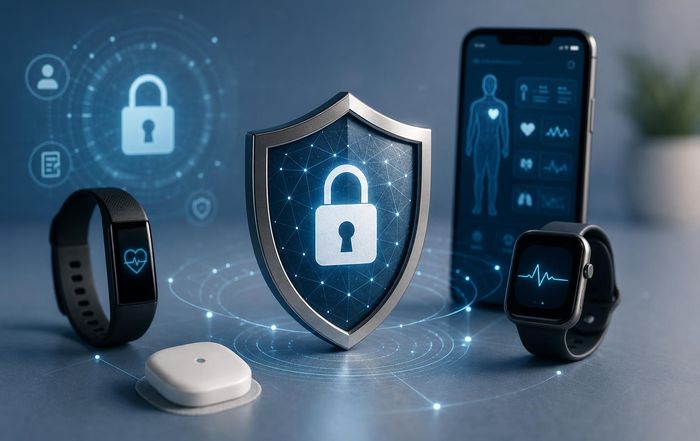
Connected health devices have evolved from niche wellness gadgets into a critical layer of global health infrastructure, shaping how individuals monitor their fitness, manage chronic conditions and interact with healthcare providers across continents. From advanced smartwatches and continuous glucose monitors to AI-powered home diagnostic tools, these systems now collect streams of physiological, behavioral and location data that are far richer and more continuous than anything traditional healthcare models could gather. For fit and happy daily readers of FitPulseNews, who follow developments across fitness, health, sports and the business of performance-enhancing technologies, understanding the privacy implications of this shift is no longer optional; it is central to evaluating which brands, platforms and ecosystems deserve their trust.
As regulators from the European Commission and the U.S. Department of Health and Human Services to authorities in Singapore, Australia and Brazil continue to tighten data protection frameworks, privacy has become a competitive differentiator rather than a compliance chore. Connected health companies that can credibly demonstrate robust privacy-by-design practices, transparent data governance and clear value exchange are increasingly favored not only by consumers but also by enterprise buyers, insurers and sports organizations. In this environment, privacy is emerging as a core dimension of performance for health technology brands, on par with accuracy, battery life and user experience, and the winners in this space will be those who can align innovation with a disciplined, trustworthy approach to data.
What Connected Health Devices Really Collect
Behind every sleek wearable or smart home health device lies a complex, layered data ecosystem that extends far beyond step counts and heart rate readings. Modern devices, from leading platforms like Apple, Samsung, Garmin and Fitbit (now part of Google) to specialized medical-grade manufacturers, routinely capture detailed biometric signals such as heart rate variability, blood oxygen levels, sleep stages, respiration, skin temperature and in some cases electrocardiogram traces and blood pressure trends. These measurements, when processed by advanced algorithms and machine learning models, allow the devices to infer stress levels, recovery status and even early indicators of illness, which has fueled significant interest in elite sports and high-performance training communities that FitPulseNews regularly covers in its sports and brands reporting.
In parallel, connected health devices merge physiological data with contextual information, including geolocation, movement patterns, device usage behavior and sometimes social graph data, which can be aggregated across platforms and linked with external sources such as electronic health records or insurance claims. Resources like the World Health Organization provide overviews of how digital health data ecosystems are expanding globally, while organizations such as the U.S. National Institutes of Health document the growing use of wearable data in research. Learn more about how digital health is reshaping global care models through the WHO's digital health initiatives at who.int. When multiple data streams converge, what appears to be anonymous wellness information can often be re-identified or profiled, raising sophisticated privacy risks that go far beyond the traditional concerns associated with web browsing or social media use.
Regulatory Landscapes: From HIPAA and GDPR to Global Convergence
In 2026, the regulatory context for connected health devices is more complex and fragmented than ever, yet it is also gradually converging around common principles of transparency, purpose limitation and user control. In the United States, the Health Insurance Portability and Accountability Act (HIPAA) still governs protected health information within traditional healthcare settings, but many consumer wearables and fitness apps operate outside HIPAA's strict boundaries, instead falling under the broader consumer protection remit of the Federal Trade Commission, which has increasingly scrutinized deceptive or unfair data practices. Businesses and consumers can review the latest guidance on health app privacy on the FTC's website at ftc.gov.
Across Europe, the General Data Protection Regulation (GDPR) remains the global benchmark for data protection, treating health data as a special category requiring enhanced safeguards and explicit consent in most contexts. National regulators in the United Kingdom, Germany, France, Spain, Netherlands and the broader European Economic Area have issued specific guidance on wearables and digital health platforms, underscoring obligations around data minimization, user rights and cross-border transfers. Learn more about GDPR health data obligations at the European Data Protection Board via edpb.europa.eu. Meanwhile, jurisdictions in Asia-Pacific such as Singapore, Japan and Australia, as well as Brazil, South Africa and Canada, have enacted or strengthened privacy laws inspired by GDPR principles, creating a patchwork of regional requirements that global health technology brands must navigate as they scale.
The Blurring Line Between Wellness and Medical Devices
One of the most challenging privacy issues for connected health technology lies in the increasingly blurred boundary between wellness devices and regulated medical products. When consumer wearables began offering features like ECG readings, irregular heart rhythm notifications and blood oxygen saturation measurements, regulators such as the U.S. Food and Drug Administration (FDA) and the UK Medicines and Healthcare products Regulatory Agency (MHRA) were compelled to clarify when such functionality crosses into medical device territory. The distinction matters because medical devices must comply with stricter safety, efficacy and data protection standards, and data associated with diagnosis or treatment is typically subject to higher regulatory scrutiny. For an overview of how regulators classify health software and wearables, readers can explore the FDA's digital health center of excellence at fda.gov.
From a privacy perspective, this blurring of categories means that users often do not know whether their data is being treated as consumer wellness information, which may be monetized or shared with third parties under broad terms of service, or as protected health data with robust confidentiality expectations. For businesses covered in the business and innovation sections of FitPulseNews, the strategic implication is clear: transparency about device classification, regulatory status and data governance frameworks has become an essential ingredient in building credibility with increasingly sophisticated users in the United States, Europe and high-growth markets across Asia and Latin America.
Data Flows, Cloud Platforms and the Hidden Infrastructure of Health
Behind the user-facing experience of any connected health device lies an intricate cloud and network infrastructure that moves, processes and stores data across borders and corporate boundaries. Major cloud providers such as Amazon Web Services, Microsoft Azure and Google Cloud power a significant share of digital health platforms, offering specialized services for healthcare compliance, encryption and identity management. Organizations considering partnerships or deployments can review healthcare compliance capabilities on resources like Microsoft's compliance documentation at microsoft.com. However, even when a device manufacturer advertises end-to-end encryption or "secure cloud," the reality is that data often passes through multiple intermediaries, including analytics providers, AI model vendors, marketing partners and in some cases data brokers.
This complex supply chain introduces privacy and security risks, particularly when data is transferred between jurisdictions with differing legal protections or when third-party vendors have access to raw or pseudonymized health information. For global companies headquartered in the United States, United Kingdom, Germany, Switzerland, Japan or Singapore, cross-border data transfers are not only a technical challenge but also a governance issue, as they must align with frameworks such as the EU-U.S. Data Privacy Framework or country-specific adequacy decisions. The International Association of Privacy Professionals (IAPP) provides detailed overviews of evolving cross-border transfer rules at iapp.org, which many privacy officers in the connected health sector now treat as essential reference material.
AI, Predictive Analytics and the Ethics of Inference
The most transformative-and controversial-aspect of connected health privacy in 2026 arises from the use of artificial intelligence and advanced analytics to derive insights from raw sensor data. Rather than merely recording heart rate or sleep duration, leading platforms now deploy machine learning models to predict injury risk, detect arrhythmias, estimate mental fatigue, identify early signs of respiratory infection and even infer mood or cognitive strain from subtle physiological patterns. Research institutions such as Stanford Medicine and Mayo Clinic have published studies on the predictive value of wearable data, and readers can explore how AI is transforming diagnostics through resources like Stanford's Center for Digital Health at med.stanford.edu.
While these capabilities promise substantial benefits for athletes, patients and everyday users-benefits frequently highlighted in FitPulseNews coverage of wellness and nutrition-they also raise profound privacy questions. Inference-based profiling means that sensitive insights can be generated even from data that appears non-sensitive in isolation, such as movement patterns or resting heart rate trends. This can enable powerful personalization of training and recovery programs, yet it may also allow employers, insurers or third-party partners to draw conclusions about an individual's health status, stress levels or potential future conditions, sometimes without explicit consent. Guidance from organizations like the OECD on responsible AI and health data, available at oecd.org, stresses the importance of proportionality, transparency and governance when deploying predictive models in health contexts.
Commercialization, Insurers and the Risk of Discrimination
The commercial value of connected health data has attracted a wide array of stakeholders beyond traditional healthcare providers, including health and life insurers, corporate wellness program operators, sports teams, digital advertising networks and consumer brands. Some insurance companies in the United States, United Kingdom, Germany, Canada and Australia now offer premium discounts or rewards programs tied to activity levels, sleep quality or biometric markers tracked by approved devices, promoting a vision of data-driven prevention and engagement. Learn more about how insurers are experimenting with wearable-based incentives through industry overviews at McKinsey & Company on mckinsey.com.
However, privacy and ethics experts warn that such models can create new forms of discrimination and exclusion if not carefully designed. Individuals who choose not to share their data, cannot afford high-end devices or have chronic conditions affecting their metrics may face implicit penalties, while subtle algorithmic biases could disproportionately impact people from certain regions or demographic groups. The World Economic Forum has highlighted these concerns in its work on responsible data-driven health, which can be explored at weforum.org. For the global audience of FitPulseNews, spanning markets from North America and Europe to Asia-Pacific, these dynamics underscore the need for transparent policies, opt-out mechanisms and clear separation between wellness engagement and core risk assessment in insurance and employment contexts.
Security Breaches, Ransomware and the Real-World Consequences
While privacy discussions often focus on data use and consent, the security of connected health devices and their supporting infrastructure remains an equally critical concern. Over the past decade, there have been documented incidents of fitness platforms exposing user location data, medical device manufacturers patching vulnerabilities that could allow remote tampering and healthcare providers suffering ransomware attacks that compromised wearable and monitoring system data. Cybersecurity organizations such as ENISA in Europe and the Cybersecurity and Infrastructure Security Agency (CISA) in the United States have repeatedly warned that connected health technologies represent a high-value target for cybercriminals and state actors. Learn more about medical device cybersecurity recommendations at CISA via cisa.gov.
In the context of sports and high-performance environments, a breach of training load, injury history or biometric readiness data could provide unfair advantages to competitors or undermine contract negotiations, while for everyday users, exposure of health metrics or location patterns can fuel stalking, blackmail or identity fraud. The reputational damage from such incidents is particularly severe in the health and fitness sector, where trust is closely tied to personal well-being and vulnerability. Companies featured in FitPulseNews technology and brands coverage are increasingly judged not only on the sophistication of their algorithms but also on their ability to demonstrate robust, independently validated security practices, including encryption, secure update mechanisms and incident response capabilities.
User Control, Transparency and the Reality of Consent
In theory, privacy for connected health devices is anchored in user consent, privacy policies and settings that allow individuals to decide what data they share and with whom. In practice, consent mechanisms are often opaque, fragmented and difficult to manage across multiple devices, apps and integrations, particularly for users who participate in complex ecosystems involving healthcare providers, fitness platforms, sports teams and corporate wellness programs. Studies referenced by organizations such as the Electronic Frontier Foundation (EFF) and Consumer Reports have shown that many users do not fully understand how their health data is collected, combined and monetized, even when they have technically agreed to terms of service. To explore consumer perspectives on health data privacy, readers can review reports available at consumerreports.org.
For a global audience that increasingly expects intuitive, human-centric design, there is growing pressure on connected health companies to move beyond long legalistic documents and toward layered notices, contextual prompts and privacy dashboards that provide meaningful control without overwhelming the user. This includes granular toggles for data sharing, clear differentiation between necessary processing and optional uses, easy export and deletion tools and straightforward explanations of how AI-driven insights are generated. In markets such as the European Union and United Kingdom, regulators have signaled that dark patterns and manipulative consent flows will face enforcement action, a trend that privacy-conscious businesses featured in FitPulseNews sustainability and culture sections are increasingly factoring into their design and governance strategies.
Global Variations in Expectations and Cultural Norms
Although many privacy principles are converging globally, cultural attitudes toward health data sharing vary considerably across regions, influencing how connected health devices are adopted and trusted. In parts of Europe and North America, there is strong emphasis on individual rights, autonomy and skepticism toward corporate data collection, leading to more assertive regulatory frameworks and consumer activism. In other regions, such as parts of Asia, there may be greater acceptance of data sharing for collective benefits, including public health surveillance, national fitness initiatives or smart city programs, provided that governments and major technology companies maintain a baseline of trust. Research from institutions like the Pew Research Center at pewresearch.org highlights these cross-cultural differences in privacy expectations and digital trust.
For global brands operating in markets from Japan, South Korea and Singapore to Brazil, South Africa and Scandinavia, this diversity requires nuanced strategies that balance local norms with consistent global standards. Athletes, wellness influencers and health-conscious consumers who follow FitPulseNews world and news coverage increasingly compare how companies behave across jurisdictions, paying attention to whether privacy protections are only as strong as the weakest regulatory environment or whether organizations genuinely embrace privacy as a universal value. Those that adopt a "highest-common-denominator" approach, aligning their global practices with the most protective regimes, are more likely to be perceived as trustworthy partners in the long term.
Building Trustworthy Health Tech: Governance, Standards and Best Practices
Creating a trustworthy ecosystem for connected health devices requires more than compliance checklists; it demands robust governance, cross-disciplinary expertise and alignment with emerging industry standards. Leading organizations are investing in dedicated privacy and security teams that collaborate closely with product designers, data scientists and clinical experts, ensuring that privacy considerations are integrated from early concept stages through deployment and lifecycle management. Frameworks such as privacy by design, articulated by regulators and scholars and promoted by entities like the Office of the Privacy Commissioner of Canada at priv.gc.ca, offer practical principles for embedding privacy into architecture, default settings and organizational culture.
Industry coalitions and standards bodies are also playing a growing role, with initiatives from groups like HL7 and its FHIR standards enabling more interoperable and secure data exchange between devices, apps and electronic health records. Learn more about interoperability standards for health data at HL7 International via hl7.org. Certification programs, third-party audits and transparent disclosure of security practices are increasingly used by businesses featured in FitPulseNews environment and innovation unique coverage to signal maturity and accountability. For startups and established brands alike, aligning with these frameworks not only reduces regulatory and cyber risk but also strengthens their value proposition to athletes, patients and wellness-focused consumers who are increasingly discerning about which ecosystems they join.
The Road Ahead: Privacy as a Strategic Asset in Connected Health
As connected health devices become more deeply woven into everyday life and professional performance across United States, United Kingdom, Germany, Canada, Australia, Japan, Singapore, Brazil, South Africa and beyond, privacy will continue to evolve from a defensive concern into a strategic asset. Organizations that treat privacy as a design constraint to be minimized will find themselves outpaced by competitors who recognize that transparent, respectful and secure data practices can unlock new forms of collaboration with healthcare providers, sports organizations, insurers and technology partners. For active and sporty readers of FitPulseNews, who track developments at the intersection of health, fitness, technology and business, this shift will influence which brands rise to prominence and which fade as trust becomes a decisive differentiator.
In this emerging landscape, experience, expertise, authoritativeness and trustworthiness are not abstract buzzwords but concrete expectations that shape purchasing decisions, partnership strategies and regulatory outcomes. Companies that can demonstrate deep understanding of regional regulations, invest in robust security and governance, communicate clearly with users and align their AI and analytics capabilities with ethical principles will be best positioned to thrive. As FitPulseNews continues to cover the evolving world of connected health, from cutting-edge wearables and sports performance platforms to corporate wellness programs and digital therapeutics, privacy will remain a central lens through which innovation is evaluated, ensuring that progress in health, fitness and human performance is matched by equal progress in respecting and protecting the individuals whose data makes it possible.