
How Community Races Encourage Active Participation in a Hyper-Connected World
The New Social Engine of Movement
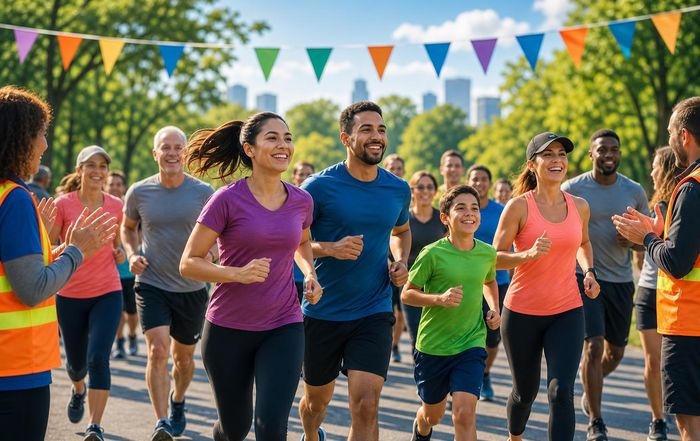
As hybrid work, digital platforms, and on-demand lifestyles continue to redefine how people live and interact, community races have quietly evolved into one of the most powerful engines for getting people moving and re-engaging with one another in the real world. From local 5Ks in small American towns to charity marathons in London, cycling sportives in Germany, and inclusive fun runs in Singapore and São Paulo, community races now sit at the intersection of fitness, health, culture, technology, and business. For the sporty active community readers of FitPulseNews, whose everyday interests span fitness, health, sports, and the broader business and cultural landscape, these events illustrate how organized movement can unlock participation at scale while building trust, loyalty, and long-term engagement.
As global organizations like the World Health Organization emphasize the dangers of physical inactivity and sedentary lifestyles, community races offer a concrete, accessible pathway into more active living for people across age groups, income levels, and cultural backgrounds. Learn more about global physical activity guidelines on the WHO website. What distinguishes these events today is not only the athletic challenge but also the ecosystem around them: digital registration platforms, wearable integration, corporate wellness programs, social media communities, and city-level infrastructure investments that collectively make participation easier, safer, and more rewarding.
From Casual Jog to Community Institution
Across North America, Europe, and Asia-Pacific, community races have matured from informal gatherings into professionally organized experiences supported by municipalities, health systems, and global brands. In the United States and United Kingdom, local running clubs and city councils have partnered with organizations such as parkrun and USA Track & Field to create regular, timed events that are free or low-cost, family-friendly, and intentionally inclusive. Readers can explore broader trends in community sport participation through resources from UK Sport at uksport.gov.uk.
This institutionalization has not reduced the grassroots spirit; rather, it has given community races the structure and credibility needed to attract first-time participants who might otherwise be intimidated by traditional competitive events. In Germany, for example, municipal programs inspired by the German Olympic Sports Confederation have embraced local running and cycling races as key tools for increasing everyday physical activity and social cohesion, while in Australia and New Zealand, local councils frequently integrate races into city festivals and seasonal celebrations, turning them into cultural fixtures rather than isolated athletic competitions. For a wider context on how sport participation supports societal wellbeing, readers can review insights from the International Olympic Committee at olympics.com.
Health, Prevention, and the Power of a Start Line
The most immediate effect of community races is physiological: they motivate people to train, walk, jog, or run more than they would alone. Yet the deeper impact lies in how these events reframe physical activity as a shared, celebrated behavior rather than an individual obligation. When cities from Toronto to Tokyo close streets for a 10K or half-marathon, they send a powerful message that movement is a civic priority, not a niche hobby. Evidence from organizations such as the Centers for Disease Control and Prevention and Public Health England has consistently linked even moderate increases in physical activity to reductions in chronic disease risk, improved mental health, and longer healthy life expectancy; readers can explore the science behind these benefits through the CDC's physical activity resources at cdc.gov.
For the audience of FitPulseNews, which frequently seeks actionable insights on wellness and nutrition, community races offer a practical framework to anchor long-term lifestyle change. Training for a local event, even at a walking pace, provides a clear goal, a timeline, and measurable progress, all of which are known behavioral drivers of adherence. Health systems in Canada, the Netherlands, and the Nordic countries have begun to integrate "social prescribing" models in which clinicians recommend participation in community-based physical activities, including races and walking groups, as part of prevention and rehabilitation plans. Learn more about social prescribing approaches through NHS England at england.nhs.uk.
The Psychology of Participation: Belonging Over Performance
One of the most important shifts in recent years has been the repositioning of community races from performance-centric events to participation-centric experiences. While elite athletes and serious amateurs still compete for podiums, the majority of participants in 5Ks, charity runs, and themed races now join primarily for enjoyment, social connection, and personal milestones. This is especially evident in markets like the United States, Canada, and the United Kingdom, where "couch to 5K" programs and beginner-friendly training plans have normalized the idea that simply showing up at the start line is an achievement worthy of recognition.
Psychologists studying motivation and behavior change have emphasized the importance of autonomy, competence, and relatedness in sustaining new habits, concepts central to self-determination theory. Community races excel at satisfying these needs by allowing individuals to choose their distance or pace, experience tangible improvement over time, and feel part of a collective endeavor. Readers interested in the science of motivation and habit formation can explore work from institutions like Harvard T.H. Chan School of Public Health at hsph.harvard.edu. For FitPulseNews, which often covers the cultural dimensions of sport and movement on its culture and sports pages, this psychological dimension underscores why inclusive race design is so critical to encouraging active participation.
Technology, Data, and the Hybrid Race Experience
Technology has fundamentally reshaped how community races are discovered, organized, and experienced. Registration platforms, mobile apps, and wearable devices have lowered logistical barriers, streamlined communication, and created new touchpoints before, during, and after race day. Platforms such as Strava, Garmin Connect, and Nike Run Club have turned training into a social, data-rich experience, allowing participants from Singapore, Berlin, Chicago, and Cape Town to compare progress, share routes, and celebrate milestones. To understand how digital fitness communities operate at scale, readers can explore Strava's annual data reports at strava.com.
The global pivot to virtual and hybrid races during the early 2020s accelerated the digital transformation of community events, and many organizers have retained virtual options to increase accessibility for participants who cannot travel or prefer to run on their own schedule. This has extended the reach of even small local races, enabling them to attract participants from other countries and time zones, while also offering corporate teams and remote workers new ways to engage in shared challenges. The integration of real-time tracking, digital race bibs, and post-race analytics has given participants deeper insight into their performance and health metrics, reinforcing the value of consistent training. For a broader view of how technology is reshaping sport and fitness, readers can consult research from MIT Sloan School of Management at mitsloan.mit.edu.
For FitPulseNews, which covers technology and innovation with a health and performance lens, community races now represent a live laboratory where wearables, biometric data, and digital coaching tools converge. This convergence raises new questions about data privacy, equity of access, and the potential for personalization in mass-participation events, all of which will shape how active communities evolve in the coming decade.
Corporate Wellness, Employer Branding, and Talent Engagement
In an era where organizations from the United States to Germany, Singapore, and South Africa compete fiercely for talent, community races have become strategic instruments for employer branding, employee engagement, and corporate wellness. Large employers and global brands, including Adidas, Nike, ASICS, and Lululemon, have long sponsored major city marathons and race series, but the trend has now filtered down to smaller companies and regional organizations that recognize the reputational and health benefits of supporting local events. Learn more about employer wellness strategies through resources from the Society for Human Resource Management at shrm.org.
Corporate teams frequently enter local races together, using them as focal points for wellness challenges, charity fundraising, and cross-department collaboration. These experiences not only encourage physical activity but also strengthen internal networks, improve morale, and reinforce cultures of resilience and mutual support. In knowledge-intensive sectors such as technology, finance, and professional services, where burnout and sedentary behavior are persistent risks, participation in community races can be framed as both a health intervention and a leadership development tool, teaching goal-setting, perseverance, and adaptability under pressure.
For readers of FitPulseNews following business and jobs trends, this integration of movement into corporate life has direct implications for recruitment and retention. Younger professionals in markets like the United States, Canada, and the Nordic countries increasingly expect employers to support holistic wellbeing, and visible involvement in community races sends a credible signal that an organization values health and work-life integration. Research from McKinsey & Company and Deloitte has further highlighted how wellbeing initiatives correlate with productivity and reduced absenteeism; readers can explore these dynamics through Deloitte's insights on workplace wellbeing at deloitte.com.
Brand Storytelling, Sponsorship, and Authentic Engagement
Beyond the workplace, community races have become a central stage for brand storytelling and consumer engagement. Global sportswear and nutrition companies, as well as regional health systems, financial institutions, and technology firms, increasingly view local races as high-trust environments where they can connect with consumers in meaningful, experience-driven ways. Unlike traditional advertising channels, race sponsorship allows brands to be physically present at moments of personal achievement and emotional intensity, from the nervous energy at the start line to the relief and pride at the finish.
Organizations such as World Marathon Majors and city-specific race series in New York, London, Berlin, Tokyo, Boston, and Chicago have demonstrated how carefully curated sponsorship ecosystems can enhance the participant experience rather than detract from it, by providing hydration, recovery zones, gear support, and educational content on topics such as injury prevention and nutrition. Learn more about major international marathon series at worldmarathonmajors.com. For FitPulseNews, which regularly analyzes brands and their role in shaping health and fitness culture, community races offer a clear window into how authenticity, consistency, and long-term commitment are now essential to effective sponsorship.
Nutrition and hydration brands, for example, have moved beyond simple logo placement to offering on-course products, pre-race webinars, and post-race content that help participants understand fueling strategies, recovery protocols, and performance optimization. Readers seeking deeper insights into sports nutrition science can explore resources from the American College of Sports Medicine at acsm.org. This content-rich approach not only supports active participation but also enhances brand trust by demonstrating expertise and genuine concern for participant wellbeing.
Local Economies, Tourism, and City Branding
Community races generate significant economic and reputational value for host cities and regions, particularly in tourism-driven markets across Europe, Asia, and North America. When participants travel to events in destinations like Boston, Berlin, Barcelona, Tokyo, Cape Town, or Rio de Janeiro, they contribute to local hospitality, retail, and transport sectors, while also amplifying the city's global profile through social media and word-of-mouth. Research from organizations such as the World Travel & Tourism Council has highlighted the growing role of sports tourism in regional development; readers can learn more about this trend at wttc.org.
In many cities, community races are now integrated into broader cultural calendars, aligning with music festivals, food markets, and arts events to create multi-day experiences that appeal to both local residents and international visitors. This convergence of sport, culture, and entertainment aligns closely with the editorial focus of FitPulseNews across events, culture, and sports coverage. Municipal leaders in countries such as Spain, Italy, and France increasingly view well-organized community races as strategic tools for city branding, showcasing infrastructure, environmental initiatives, and quality of life. For example, the integration of riverfront paths, urban greenways, and car-free zones into race routes demonstrates a city's commitment to active mobility and sustainable urban planning, themes that resonate strongly with global audiences and investors alike.
Inclusion, Accessibility, and Social Impact
A defining feature of modern community races is their expanding commitment to inclusion and accessibility, both in terms of physical ability and socioeconomic background. Event organizers across the United States, United Kingdom, Germany, South Africa, and Brazil have introduced adaptive divisions, wheelchair categories, guided running programs for visually impaired participants, and youth distances designed to encourage family participation. Organizations like Special Olympics and World Para Athletics have helped set standards and inspire best practices for inclusive event design; readers can explore their work at specialolympics.org and worldparaathletics.org.
At the same time, many community races are explicitly tied to charitable causes, from local hospitals and schools to international NGOs focused on health, education, and environmental protection. This philanthropic dimension not only raises funds but also deepens emotional engagement, as participants feel they are contributing to a cause larger than themselves. For FitPulseNews, whose readers are increasingly attentive to sustainability and social responsibility, the intersection of physical activity and impact is particularly relevant. Community races that partner with credible organizations such as UNICEF, Doctors Without Borders, or World Wildlife Fund reinforce trust and demonstrate how sport can be a vehicle for systemic change; readers can learn more about global humanitarian efforts at unicef.org and msf.org.
Sustainability, Environment, and Responsible Event Design
As climate concerns intensify worldwide, the environmental footprint of mass-participation events has come under increasing scrutiny. Forward-looking race organizers in regions such as Scandinavia, the Netherlands, Canada, and Australia are responding by rethinking everything from waste management and transport planning to merchandise and course design. This includes reducing single-use plastics, encouraging public transit and cycling to start lines, sourcing sustainable materials for race shirts and medals, and partnering with local environmental organizations to restore or protect natural areas used by participants. Learn more about sustainable event practices through resources from the United Nations Environment Programme at unep.org.
For FitPulseNews, which covers environment and sustainability alongside health and sport, these developments illustrate how community races can model responsible behavior while still delivering high-quality experiences. Cities like Copenhagen, Amsterdam, and Vancouver have begun to integrate race routes with existing cycling and pedestrian networks, reinforcing long-term shifts toward active transport. Meanwhile, certification initiatives and benchmarking tools developed by organizations such as Global Reporting Initiative and ISO are enabling race organizers and sponsors to measure and communicate their sustainability performance more transparently; readers can explore these frameworks at globalreporting.org and iso.org.
The Role of Media and Storytelling: Why FitPulseNews Cares
Media platforms like FitPulseNews play a crucial role in amplifying the impact of community races by telling the stories that numbers alone cannot capture. Behind every registration statistic lies a narrative of someone recovering from injury, managing chronic illness, navigating stress at work, or seeking connection in a new city. By covering these events across its news, world, and homepage sections, FitPulseNews provides context that helps readers understand not just what happened on race day, but why it matters for public health, local economies, corporate strategy, and cultural identity.
Through interviews with organizers, health professionals, brand leaders, and participants from diverse regions-including the United States, United Kingdom, Germany, Canada, Australia, France, Italy, Spain, the Netherlands, Singapore, Japan, and South Africa-FitPulseNews is uniquely positioned to highlight best practices and emerging trends. Whether examining how a city marathon in Asia has become a catalyst for urban cycling policy, or how a charity 10K in Europe has redefined corporate volunteering, the platform's cross-disciplinary lens ensures that readers see the full picture: the interplay between individual motivation, institutional support, technological innovation, and societal values.
Looking Ahead: Community Races as Infrastructure for Active Living
As 2026 progresses, community races are poised to become even more integrated into the fabric of everyday life, functioning less as occasional spectacles and more as recurring infrastructure for active living. Advances in wearable technology, AI-driven coaching, and personalized health data will continue to refine how individuals train and recover, while policy shifts in cities around the world may further prioritize pedestrian and cycling infrastructure that supports both racing and daily commuting. For a broader perspective on global health and urbanization trends, readers can consult analyses from the World Bank at worldbank.org.
For the growing dynamic community of FitPulseNews, the key takeaway is that community races are no longer just about crossing finish lines; they are about building ecosystems where fitness, health, culture, technology, business, and sustainability reinforce one another. Whether a reader is a first-time walker in Chicago, a seasoned marathoner in Berlin, a corporate leader in Singapore seeking to energize a workforce, or a policymaker in Cape Town designing active transport networks, the principles remain consistent: lower barriers to entry, emphasize inclusion, harness technology thoughtfully, align with credible partners, and tell authentic stories that celebrate participation over perfection.
By continuing to cover these developments with a focus on experience, expertise, authoritativeness, and trustworthiness, FitPulseNews aims to help its fit community not only understand how community races encourage active participation, but also leverage that understanding to build healthier organizations, more vibrant cities, and more connected lives.